
Having read Wesley’s “Thoughts Upon Necessity”, I decided to explore more of Lord Kames’ essay “On Liberty and Necessity”. That led to reading Jonathan Edwards remarks on the essay as well. This post is part 3 of a series which started with this post Wednesday with Wesley: Thoughts Upon Necessity
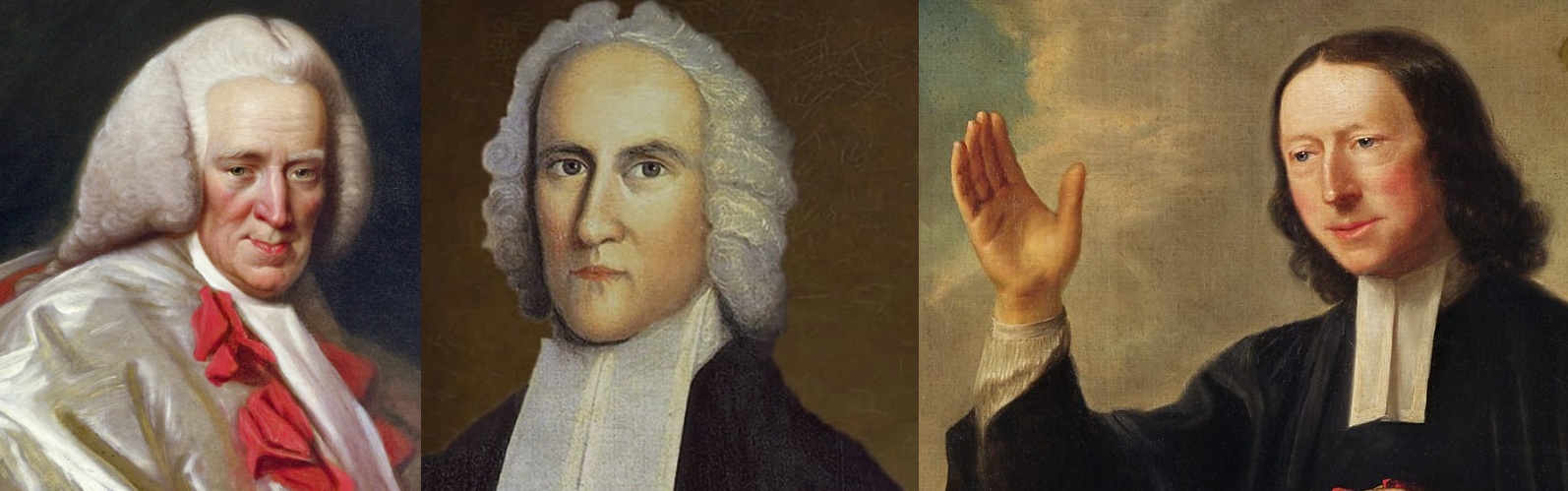
In the last post Lord Kames’ position was explored and summarized using excerpts from his essay “On Liberty and Necessity”. Wesley represented Lord Kames’ view reasonably well In his own essay, In this post we will explore how Jonathon Edwards and Lord Kames differ.
Lord Kames presented us with what he considered the fixed law of the moral world.
[our mind must] necessarily be determined to the side of the most powerful motive … in this lies the necessity of our actions 1
On this Lord Kames and Jonathan Edwards are agreed. Here is a similar statement found in the more popular work “Freedom of the Will” by Edwards.
It is that motive, which, as it stands in view of the mind, is the strongest, that determines the will.
…
I suppose the will is always determined by the strongest motive.2
Lord Kames will argue that the actions of the moral world are an effect that is as necessary as any found in the natural world.
we expect such an action in consequence of [some very strong] motive, with equal confidence, as when we expect to see a stone fall to the ground when it is dropped from the hand.
…
But as this inclination and choice is unavoidably caused or occasioned by the prevailing motive; in this lies the necessity of our actions, that, in such circumstances, it was impossible we could act otherways. 3
On this principle, also, we find that Lord Kames and Edwards are agreed, as the latter affirms an inability to act other than one does.
Moral Necessity may be as absolute as natural Necessity. That is, the effect may be as perfectly connected with its moral cause, as a natural, necessary effect is with its natural cause.
…
If it be so, that the Will is always determined by the strongest motive, then it must always have an Inability, in this latter sense, to act otherwise than it does 4

Despite both holding to Reformed doctrines and a common principle that an action is a necessitated outcome brought about by the strongest desire, Edwards did not view Lord Kames essay favorably. In the opening paragraph of his “Remarks on Lord Kames’ Essays on the Principles of Morality and Natural Religion” he makes that clear. 5
And I think it must be evident to every one that has read both his Essay and my Inquiry, that our schemes are exceeding reverse from each other.6
In case such a reader did not find the differences evident, Edwards lists several “wide Differences” between the two men in the pages that follow, often referring to Lord Kames as “The Author”.
- This Author supposes the Necessity that takes place with respect to all Men’s Actions is inconsistent with Liberty 7
- The Author denies that Men have any Liberty in acting if Motives are not under our Power or Direction 8
- The Author supposes that if Men had the Truth concerning the Necessity of their Actions then the actions would not appear Praise-worthy or culpable. Men would not be under moral Obligation or accountable for their Actions 9
- The Author supposes that God has deeply implanted in Man’s Nature a strong Feeling or wise Delusion of Liberty and Contingence of his own Actions, deceiving men so that they believe they are have this freedom when they do not 10
- The Author supposes Men’s delusive Sense of a Liberty of Contingence, to be the Foundation of all the Labour, Care and Industry of Mankind. Without this delusive sense of Liberty men would feel resigned to their fate given Events are fixed in an indisputable Chain, and not at all depending on their Care and Endeavour. 11
Jonathon Edwards will spend much of his time repeating and defending his definition of Liberty while assailing what was offered by Lord Kames.
Liberty, as I have explained it [in “Freedom of the Will”] is the Power , Opportunity , or Advantage that any one has to do as he pleases, or conducting, IN ANY RESPECT, according to his Pleasure; without considering how his Pleasure comes to be as it is.12
For Edwards “real Liberty” does not consist in having our motives under our power or direction, nor in contingence, nor in the absence of moral necessity.
The defining characteristic for Liberty is:
no Necessity of Men’s Volitions that I maintain, is inconsistent with this Liberty [to do as one pleases]13
Edwards’ phrase “doing as one pleases” is another way of saying that the “Will is always determined by the strongest motive”. What one pleases is defined by, or synonymous with, the strongest motive.
Edwards has a lofty view of his scheme, suggesting that “it is impossible for anyone to rise higher in his conceptions of Liberty than” what he does. All that claim to are “deceived and delude themselves.”
Digging into the Differences
Lord Kames has argued that “real Liberty” consists in a person having “a Freedom that is opposed to moral Necessity”, which is quoted by Edwards.
Now, liberty as opposed to moral necessity, must signify a power in the mind, of acting without or against motives; that is to say, a power of acting without any view, purpose or design, and even of acting in contradiction to our own desires and aversions, or to all our principles of action; which power, besides that no man was ever conscious of it, seems to be an absurdity altogether inconsistent with a rational nature.14
It would appear that both Lord Kames and Edwards would agree that actions that do not arise from moral necessity are those that are performed “without motives” or “purpose or design”. Consider what Edwards, himself, asserts:
[Those that oppose Edwards view of Liberty suggest that] a Man exercises Liberty in this, even in determining his own Choice, but not as he pleases, or not in Consequence of any Choice, Preference, or Inclination of his own, but by a Determination arising contingently out of a State of absolute Indifference15
The difference, then, between the two, is whether an act that arises from moral necessity is what can properly be called Liberty. Others, such as John Wesley and Daniel Whedon, would challenge both Lord Kames and Edwards, striking at the very heart of their definition. They would argue that a Liberty that is not under moral necessity does not require an action to be done out of a state of indifference or without motives, purpose or design. But that is a topic for another post.
Kames identified the term Liberty with contingence and suggests that our choices should depend upon the power within the decision maker to make them.16 As we have seen, Kames attributes these powers of choosing otherways, that we think we have, are part of a wise delusion from God.
Edwards will argue that this view does “not rise higher than his Conception of Liberty.” The proper definition of Liberty, again, is to do as one pleases. Edwards is frustrated that Kames would, as Wesley will later note “give up the whole cause”, in conceding that real Liberty means Man must have a Freedom that is opposed to Necessity. 17
What more Freedom can exist then the Power from ourselves to fulfill our own Choice rather than the absurd notion we have a Liberty in which “a Power in the Mind is acting without and against Motives”
[That Kames] supposes some Liberty conceivable whereby Men’s own Actions might be more PROPERLY IN THEIR POWER, and by which Events might be more DEPENDENT ON OURSELVES [is] contrary to what I suppose 18
In the “Freedom of the Will”, Edwards will argue that any act that is done without a preference or design but rather is the result of indifference is not volition.
So that in every act, or going forth of the will, there is some preponderation of the mind or inclination one way rather than another; and the soul had rather have or do one thing than another, or than not to have or do that thing; and that there, where there is absolutely no preferring or choosing, but a perfect continuing equilibrium, there is no volition. (emphasis in original) 19
By determining the will, if the phrase be used with any meaning, must be intended, causing that the act of the will or choice should be thus, and not otherwise: and the will is said to be determined, when, in consequence of some action or influence, its choice is directed to, and fixed upon, a particular object. As, when we speak of the determination of motion, we mean causing the motion of the body to be such a way, or in such a direction, rather than another. … It is sufficient to my present purpose to say, It is that motive which, as it stands in the view of the mind, is the strongest, that determines the will (emphasis in original) 20
Liberty then for Edwards is an absurd notion if the act of the will is arising out of indifference, rather than a motive even if the act is as morally necessary as the direction an object moves after being hit in a certain way. If we were to add to what Edwards says, it seems he suggests that our actions our as determined and necessary as the direction a billiard ball will travel when struck by the cue ball a certain way.
In the “Freedom of the Will”, Edwards would say that if a person chose in opposition to what he pleases that he was “necessitated to do otherwise” and this very idea is “contrary to liberty” 21
Next, Edwards, examines and rebukes Lord Kames regarding his views on moral obligation.
The Author of the Essays most manifestly supposes, that if Men had the Truth concerning the real Necessity of all their Actions clearly in View, they would not appear to themselves , or one another, as at all Praiseworthy or culpable, or under any moral Obligation, or accountable for their Actions: which supposes, that Men are not to be blamed or praised for any of their Actions, and are not under any Obligations, nor are truly accountable for any thing they do, by Reason of this Necessity; which is very contrary to what I have endeavored to prove.22
That part of Edwards remarks will be the focus of the next post.
[Continuing Thoughts Upon Necessity (part 4)]
- Kames, Henry Home, Lord, “On Liberty and Necessity”” in Essays on the principles of morality and natural religion. In two parts, 168-169,174 ↩︎
- Edwards, Jonathan, Freedom of the Will Part 1 Section 2, pages 6,7
https://ccel.org/ccel/edwards/will/will.ii.ii.html
also (page numbers taken from this edition)
https://archive.org/details/freedomofwill0000revj/page/n3/mode/2up
↩︎ - Kames, 166, 174 ↩︎
- Edwards, Part 1 Section 4 (25,29) ↩︎
- An online edition of Edwards’ Remarks
https://play.google.com/books/reader?id=3fVhAAAAcAAJ&pg=GBS.PA1&hl=en ↩︎ - Remarks, 1 ↩︎
- Remarks, 1 ↩︎
- Remarks, 1-2 (paraphrased) ↩︎
- Ibid 7 ↩︎
- Ibid 8, 14 ↩︎
- Ibid 12 ↩︎
- Ibid 2 ↩︎
- Ibid 2 ↩︎
- Kames, 175 (cmp Remarks, 4) ↩︎
- Remarks, 3 ↩︎
- Kames, 204,206-207 ↩︎
- Remarks, 4 ↩︎
- Ibid 5 ↩︎
- Edwards, Part 1 Section 1 (5) ↩︎
- Edwards Part 1 Section 2 (5-6) ↩︎
- Edwards Part 1 Section 5 (32) ↩︎
- Remarks, 7 ↩︎
 Dead Heroes Don't Save