
This post is part 4 of a series that has explored the three essays on the topic Liberty and Necessity by John Wesley, Jonathan Edwards and Lord Kames. This series started with this post Wednesday with Wesley: Thoughts Upon Necessity
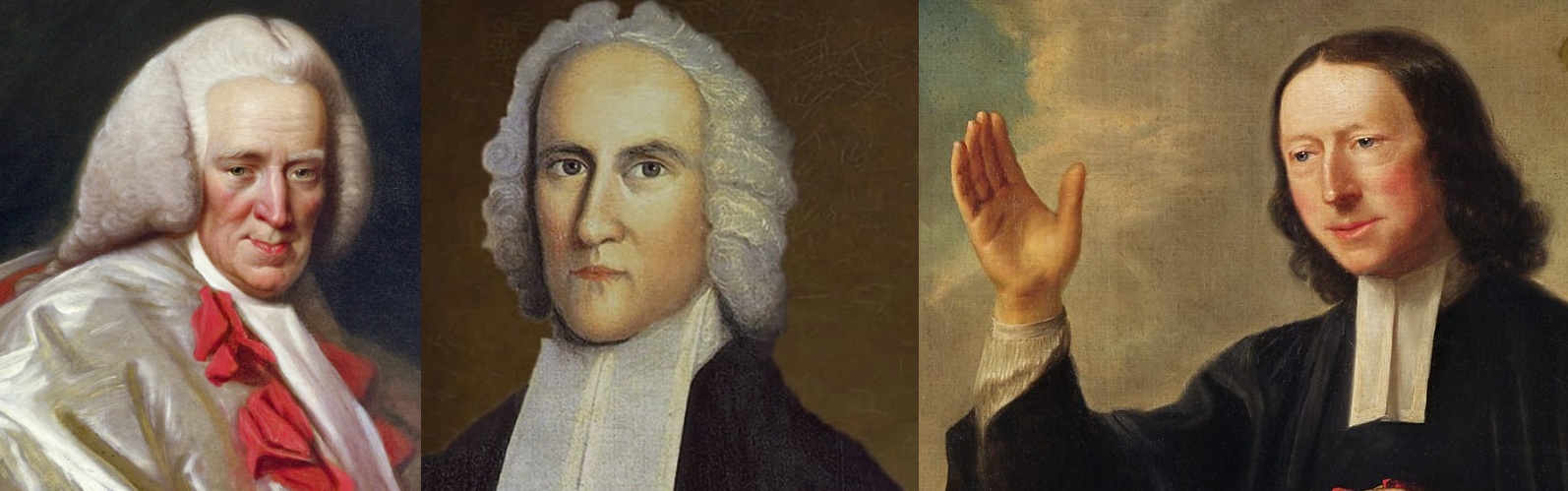
In the last post, we found that both Edwards and Lord Kames put forth a position where all of our actions are morally necessary and that they are just as certain as any found in the natural world. Both of these theologians further propose that every act is a “going forth of the will” which “is always determined by the strongest motive.”1
Where these theologians disagreed with each other was on how the concept of liberty should be defined. Lord Kames will assert that “liberty [is] opposed to moral necessity.” 2 Edwards recoils at this idea, arguing that liberty is not only not opposed to moral necessity but requires it.3 Lord Kames ascribes to the term liberty “a power [to act] without or against motives.”4 Edwards rejects this noting that an action done without a motive is no liberty at all.5
It is anachronistic to attempt to label the Lord Kames and Edwards with terms used in modern debates about free will. 6 Any identification attempted here would be based on a limited exposure to the corpus of either thinker and based primarily on these essays. However, by breaking down their essays into a series of premises we can deduce where they fall within the debate and gain some clarity on why these theologians have opposing ideas about liberty, necessity and moral accountability.
Taking these into account, I would suggest that Lord Kames is an incompatibilist as he seems to find moral necessity and moral obligation incompatible.
- (K1) Motives are not under our power or direction 7
- (K2) Liberty requires our motives to be under our power or direction. 8
- (K3) Therefore we have no Liberty (from 1 and 2)9
- (K4) All human actions proceed in a fixed and necessary train and are thus morally necessary … it is impossible that one should will or choose otherways than in fact he wills or chooses 10
- (K5) Liberty requires events to be dependent on ourselves to cause or prevent, that is contingent. They may be, or may not be. 11
- (K6) Therefore, Liberty is opposed to moral necessity (from 4 and 5) 12
- (K7) Liberty is required for actions to be considered praiseworthy or culpable and for the man to be accountable 13
- (K8) Therefore we are not morally accountable for our actions (from 3 and 7)

As we have seen, Lord Kames takes the position that we have an illusion of liberty that makes it appear as if actions are under our power and are contingent. Thus “an accountable creature arises.” But, in reality he asserts that all human actions are under moral necessity.
Edwards is more readily identified as a compatibilist arguing that moral obligation and moral necessity are, contra Lord Kames, compatible.
- (E1) The plain and obvious meaning of the words freedom and liberty is the power to do as one pleases (to act on our strongest motive) 14
- (E2) Liberty is the power to fulfil our own Choice, to act from our own Inclination, pursue our own Views, and execute our own Designs (to act on our strongest motive)15
- (E3) Liberty can only be ascribed to a being which has a faculty, power or property called the Will. That which has the power of volition is the man, and he has the liberty of doing according to his will 16
- (E4) the Will is always determined by the strongest motive, then it must always have an Inability, in this latter sense, to act otherwise than it does 17
- (E5) Therefore Men possess a Liberty of Moral Necessity (from 1-4)18
- (E6) A Liberty of Contingence or Chance, which is the opposite of a Liberty of Moral Necessity, would mean that the Actions of Men would not be determined by inward Inclinations, Incitements, Motives and Ends. They would arise from no Cause and be due to Indifference. 19
- (E7) A Liberty of Contingence signifies that Mens Actions are not the Fruit of their own Desires and Designs, but altogether contingent, fortuitous, and without a Cause … consisting in Accident or Chance. 20
- (E8) The more a Man does any Thing with full Inclination of Heart, excited by Motive, the more is it to be charged to his Account. … in order for our Actions to be accountable they must be performed with Purpose, Design and Desire … we should act from Motives, Intentions and Aims and have an End, either good or bad 21
- (E9) Therefore a Liberty of Contingence would destroy any notion of moral obligation (from 6-8) 22
- (E10) Therefore the moral Necessity of Mens Actions is requisite to the Being of Virtue and Vice, or anything Praiseworthy or culpable. … this moral Necessity is the very Ground and Reason, why Men’s Actions are to be ascribed to them as their own, in that manner as to infer Desert, Praise and Blame (from 5 and 8) 23

Working through the essays and assembling their arguments into a more concise series of premises, we find that each theologian is coming at the concept of moral accountability from very different perspectives.
Both Lord Kames and Edwards can be said to affirm that liberty is necessary for moral accountability. However, the difference in their definitions of liberty make that statement nearly meaningless.
Beyond the term “liberty”, both theologians sense the need for actions being under our power. However, what is meant by “being in our power” is also understood in different ways. Lord Kames understands the power to be that of contingency in which a person can cause or prevent an act, which may or may not be. Edwards says a person has a power to do as they please, even if the act itself is certain and must be.
Both theologians equate contingency with chance. The Lord Kames understands contingency to mean that an action is not “predetermined to fall out” and that it “may be or may not be”. However, he also still seems to describe this as chance.
This feeling of chance or contingency is most conspicuous, when we look forward to future events. Some things we indeed always consider, as certain, or necessary, such as the revolution of seasons, and the rising and setting of the sun. … But many things appear to us loose, fortuitous, uncertain. Uncertain not only with respect to us, on account of our ignorance of the cause; but uncertain in themselves, or not tied down, and predetermined to fall out, by any invariable law. We naturally make a distinction betwixt things that must be, and things that may be, or may not be.24
It is a bit unclear how the concept of chance should be understood with other statements Lord Kames makes regarding a Liberty of Contingency being the “foundation of all the labor, care and industry of mankind” and with one’s happiness or misery being in their power. 25
Edwards, as we have seen, directly equates contingency with an act that is done in indifference. It is an accident or it is by chance. This indifference, as Edwards argues, is the result of an action being done without our desires, designs, inclinations, motives or ends.
It seems hard to reconcile what Edwards asserts about contingence and chance with what Lord Kames means in using those terms. Lord Kames provides an example of the Liberty of Contingency and argues that the “feeling of contingency” results in our “taking care of prolonging our life” through our actions, such as exercise and medicine. 26 This very description suggests a desire and a design to prolong one’s life and thus seems opposed to Edwards denying there is any desire or design behind our actions.
Edwards will argue that any “self determining power in the will” is an absurdity 27 but doesn’t give a detailed account on how the strongest motive itself comes about. He only affirms that our actions are morally necessary and cannot be otherwise because of it.28
In his wrangling over the word “necessary”, Edwards will affirm that “metaphysical or philosophical necessity is nothing different from certainty.” 29 He goes on to describe the following moral causal chain:
- (1) Something can be Necessary in itself, such as mathematical truths.30
- (2) Something can be Necessary, if it has already come to pass, the past event being fixed, cannot be otherwise31
- (3) Something can be Necessary, if being in the future, it is connected with something that is necessary (such as found in 1 or 2). Things which are perfectly connected with other things that are necessary are necessary themselves, by a necessity of consequence. They are not necessary in themselves. 32
Edwards will conclude, that the only way in which something which is not necessary in itself could be necessary before it came to pass, is through a connection with something that was prior and itself necessary. Further, Edwards will note moral necessity, and its causes and effects, are “entirely distinct” from natural necessity, and its causes and effects. However, he still affirms a causal chain such that “there is a sure and perfect connection between moral causes and effects” that exists even if it is not as obvious as those in the natural world. 33
We have already seen how an John Wesley pushes back on Lord Kames overall views. He also would readily point out the mistakes in Edwards views on liberty, contingency and how they relate to moral obligations. But that will be the topic of the next post.
[Continuing Thoughts Upon Necessity (part 5)]
- Edwards, Jonathan, Freedom of the Will Part 1 Section 2, pages 6,7 ↩︎
- Kames, 175 ↩︎
- Remarks, 2
moral Necessity which universally takes Place, is not in the least inconsistent with any thing that is properly called Liberty
also
Remarks, 7
moral Necessity of Mens Actions is requisite to the Being of Virtue or Vice or any thing Praiseworthy or culpable ↩︎ - Kames, 175
specifically he writes:
liberty, as opposed to moral necessity, must signify a power in the mind, of acting without or against motives; that is to say, a power of acting without any view, purpose or design, and even of acting in contradiction to our own desires ↩︎ - Remarks, 3
specifically he writes:
Surely he that places Liberty in a Power of doing something not according to his own Choice, or from his Choice, has not a higher Notion of it, than he that places it in doing as he pleases, or acting from his own Election . If there were a Power in the Mind to determine itself, but not by its Choice or according to its Pleasure, what Advantage would it give? and what Liberty, worth contending for, would be exercised in it? ↩︎ - A brief history of free will can be found in the SEP article
https://plato.stanford.edu/entries/freewill/#MajoHistCont ↩︎ - Kames, 168
In short, if motives are not under our power or direction, which is confessedly the fact, we can, at bottom, have no liberty ↩︎ - Kames, 168, ↩︎
- Kames, 168 ↩︎
- Kames, 179-180 ↩︎
- Kames, 175, 183-184
A multitude of events appear to us as depending upon ourselves to cause or to prevent: and we readily make a distinction betwixt events, which are necessary, i.e. which must be, and events which are contingent, i.e. which may be, or may not ↩︎ - Kames, 175
Now, liberty as opposed to moral necessity, must signify a power in the mind, of acting without or against motives; that is to say, a power of acting without any view, purpose or design, and even of acting in contradiction to our own desires and aversions ↩︎ - Kames, 206-207
the feeling of liberty presents the moral world to our view, answers all the good purposes of making the actions of man entirely dependent upon himself. His happiness and misery appear to be in his on power. He appears praiseworthy or culpable, according as he improves or neglects his rational faculties. The idea of his being an accountable creature arises ↩︎ - Remarks, 2
Edwards, Part 1 Section 5, page 31-32 ↩︎ - Remarks, 5 ↩︎
- Edwards, Part 1 Section 5, page 32 ↩︎
- Edwards, Part 1 Section 4, page 25,29 ↩︎
- Edwards Part 1 Section 3, page 18-21
Metaphysical or philosophical Necessity is nothing different from their certainty
…
Therefore, the only way that any thing that is to come to pass hereafter, is or can be necessary, is by a connexion with something that is necessary in its own nature, or something that already is, or has been; so that the one being supposed, the other certainly follows. And this, also, is the only way that all things past, excepting those which were from eternity, could be necessary before they came to pass, or could come to pass necessarily ; and therefore the only way in which any effect or event, or any thing whatsoever that ever has had or will have a beginning, has come into being necessarily, or will hereafter necessary exist. And therefore this is the necessity which especially belongs to controversies about the acts. of the will” (p 21) ↩︎ - Remarks, 10-11
Edwards definition of contingence is to see it as synonymous as chance, which he then correlates to an action of indifference. This amounts to an action done without design, motive or end, either good or bad.
See also Freedom of the Will, Part 1 Section 3 (p23)
But the word contingent is [used] for something which has absolutely no previous ground or reason, with which its existence has any fixed and certain connexion ↩︎ - Remarks, 14 ↩︎
- Remarks, 11, 8 ↩︎
- Remarks, 10-11 ↩︎
- Remarks, 7, 17 ↩︎
- Kames, 158 ↩︎
- Kames, 183-185, 206-207 ↩︎
- Ibid, 185 ↩︎
- Edwards Part 2 Section 1, page 37-38, 45 ↩︎
- Edwards Part 1 Section 2, page 5-6 ↩︎
- Edwards Part 1 Section 3, page 18 ↩︎
- Ibid, 20 ↩︎
- Ibid, 20 ↩︎
- Ibid, 20-21 ↩︎
- Ibid 25, 27 ↩︎
 Dead Heroes Don't Save