
This post is part 6 of a series that has explored the three essays on the topic Liberty and Necessity by John Wesley, Jonathan Edwards and Lord Kames. This series started with this post Wednesday with Wesley: Thoughts Upon Necessity
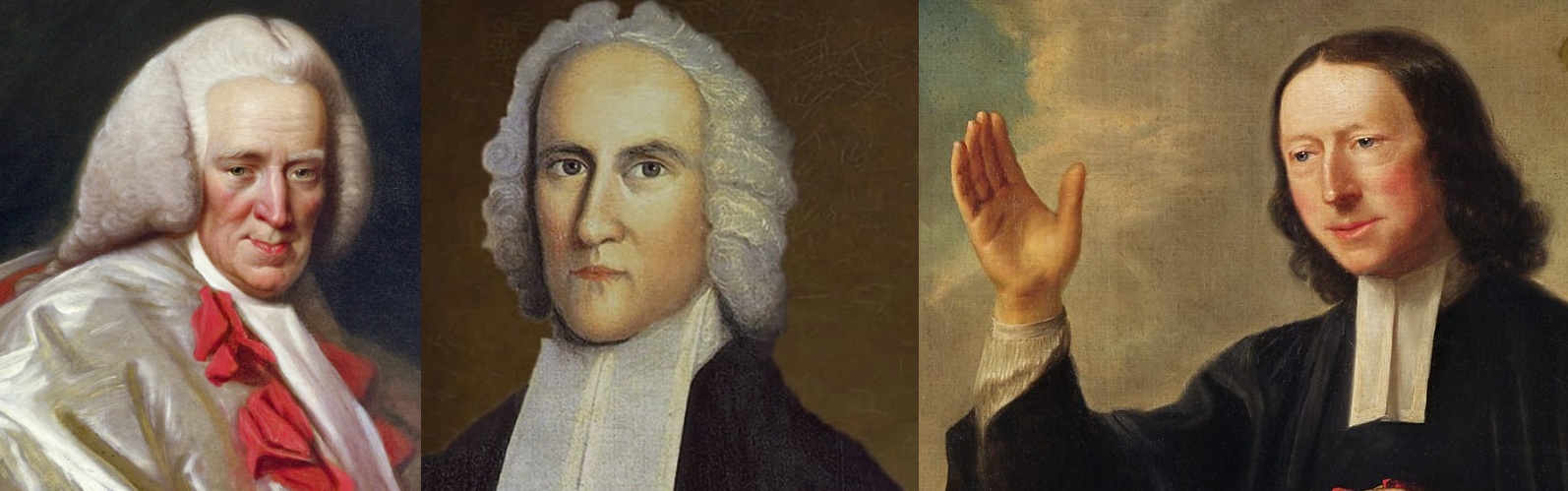
In “Thoughts Upon Necessity“, John Wesley critiqued the Lord Kames’ views on Necessity, Liberty and Moral Obligation and highlighted its flaws. He then went on to admit that Jonathan Edwards avoids the problem Lord Kames found himself in.
But Mr, Edwards, has found a most ingenious way of evading this consequence …1
Through “deep, metaphysical reasoning”, Edwards has asserted that “the actions of men are quite voluntary; the fruit of their own will” while also claiming that the strongest motive “determin[es] the Will [causing] the choice to be thus, and not otherwise.” 2 Despite using words like “voluntary” and “choice”, Edwards’ Liberty of Necessity, according to Wesley, amounts to the acts of a moral agent being “irresistibly impelled.” 3
Through this series we have explored how Edwards understood a Liberty of Necessity as well as how he understood a Liberty of Contingency. In this post, we will explore Wesley’s claims about Edwards’ framework and his own perspective on these matters.

Wesley breaks down the decision making faculties into three parts.
God created Man as Intelligent Being; and endued him with Will as well as Understanding. Indeed it seems, without this, his Understanding would have been given to no purpose. Neither would either his Will or Understanding have answered any valuable purpose, if Liberty had not been added to them, a power distinct from both. A power of choosing for himself, a self-determining Principle. It may be doubted, whether God ever made an intelligent creature, without all these three faculties … Certain it is, that no Being can be accountable for its Actions which has not Liberty, as well as Will and Understanding. (emphasis in original) 4
These three faculties are also described in Wesley’s Sermon 57.
God did not make him mere matter, a piece of senseless, unintelligent clay; but a spirit, like himself, although clothed with a material vehicle. As such he was endued with understanding; with a will including various affections; and with liberty, a power of using them in a right or wrong manner, of choosing good or evil. Otherwise neither his understanding nor his will would have been to any purpose; for he must have been as incapable of virtue or holiness as the stock of a tree.5
Thomas Oden summarized Wesley’s understanding of the three faculties working together in decision making as follows:
The understanding needs the will to execute its decisions, and the will needs liberty to determine itself. To deny liberty is to deny the essence of the human spirit.6
In 1864, some 110 years after Jonathon Edwards wrote his Inquiry Freedom of the Will, Daniel Whedon, would offer a critique that “fundamentally disagrees” with his Liberty of Necessity. We find in Whedon’s work a more robust metaphysical treatise then Wesley’s essay. Whedon also understood the soul, or the person, as a total package that has classes of operations that “perceive, feel, and think.”
[the] Will is the power of the soul by which it is the conscious author of an intentional act. … When, therefore, we speak of Will, we speak not of a separate, blind, unintelligent agent, but of the whole intelligent soul engaged in and capable of volitional actions. 7
A Liberty of contingency, contradiction and contrariety
Essential to Wesley’s definition of Liberty is the self-determining ability of the soul, in which it can use the other faculties it has to choose to do or not to do. This ability is what Whedon will identify as a pluripotent power.
In Sermon 109, we find a more expansive description of how Wesley viewed Liberty. This description would align well with Lord Kames’ liberty of contingency, allowing for actions “which may be, or may not be.” 8
I am conscious to myself of one more property, commonly called liberty. This is very frequently confounded with the will; but is of a very different nature. Neither is it a property of the will, but a distinct property of the soul; capable of being exerted with regard to all the faculties of the soul, as well as all the motions of the body. It is a power of self-determination; which, although it does not extend to all our thoughts and imaginations, yet extends to our words and actions in general, and not with many exceptions. I am full as certain of this, that I am free, with respect to these, to speak or not to speak, to act or not to act, to do this or the contrary, as I am of my own existence.
I have not only what is termed, a “liberty of contradiction,” — power to do or not to do; but what is termed, a “liberty of contrariety,” — a power to act one way, or the contrary. To deny this would be to deny the constant experience of all human kind. … And although I have not an absolute power over my own mind, because of the corruption of my own nature; yet, through the grace of God assisting me, I have a power to choose and do good, as well as evil.9
The role of reason (aka understanding)
For Wesley, the soul has an ability to reason and understand the world and to make evaluations and judgements about the objects that surrounds it when it acts. This faculty is an integral part of making choices and is described in more detail in Sermon 70.
First, then, reason is sometimes taken for argument. So, “Give me a reason for your assertion.” … We use the word nearly in the same sense, when we say, “He has good reasons for what he does.” It seems here to mean, He has sufficient motives; such as ought to influence a wise man.
…
In another acceptation of the word, reason is much the same [as] understanding. It means a faculty of the human soul; that faculty which exerts itself in three ways; by simple apprehension, by judgement, and by discourse. … The faculty of the soul which includes these three operations I here mean by the term reason.10
In that same sermon, Wesley writes that “God has given us our reason for a guide. And it is only by acting up to the dictates of it, by using all the understanding which God hath given us, that we can have a conscience void of offense towards God and towards man.”
In Sermon 109, the operations described as a part of reason are expanded upon. We find not only an apprehension of the world around us but such activities of the mind as evaluating, reflecting, remembering and reasoning.
I find something in me that thinks; … Something which sees, and hears, and smells, and tastes, and feels; all which are so many modes of thinking. It goes farther: Having perceived objects by any of these senses, it forms inward ideas of them. It judges concerning them; it sees whether they agree or disagree with each other. It reasons concerning them: that is, infers one proposition from another. It reflects upon its own operations; it is endued with imagination and memory 11
Edwards saw reason as having less of a role in how or why a particular act was performed than Wesley did. Reason plays a part, but the “faculty of perception” is described as the main driver in Edwards’ framework. This faculty presents the “last dictate of understanding” to the Will. When Edwards using the term “understanding” it is not equivalent to Wesley’s own use of the term. For Edwards this is yet way to describe the strongest motive, upon which the Will itself is determined.
It appears from these things, that in some sense the will always follows the last dictate of the understanding; but then the understanding must be taken in a large sense, as including: the whole faculty of perception or apprehension, and not merely what is called reason or judgment. If by the dictate of the understanding is meant what reason declares to be best, or most for the person’s happiness, taking in the whole of its duration, it is not true that the will always follows the last dictate of the understanding. Such a dictate of reason is quite a different matter, from things appearing now most agreeable …12
For Edwards, the dictates of reason are an influence that can augment or detract from what is apprehended and deemed most agreeable.
… that dictate of reason, when it takes place, is one thing that is put into the scales, and is to be considered as a thing that has concern in the compound influence which moves and induces the will ; and is one thing that is to be considered in estimating the degree of that appearance of good which the will always follows; either as having its influence added to other things, or subducted from them. 13
What is a choice according to Wesley
Wesley, agreeing with the Lord Kames, argues that without a power of choosing, such that an act may or may not be, there is no moral responsibility.
The power of choosing, either to do or not to do (commonly called Liberty of Contradiction) or to do this or the contrary, Good or Evil, commonly called Liberty of Contrariety. Without the former at least, there can be nothing good or evil, rewardable or punishable.
But it is plain, the doctrine of Necessity … destroys both [Liberty and Will], leaves neither a shadow of either, in any soul of man. Consequently it destroys all the Morality of human actions, making them a mere Machine, and leaves no room for any Judgment to come, or for either Rewards of Punishments. 14
Daniel Whedon would also define a choice in a similar way.
[the] power to the thing and from the thing, is requisite for the liberty of a free agent. … It is an error to call an agent volitionally free unless he has power for either one of two or more volitions15
The power to choose to do or not to do an action or to decide between two or more volitions as defined by Wesley and Whedon is different than how Edwards would have us understand the idea of choice. For Edwards a choice is the act of the Will.16 Every act of the Will is an effect rendered to a singular outcome by the strongest motive with absolute certainty. It can not be otherwise.17 A Liberty of Necessity then offers no power for choosing between two or more volitions, only a choice to do what one must.
John Wesley’s view can be understood as contingence, when that term is defined as an act that may or may not be. This is another troublesome term as we have seen in this series. Edwards asserts that contingence would require indifference on the part of the agent rendering their actions without any motive or intended purpose. Wesley would vehemently disagree with that definition, asserting that the self-determining power of a moral agent is anything but indifferent. It is the “spring of action in the soul.”18
Irresistibly Impelled
It is hard to be sure whether Wesley is referring to Edwards or Lord Kames when he mentions “this Author” in this portion of his essay. However the main points of the argument he lays out would would align with the views of either theologian..
Let us now weigh the main Argument on which this Author builds the melancholy hypothesis of Necessity. “Actions necessarily arise from their several motives: Therefore all human Actions are necessary.” Again, “In all cases the Choice must be determined by that motive which appears best upon the whole. But motives are not under our power. Man is passive in receiving impressions of things, according to which the last judgment is necessarily formed. This the Will necessarily obeys, and the outward Action necessarily follows the Will.” 19
Wesley sees the actions under a Liberty of Necessity as something that is not under our power. Whedon concurred with Wesley’s assessment of Edward’s view, noting that under his framework we have nothing more than the freedom that is enjoyed by a machine.
The power to will as we will [or to do as we please], is simply the mechanical power for a thing to do as it does; to be as it “be’s” … All the physical machinery of the universe has the liberty to be solely as it is, to operate as it operates.
…
And this freedom of the Will, which is boasted by Edwards as the loftiest conceivable, is just the freedom by which whatever is, is and must be. 20
Are these descriptions of a Liberty of Necessity much different from those advanced by Lord Kames?
This universe is a vast machine, winded up and set a going. The several springs and wheels act unerringly one upon another. The hand advances, and the clock strikes, precisely as the artist has determined.21
From these descriptions we can understand how Wesley would come to describe Edwards’ view as “irresistibly impelled”. Edwards may have rejected this description as he has fought the metaphysical good fight to evade this charge. He might even quibble about whether motives are “under our power” but let us examine his assertions within his own framework.
Edwards argues “Nothing can induce or invite the mind to will or act any thing, any further than it is perceived, or in some way or other in the mind’s view.” 22 Furthermore what is perceived is related to the circumstances that surround the mind that views the object.
what has influence to render an object in view agreeable, is not only what appears in the object viewed, but also the manner of the view, and the state and circumstances of the mind that views.23
How or why a person perceives an object as they do and what causes one object to be perceived as most agreeable rather than another is not something Edwards felt needed much explaining. 24 He felt he satisfactorily defined things to show the absurdity of a Liberty of Contingence.
Edwards may have declined to connect the dots in his Inquiry, but that should not stop his interlocutors from doing so. Throughout his treatise, Edwards makes several assertions that allow us to continue exploring the moral causal chain and its relationship to what we perceive as most agreeable.
Here are the statements Edwards makes arranged as a set of premises. A logical conclusion, that Edwards himself does not make, is offered in the final bullet.
- (0) the word cause signifies any antecedent on which an event so depends, that it is the ground and reason why it is, rather than not; or why it is as it is, rather than otherwise 25
- (1) all things that begin to be or come to pass must have a cause 26
- (2) we have no way to prove any thing else, but by arguing from effects to causes 27
- (3) it is indeed as repugnant to reason that an act of the will should come into existence without a cause 28
- (4) the soul, though an active substance, cannot diversify its own acts … if it could then the same cause, that is the same circumstances, without variation in any respect, would produce different effects 29
- (5) the only way that any thing that is to come to pass can be necessary is by a connection with something that already is, or has been; so that the one being supposed, the other certainly follows.30
- Therefore any act that comes to pass, even an act of the Will, is a necessary effect, brought about by a series of antecedent causes.
Edwards quips that those who argue for a self-determining power assign “the active being’s own determination as the cause, and a cause sufficient for the effect; and leaves all the difficulty unresolved.” 31 But it is only unresolved if one assumes premise (4) is true.
An advocate of a Liberty of Contingence could accept premises (0) through (3), though they may want to word the definition of cause in premise (0) a bit differently. The place to challenge Edwards framework is by denying premise (4) where he assumes, but does not prove, that the soul is unipotent. Unipotency means that under given a set of circumstances the Will can only produce a single effect. One cause products one and the same effect.
Wesley and Whedon reject Edwards view, ascribing to the soul a power of pluripotency. This means that the soul has a capability to produce different effects, even under the same cause. That capability is the foundation for a “power of choosing, either to do or not to do” and is the basis by which one can assert that we are the intentional cause of our action in a given set of circumstances.
The denial of premise (4) and the assertion of pluripotency makes a positive case for a Liberty of Contingence, properly defined. Pressing Edwards on premise (5) is where a case can be made against his framework, charging it with the premise that under a Liberty of Necessity our actions are “irresistibly impelled.”
In his Inquiry Edwards proclaims that those he critiques ignore the “very difficulty” of “why is [an event] in this manner rather than another?” 32 Ironic given his own dismissals. But if we carefully read his Inquiry we find that his own framework proposes a moral causal chain in which all events that come to pass are linked together.
Compare what Edwards asserts under premise (5) with Whedon’s summary of what Edwards is claiming:
For if each and every antecedent in the series, however long the series be, is fixed by its predecessor and fixes its successor, the whole train is necessitated and the putting forth of the last volition, the one in question, is anteriorly fixed. 33
Lord Kames would also readily affirm the linking of events described in premise (5) under a Liberty of Necessity, writing that “all things proceed in a regular train of causes and effects” 34
Having pulled the moral causal chain to the forefront, we can answer “why [an event] is in this manner rather than another?” Specifically we will answer the question: “why is this object more agreeable than any other object?” under a Liberty of Necessity.
We must remember that, for Edwards, the choice or “volition is always determined by that, in or about the mind’s view of the object, which causes it to appear most agreeable.”35 This in turn is the cause of the Will, which is the cause of our act. That outlines a simple linking of cause to its effect. This is the only part of the chain that Edwards focuses on. But under the principle that every effect must have a cause, we can rightly infer that the object that is deemed most agreeable is itself an effect of an antecedent cause. That makes our strongest motive an effect that is just as certain as the action that it is the cause of.
We can then work backwards examining each link in the causal chain. The cause that drove an object to be most agreeable must itself have a cause. If we follow this series long enough it would lead us to antecedents that arose prior to the soul making the volition in question was even born. That would logically allow us to conclude that the volition in question was necessitated by antecedents for which the soul has no control or even influence. Their act must certainly come to be as an effect in a long unipotent chain of causes and effects. Nothing in the chain can be otherwise. One can debate what term or phrase would best describe this, but “irresistibly impelled” seems to fit.
The necessitarian, such as Edwards, may still attempt to marshal arguments that a person could be held morally accountable for such a necessitated act, but it certainly strains credulity, absent Edwards own definitions and assumptions, to argue this action is a voluntary choice.
The whole mistake
Whedon, like Wesley, finds in Edwards a treatise that dismisses the key point in the debate.
The freedomist … maintains that in Will – alone of all existences – there is an alternative power. … It is the existence or non-existence of this power in Will which constitutes the dispute between the necessitarian and the freedomist.36
When Edwards asserts that the soul is unipotent and defines such terms as “Liberty”, “contingency”, “voluntary” and “choice” in ways that fit his framework he tries to force the debate into terms friendly to his view. This isn’t missed by Whedon.
Edwards’ synthesis of definitions becomes an artificial framework in which the whole question in debate is anticipatively assumed.37
Unless one has a Liberty that allows a non-unipotent ability, allowing to have a greater freedom than that which is possessed by the sun, the sea and a clock, then “no Being can be accountable for its Actions.”38
There can be no moral Good or Evil, unless they have Liberty as well as Will, which is entirely a different thing. And the not adverting to this, seems to be the direct occasion, of Mr. Edwards whole mistake.39
That whole mistake is despite or perhaps due to the deep metaphysical reasoning of Edwards he has reduced “the noblest creature in the visible world to be only a fine piece of Clock-work.” 40
- Wesley, 22 ↩︎
- Edwards, Part 1 Section 2, 5 ↩︎
- Wesley, 22-23 ↩︎
- Wesley, 23 ↩︎
- Wesley John, “On the Fall of Man” Sermon 57
https://wesley.nnu.edu/john-wesley/the-sermons-of-john-wesley-1872-edition/sermon-57-on-the-fall-of-man/ ↩︎ - Oden, Thomas C.. John Wesley’s Teachings, Volume 1: God and Providence (p. 290). Zondervan Academic ↩︎
- Whedon, Daniel D.. Freedom of the Will: A Wesleyan Response to Jonathan Edwards (p.4, 10). Wipf & Stock. ↩︎
- Kames, 183-185 ↩︎
- Wesley, John, “What is Man?”, Sermon 109
https://wesley.nnu.edu/john-wesley/the-sermons-of-john-wesley-1872-edition/sermon-109-what-is-man/ ↩︎ - Wesley, John, “The Case of Reason Impartially Considered” Sermon 70
https://wesley.nnu.edu/john-wesley/the-sermons-of-john-wesley-1872-edition/sermon-70-the-case-of-reason-impartially-considered/ ↩︎ - Sermon 109
Wesley would also expand upon the faculty of the will writing:
“This inward principle, wherever it is lodged, is capable, not only of thinking, but likewise of love, hatred, joy, sorrow, desire, fear, hope, &c., and a whole train of other inward emotions, which are commonly called passions or affections They are styled, by a general appellation, the will; and are mixed and diversified a thousand ways. And they [reason and the will] seem to be the only spring of action in that inward principle I call the soul.”
↩︎ - Edwards, Part 1, Section 2, 14 ↩︎
- Edwards, Part 1, Section 2, 14 ↩︎
- Wesley, 25 ↩︎
- Whedon, 20 ↩︎
- Edwards, Part 1 Section 1, 1 ↩︎
- Edwards, Part 1 Section 2, 5 ↩︎
- Sermon 109 ↩︎
- Wesley, 30 ↩︎
- Whedon, 21 ↩︎
- Kames, 188 ↩︎
- Edwards, Part 1, Section 2, 6 ↩︎
- Ibid, 10
From such statements by Edwards, Wesley, on page 15 of his essay, would, rightly or wrongly, summarize the passivity of decision making under Edwards view as follows:
“Mr. Edwards of New-England: In proving by abundance of deep, metaphysical reasoning, That we must see, hear, taste, feel the objects that surround us, and must have such Judgments, Passions, Actions, and no other. He flatly ascribes the necessity of all our Actions, to Him who united our Souls to these Bodies, placed us in the midst of these objects, and ordered, that these Sensations, Judgments, Passions and Actions should spring therefrom”
↩︎ - Ibid. 10 ↩︎
- Edwards, Part 2, Section 3, 47-48
“Therefore I sometimes use the word cause, in this inquiry, to signify any antecedent, either natural or moral, positive or negative, on which an event, either a thing, or the manner and circumstance of a thing, so depends, that it is the ground and reason, either in whole or in part, why it is, rather than not; or why it is as it is, rather than otherwise” ↩︎ - Ibid. 48
“Having thus explained what I mean by cause, I assert, that nothing ever comes to pass without a cause. What is self-existent, must be from eternity, and must be unchangeable; but as to all things that begin to be, they are not self-existent, and therefore must have some foundation of their existence without themselves“
Even Kames (p156) writes:
“That nothing can happen without a cause, is a principle embraced by all men, the illiterate and ignorant as well as the learned. Nothing that happens is conceived as happening of itself, but as an effect produced by some other thing. However ignorant of the cause, we notwithstanding conclude, that every event must have a cause.” ↩︎ - Ibid. 51
“For we have no way to prove any thing else, but by arguing from. effects to causes; from the ideas now immediately in view, we argue other things not immediately in view ; from sensations now excited in us, we infer the existence of things without us, as the causes of these sensations : and from, the existence of these things, we argue other things, which. they depend on, as effects on causes” ↩︎ - Ibid. 53 ↩︎
- Edwards, Part 2, Section 4.4, 56-57 ↩︎
- Edwards, Part 1, Section 4, 21
“Therefore, the only way that any thing that is to come to pass hereafter, is or can be necessary, is by a connexion with something that is necessary in its own nature, or something that already is, or has been; so that the one being supposed, the other certainly follows.” ↩︎ - Edwards, Part 2, Section 4, 54 ↩︎
- Edwards, Part 2, Section 4, 54 ↩︎
- Whedon, 22 ↩︎
- Kames, 187 ↩︎
- Edwards, Part 1, Section 2, 10 ↩︎
- Whedon, 4 ↩︎
- Whedon, 42 ↩︎
- Wesley, 16 ↩︎
- Wesley 22-23 ↩︎
- Wesley, preface to the reader ↩︎
 Dead Heroes Don't Save