World Vision, Wesley, and Differing Opinions

Matt Anderson tweeted this as a reminder to all those responding to the World Vision decision to first hire Christians who are in a same-sex marriage and then the reversal of that decision a few days later.

As this was unfolding, a friend of mine, knowing that I have blogged through some of John Wesley’s sermons, asked me what I knew of the relationship between Wesley and Augustus Toplady. Not knowing much I did what anyone would do and fired up “Google”.

[if you are scratching your head at this point,the connection between these two events will be clear soon]
Continue reading

Ordaining All that Comes to Pass

DecreeThe Westminster Confession was drafted in 1646 and is one of the Reformed creeds of faith. In this confession (chapter III section 1) it reads:

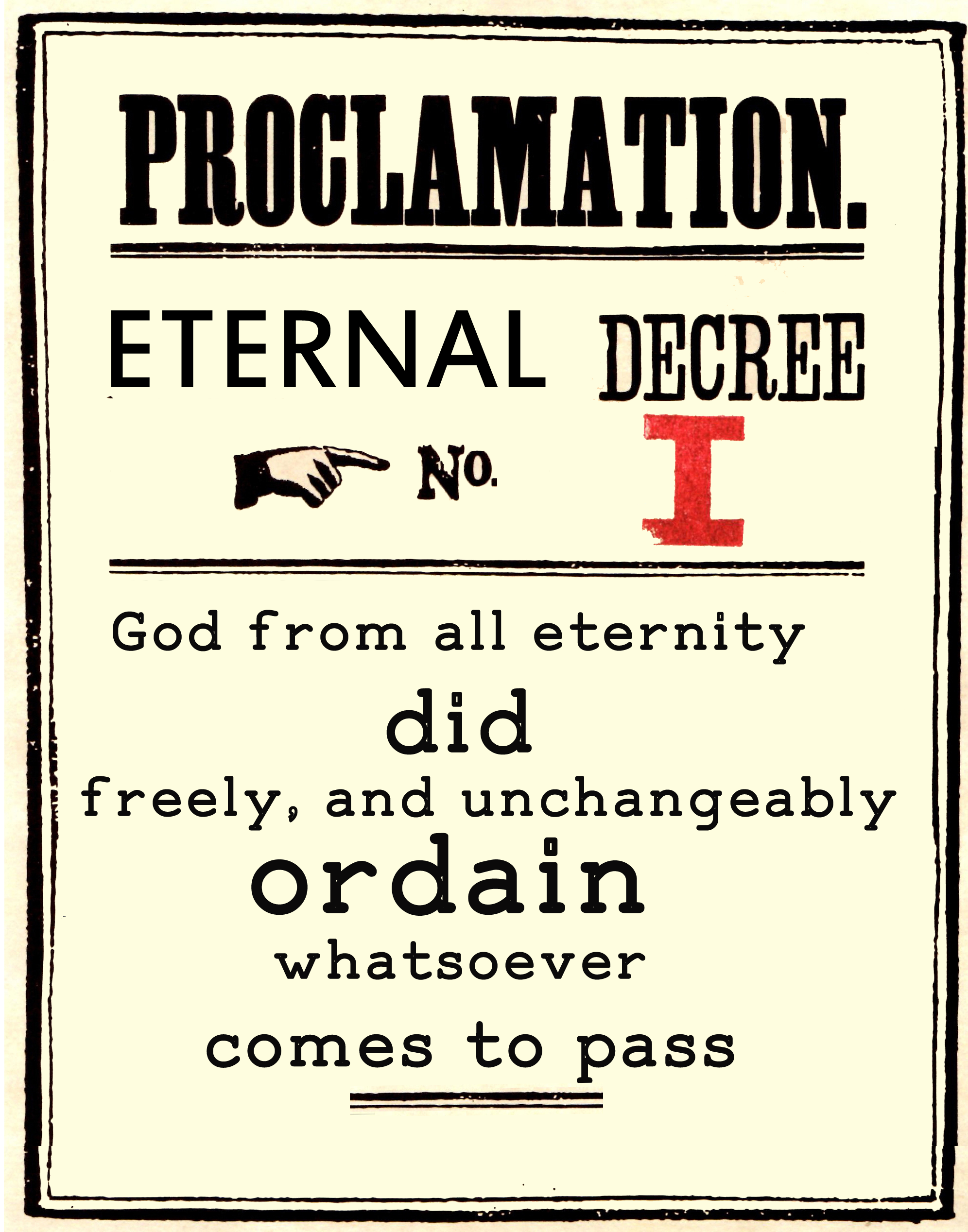
God from all eternity, did, by the most wise and holy counsel of His own will, freely, and unchangeably ordain whatsoever comes to pass

What does it mean for God to ordain all things that come to pass?

That is frustratingly difficult to answer. The word “ordain” carries the meaning of “to decree, “to set (something) that will continue in a certain order”. How God ordains all things is closely related to how one understands God’s sovereignty. There are 4 major models (outlined in this Parchment & Pen post), describing different ways in which God may exercise His sovereignty.

Continue reading

Wesley and Watson examine who is Appointed to Eternal Life (Acts 13:48)

Richard Watson (1781-1833) was an Arminian theologican. In chapter 27 of his Theological Institutes he examines several passages in Scripture that are commonly used to support unconditional election.

Unconditional election asserts that God, before the foundation of the world, made an unchangeable decree in which He chose ‘a set number of people’ out of the entire human race to receive eternal life. These elect, and only these, are given the necessary and irresistible grace that enables the person to believe.

Watson disagreed with this, asserting that the election of individuals to salvation was based on foreseen faith and the unchangeable decree that God would save, through the blood of Christ, whosoever should believe. Continue reading