Blogging Thru The Incarnation Four Views: Divine Preconscious Model (Part 2)

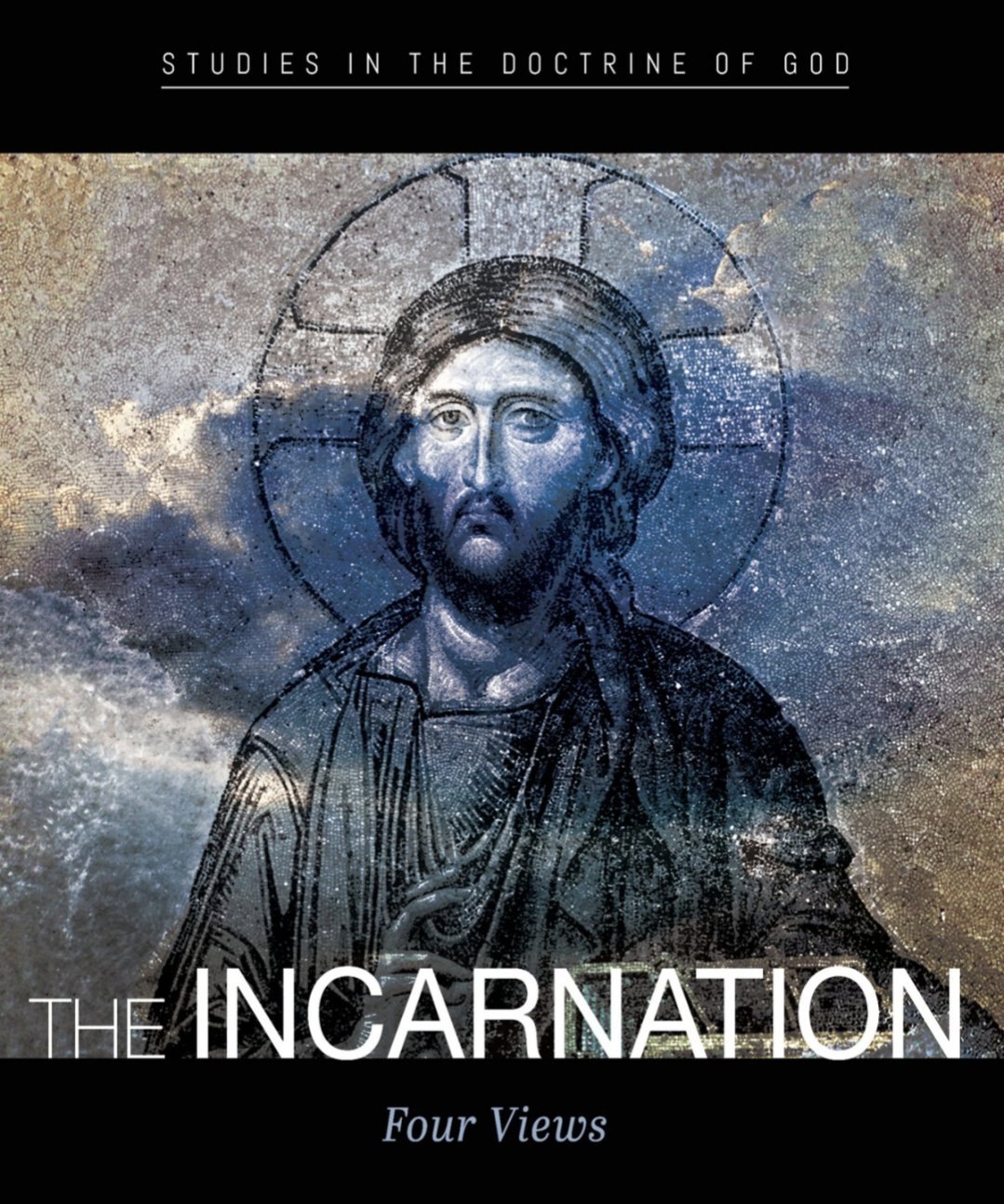
This is part of a series of posts exploring each of the views presented in The Incarnation Four Views edited by Andrew Hollingsworth and R.T. Mullins. In part one we explored the Narrow Scope Negation model. 

View 2: Divine Preconscious Model
Andrew Loke is an Associate Professor in the Department of Religion and Philosophy at Hong Kong Baptist University. Among his published works is A Kryptic Model of the Incarnation.

In building a model of the Incarnation, Andrew Loke has a different set of starting premises than Timothy Pawl. He isn’t trying to fit classical theism into his model nor does he accept the authority of the councils. One of the major concerns that Pawl raises against this model is its novelty and theological cost.1

Loke makes a valuable observation about any model that is proposed for the Incarnation.

in order to make meaningful statements about Jesus in accordance with the Scriptures and to rebut the charge of incoherence, it would be helpful if the Christian can suggest a possible model to show how concepts like omniscience and apparent limitation in knowledge can be affirmed of Jesus in such a way that no contradiction results. It is not required that the Christian come up with the actual model of the incarnation. Rather, all that is required is that he or she suggests a possible model to show how contradictions do not result. (emphasis in original) 2

C. Stephen Evans, in his critique, agrees with this idea suggesting he would “be happy if it turns out to be the case that there are other models which accomplish the same goal: providing an account of how God might become incarnate that is logically coherent and possible.” 3

There was a consistent observation highlighted in the responses of each contributor about the Divine Preconscious Model (DPM) model. It is very complex and difficult to understand.4 A notion that Loke does not back away from, noting that “On the other hand, “a great level of complexity of the model of the incarnation is only to be expected given the sheer difficulty of the idea that a person could at the same time be a human as well as the Maker of the universe.” 5

What follows is an overview of DPM.

Continue reading

Blogging Thru The Incarnation Four Views: Narrow Scope Negation (Part 1)

This summer I have been reading more about the Trinity and Christology. I was excited to see the newly published book that explores four different views on the Incarnation. It was edited by Andrew Hollingsworth and R.T. Mullins. I was unfamiliar with the four main contributors and was interested in seeing the different approaches each would take. This short blog series will cover each view with some of my thoughts.

Having read through the first entry and the responses I have a few observations regarding the book. Understanding that the authors were given a limited amount of space to make their points, they need to be judicious in describing their view. However, that should not have resulted in skipping defining key terms in detail. In addition, readers should know that when they crack the cover they are dropped into the middle of a rather deep philosophical discussion between the contributors. It can take some effort to get oriented. Finally, prior familiarity with the concepts that are part of the Trinitarian and Christological discussion is highly recommended.

View 1: Conciliar Narrow Scope Negation
Dr. Timothy Pawl is the first to present his view. He is a Professor in the Department of Philosophy at the University of St. Thomas and is noted for publishing two books on Conciliar Christology. Pawl argues that a Conciliar Christology is the foundation upon which any model of Christology should be built.

Continue reading

Blogging thru On the Incarnation: Athanasius, Faith and Free Will

This is an addendum to the series blogging through the book On the Incarnation by Athanasius. You might want to start with part 1 and work your way through the series. This is also an extension to a series of posts that explored The Early Church on Free Will. These can be found in the Series page under that heading.

In both Against the Gentiles and in On the Incarnation, Athanasius was primarily focused on articulating the reasons for the cross of Jesus. Since he is writing to believers to demonstrate the rationality of faith in Christ it isn’t surprising that he does not spend much space elaborating on how one would become a follower of Jesus.

so let the one not believing the victory over death accept the faith of Christ and come over to his teaching, and he will see the weakness of death and the victory over it. (On the Incarnation Chap 28)

In Against the Gentiles he does offer some thoughts on the decision making capability that is inherent in people made in the image of God. Whether one would anachronistically label this libertarian free will or not, Athanasius’ viewpoint would not readily align with the doctrines of original sin that would be debated nearly a century later by Augustine against Pelagius. His view on decision making also falls in line with his contemporaries and predecessors.

In chapter 4, he notes that people are “by nature mobile”. That is an odd turn of phrase. Given it is an underlying part of his understanding of humankind we should quickly touch on what Athanasius means by this claim.

For being by nature mobile … 1

Athanasius does not explain the phrase, however the idea he has in mind is likely related to the Greek philosophical ideas of motion. We saw how Athanasius draws on the idea of eudaimonia as well as motion in the series that explored On the Incarnation.

Continue reading