What is an elite Christian? If you are reading this post check out part 1 which lays out the main idea. In part 2 we looked at the Canaanite woman who was recognized for her great faith. Today we examine the centurion who was also noted for his great faith.
When he had entered Capernaum, a centurion came forward to him, appealing to him, “Lord, my servant is lying paralyzed at home, suffering terribly.” And he said to him, “I will come and heal him.” (Matt 8:5-7 ESV)
As we engage in this story we must remember that the man who approaches Jesus was a warrior in the army of Rome.
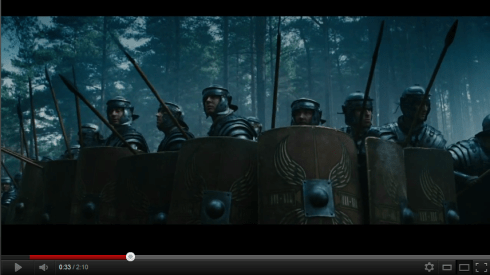
 He is a leader responsible for around 80 men, called a century. His century would be one of six that comprised a larger combat unit called a cohort. This is similar to the way the military divides men into platoons, companies, and battalions today. As a centurion this man has lead troops into battle. And he has charged the enemy lines and faced his enemy face to face in combat. He has likely killed many people during these battles. The centurion is a tough and strong individual who has earned the right to lead.
Not every man was fit for service in the Roman army. According to Book 1 of “De Re Militaria” (On Military Matters), dating to the 4th century, the new recruit was evaluated before being accepted as a Roman soldier:
The recruit, however, should not receive the military mark as soon as enlisted. He must first be tried if fit for service; whether he has sufficient activity and strength; if he has capacity to learn his duty; and whether he has the proper degree of military courage. For many, though promising enough in appearance, are found very unfit upon trial. These are to be rejected and replaced by better men; for it is not numbers, but bravery which carries the day.
And from Book II of the same work, fewer still would be fit to serve as a centurion. This person was one who excelled in the art of combat, discipline, and self-control:
The centurion in the infantry is chosen for his size, strength and dexterity in throwing his missile weapons and for his skill in the use of his sword and shield; in short for his expertness in all the exercises. He is to be vigilant, temperate, active and readier to execute the orders he receives than to talk; Strict in exercising and keeping up proper discipline among his soldiers, in obliging them to appear clean and well-dressed and to have their arms constantly rubbed and bright.
This man has likely formed a strong relationship with his servant, having relied on each other through many trying times. Showing both compassion and humility he realizes his friend needs more help then he can provide, so the centurion approaches Jesus. Recognizing the man’s faith and humility, Jesus is ready to heal the centurion’s servant by offering to go to his house.
Who is serving who?
Most people like when people drop everything to take care of their request. They would respond “great, Lord, let’s go”. That’s what I would have done. I would have been so focused on getting what I wanted that I would grab Jesus by the arm and start heading toward home. But the centurion is not like most people.
… the centurion replied, “Lord, I am not worthy to have you come under my roof, but only say the word, and my servant will be healed. For I too am a man under authority, with soldiers under me. And I say to one, ‘Go,’ and he goes, and to another, ‘Come,’ and he comes, and to my servant, ‘Do this,’ and he does it.”
This warrior must have known that Jesus was sent from God and able to heal otherwise he would not have sought Him out. But he also understands that anyone who can heal a broken body and restore a person back to health is someone with authority. He reasons that if an officer in the Roman army can issue commands to the soldiers under him with the full expectation that they will be carried out then Jesus can issue the command for the healing and it will be accomplished.
And anyone with authority over the physical world and diseases has authority over him and deserves to be served and obeyed. Not serve him. Just as John the Baptist knew that he was unworthy to untie the sandals of the Messiah, the centurion puts it all together and humbly realizes that he is not worthy of having Jesus come to his home.
And that is what I would have missed. In my pride I would not have recognized how unworthy I really was in the presence of Jesus. I would have expected Jesus to come follow me to my house. I expect Jesus to fulfill my requests. Now, the account doesn’t tell us what Jesus and his disciples were doing, but whatever it was, the centurion had just interrupted them. Had I been there I would have put Jesus “in a box” and expected Him to do what He has always done and heal through physical contact. Jesus would have come and altered His plans and come to heal my friend. But I would have missed out on truly understanding the power and authority of Jesus.
When Jesus heard this, he marveled and said to those who followed him, “Truly, I tell you, with no one in Israel have I found such faith. I tell you, many will come from east and west and recline at table with Abraham, Isaac, and Jacob in the kingdom of heaven, while the sons of the kingdom will be thrown into the outer darkness. In that place there will be weeping and gnashing of teeth.” And to the centurion Jesus said, “Go; let it be done for you as you have believed.” And the servant was healed at that very moment.
Take me to your leader
Most people like to be in authority rather than under authority. But the centurion is not like most people and Jesus is amazed at his response. To be under authority requires humility and the recognition that another has control and power over you.
Paul, writing his last (extant) letter to Timothy before his pending execution reminds us that serving Jesus takes hard work:
Take your share of suffering as a good soldier of Christ Jesus. No one in military service gets entangled in matters of everyday life; otherwise he will not please the one who recruited him. (NET 2 Tim 2:3-4)
He compares serving Jesus to being a soldier who was to work hard and focus on his training so that he might be prepared to fight and engage in battle. His focus must be on obeying the one who is in command. Without a good leader to train and exercise his men they are unprepared and on the battle field they are more vulnerable. Without the trust and respect for the leader and his authority the soldiers will be disorganized and defeated when the enemy advances.
Jesus said, “no one can serve two masters, for either he will hate the one and love the other, or he will be devoted to the one and despise the other.” He also said “all authority in heaven and on earth has been given to me”. If we are going to be elite we are going to have to be like the centurion who was humble enough to accept the authority of Jesus.


 Dead Heroes Don't Save