Blogging Thru The Incarnation Four Views: Relative Identity Model (Part 4)

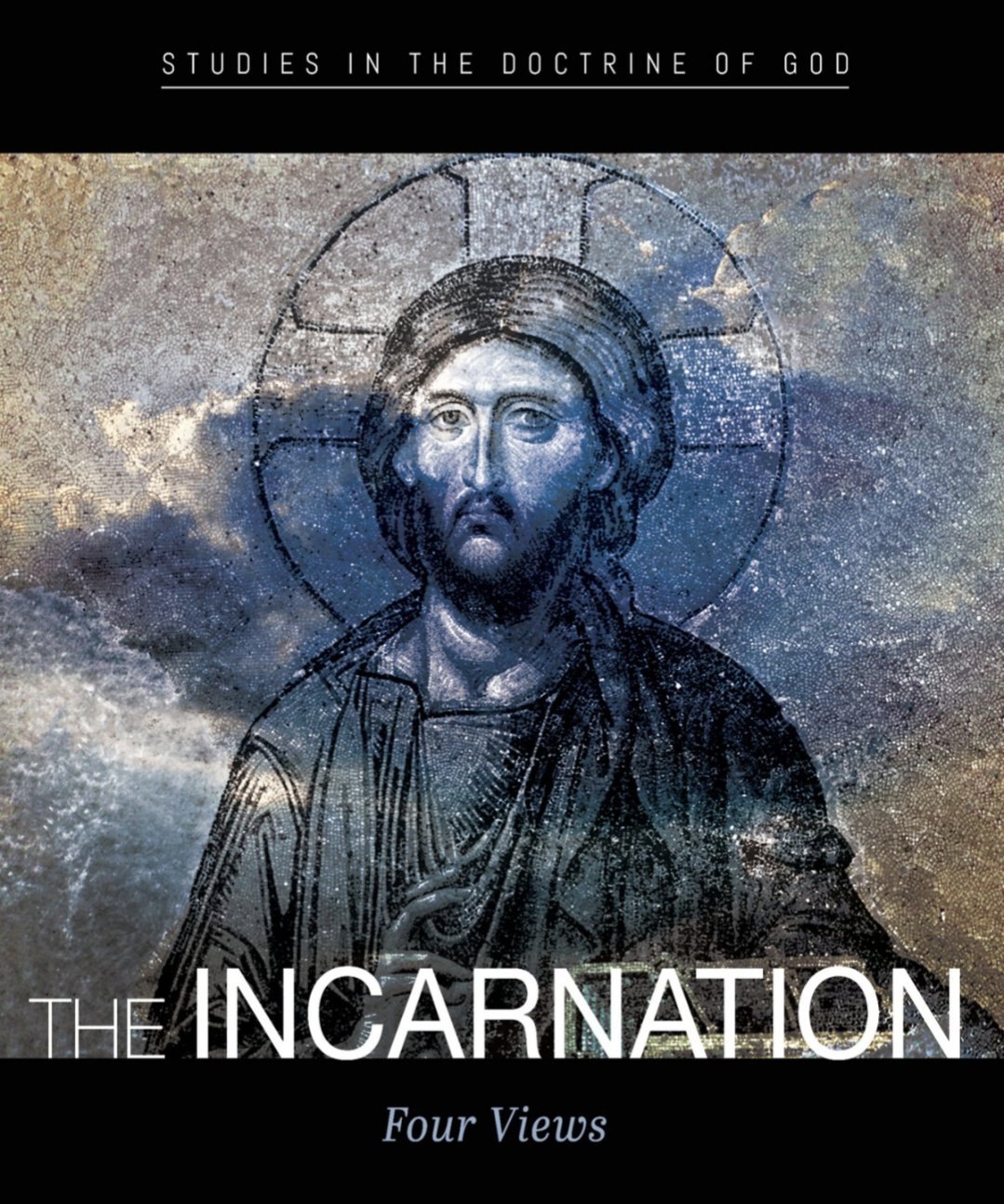
This is part of a series of posts exploring each of the views presented in The Incarnation Four Views edited by Andrew Hollingsworth and R.T. Mullins. 

View 4: Relative Identity
Joseph Jedwab is an Associate Professor of Philosophy and Government at Kutztown University. He has published several papers, including a review of Timothy Pawl’s In Defense of Conciliar Christology.

Jedwab has the unusual position of writing and defending a model that he does not hold.1 In fact he admits that he doesn’t endorse any model, but does encourage the proposal of many possible models to solve the challenges of the Incarnation.2

Examining the Relative Identity (RI) model he presents is going to be a challenge due to its complexity. Two of the contributors, Loke and Evans, note that they are confused. 3 The other contributor, Pawl, admits that Jedwab’s essay is “daunting”.4 And, I remind you, these are philosophy professors.

One more thing worth noting is that RI, like NSN, sees the Incarnation as a logic problem and relies on formal logic to present the premises in a way that is non-contradictory. Unlike the two kenotic models, RI does not provide a positive explanatory story about how Jesus can be fully divine and human. A point that Jedwab concedes.

The RI model, though, leaves us with a mystery. We cannot fully understand how it could be that different persons are the same being or that different beings are the same person. 5

In his essay Jedwab presents several pages of logical premises and conceptual truths that present apparent contradictions. He also presents several formulas related to RI relations to work through a possible solution.

An example of an apparent contradiction might be (numbering carried over from the essay):

  • P1: The Son is divine and human 6
  • P2: Everything divine is uncreated
  • P3: Everything human is created

The RI model seeks to solve for the contradictory claim that the Son is both uncreated and created.

Before digging into the basics of what RI relations can offer Christology as a solution, I will do my best to explain what the RI model sets out to do more broadly first.

Identity
The philosophical problem of identity is brought to the forefront in this proposed model. The absolute (or standard) model of identity has four major properties.7

Continue reading

Blogging Thru The Incarnation Four Views: Kenotic Christology (Part 3)

This is part of a series of posts exploring each of the views presented in The Incarnation Four Views edited by Andrew Hollingsworth and R.T. Mullins. In part one we explored the Narrow Scope Negation model. In part two we explored the Divine Preconscious model.

View 3: Kenotic Christology
C. Stephen Evans is a Professor of Philosophy and Humanities at Baylor University. He was editor, as well as an author, for a collection of essays published in Exploring Kenotic Christology: The Self-Emptying of God.

Like Andrew Loke, Evans notes that his model for the Incarnation may not be “the correct account of how God became human.” 1 Rather his model may be one of several possible models that could be true since it demonstrates that “the doctrine of the incarnation is [not] incoherent.” 2

Evans, like Loke, builds a model of the Incarnation on the idea of kenosis. He also notes, like Loke, that his model is not compatible with a strong view of classical theism. 3 However, he also argues that his model, like Pawl’s, is consistent with the conciliar understanding of Jesus.4

In evaluating Evans’ essay, the other contributors noted a lack of precision in several areas. These include what parts of the conciliar affirmations are required for orthodoxy and which can be set aside and what model of kenosis is adopted.5 To this I would add his essay lacked a clear definition of how he understands “nature” and “person”. 6

What is a nature?
Evans clearly holds that Jesus is fully human and fully divine possessing the essential properties of both. 7 However he rejects that Jesus has two concrete natures. Remember from part 1 that a concrete nature is, itself, a particular entity and is the instantiation of a universal abstract nature. For example, Socrates the human is a concrete nature in whom the abstract universal of “humanness” is real.

For the first two contributors the person Jesus, as incarnate, is a unique entity that possesses two concrete natures, which are themselves entities. Jesus has a concrete divine nature and assumes a concrete human nature, giving Him two natures in which there was no mixture or confusion. 8

Continue reading

Blogging Thru The Incarnation Four Views: Divine Preconscious Model (Part 2)

This is part of a series of posts exploring each of the views presented in The Incarnation Four Views edited by Andrew Hollingsworth and R.T. Mullins. In part one we explored the Narrow Scope Negation model. 

View 2: Divine Preconscious Model
Andrew Loke is an Associate Professor in the Department of Religion and Philosophy at Hong Kong Baptist University. Among his published works is A Kryptic Model of the Incarnation.

In building a model of the Incarnation, Andrew Loke has a different set of starting premises than Timothy Pawl. He isn’t trying to fit classical theism into his model nor does he accept the authority of the councils. One of the major concerns that Pawl raises against this model is its novelty and theological cost.1

Loke makes a valuable observation about any model that is proposed for the Incarnation.

in order to make meaningful statements about Jesus in accordance with the Scriptures and to rebut the charge of incoherence, it would be helpful if the Christian can suggest a possible model to show how concepts like omniscience and apparent limitation in knowledge can be affirmed of Jesus in such a way that no contradiction results. It is not required that the Christian come up with the actual model of the incarnation. Rather, all that is required is that he or she suggests a possible model to show how contradictions do not result. (emphasis in original) 2

C. Stephen Evans, in his critique, agrees with this idea suggesting he would “be happy if it turns out to be the case that there are other models which accomplish the same goal: providing an account of how God might become incarnate that is logically coherent and possible.” 3

There was a consistent observation highlighted in the responses of each contributor about the Divine Preconscious Model (DPM) model. It is very complex and difficult to understand.4 A notion that Loke does not back away from, noting that “On the other hand, “a great level of complexity of the model of the incarnation is only to be expected given the sheer difficulty of the idea that a person could at the same time be a human as well as the Maker of the universe.” 5

What follows is an overview of DPM.

Continue reading