
This is part 3 of the series blogging through the book On the Incarnation by Athanasius. You might want to start with part 1 and work your way through the series.
Having established the proper state of mankind, Athanasius traces the origin and history of evil all the way to its worse form, which for him is idolatry. Don’t worry, we won’t get too bogged down in all of the arguments or the refutations that Athanasius offers against idols.
In Against the Gentiles, he starts off chapter 2 saying:
In the beginning wickedness did not exist. 1
With these words Athanasius takes us back to the Genesis account and creation.
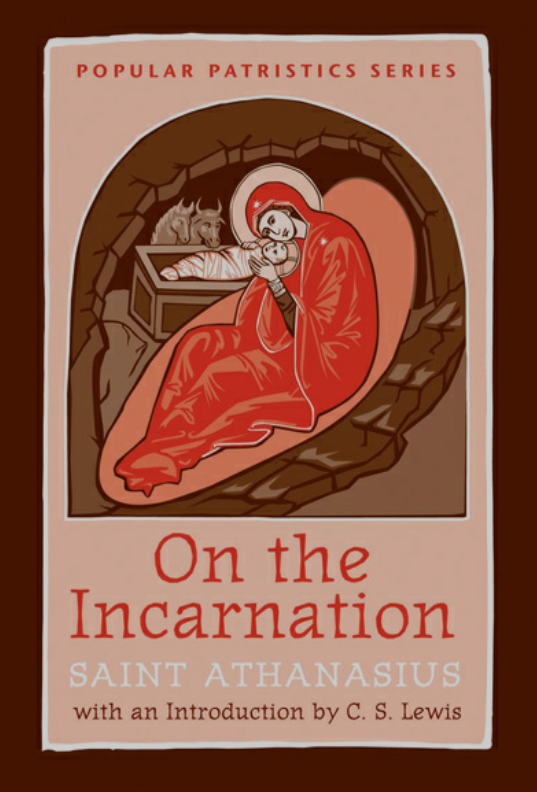
In the early part of On the Incarnation, Athanasius will tell us that it will “be necessary to speak about the creation of the universe” in order to understand why Christ came in bodily form. In that work he will examine more closely the Fall and its impacts. Here, in Against the Gentiles, he delves into how man left the proper state and brought about evil with broader brush strokes.
But men later on began to contrive [wickedness] and to elaborate it to their own hurt. Whence also they devised the invention of idols, treating what was not as though it were.
Describing God as “good and exceedingly noble”, Athanasius will later say (in chapter 4):
But good is, while evil is not; by what is, then, I mean what is good, inasmuch as it has its pattern in God Who is. But by what is not I mean what is evil, in so far as it consists in a false imagination in the thoughts of men.
In describing evil and idols as things that are not or as false imaginations; Athanasius is not denying that evil exists but rather disassociating its existence from God. Evil is brought about by mankind.
[Some Greeks acknowledge] that He is maker of all things, they will of necessity admit Him to be maker of evil also. For evil, according to them, is included among existing things. But this must appear paradoxical and impossible. For evil does not come from good, nor is it in, or the result of, good, since in that case it would not be good, being mixed in its nature or a cause of evil. (ch 6)
… the truth of the Church’s theology must be manifest: that evil has not from the beginning been with God or in God, nor has any substantive existence; but that men, in default of the vision of good, began to devise and imagine for themselves what was not, after their own pleasure. (ch 7)
How then did evil, which was not, become a reality? Athanasius answers, mankind “forgot the power they originally had from God” to contemplate Him but rather, having been made “with power over herself” such that people could “on the one hand incline to what is good, so on the other to reject it”, chose to make “novel use of her power.”
The history of evil in a nutshell starts when people shifted their contemplation from God to “things nearer to themselves.” These things that are nearer are the body and the senses. We might say that they shifted their attention from the supernatural to the natural. Once they did this they began to prefer thinking about these closer, natural, things over the divine.
And by considering themselves and holding to the body and the other senses, and deceived as it were in their own things, they fell into desire for themselves, preferring their own things to the contemplation of divine things.2
AGainst the Gentiles chapter 3
As they “felt more at home in these things”, and explored “bodily pleasure”, it was a steady descent from virtue to vice.
seeing that pleasure is good … thought that pleasure was the very essence of good. … But having fallen in love with pleasure, she began to work it out in various ways. (ch 4)
Athanasius suggests that the path to evil started first with a focus on worldly things, that in themselves were not evil. Being an insatiable people, the pleasures of the world began to gratify mankind less and less. The next move was “learn[ing] to commit murder and wrong.” Like pleasure, commission of moral wrongs lost its appeal and mankind was no longer “satisfied with the devising of evil”. From here mankind would do even worse things. What is worse than evil? For Athanasius it is forgetting about God and imagining that the things of the world are gods.
In chapter 9, Athanasius traces the development of idolatry in all its forms describing it as “going lower in their ideas and imaginations” and “having fallen lower and lower from the idea of God” to giving “the honor due to God” to:
- the heaven and the sun and moon and stars
- then celebrating as gods the major elements of which physical things are composed
- then setting up as gods men, and the forms of men
- then transferring the divine and supernatural name of God to stones and animals
- then making gods of things that have no existence at all such as dog-headed, snake-headed, ass-headed and ram-headed gods
Coming full circle, mankind moves to deifying “the motive of the invention of these things” as they begin to worship “pleasure and lust” in the form of gods and goddesses like Eros and Aphrodite.
In the sequel, On the Incarnation, Athanasius will summarize this as follows:
For even in their transgressions human beings had not stopped short of any defined limits, but gradually pressing forward they had passed beyond all measure: from the beginning they were inventors of evil and called death and corruption down upon themselves; while later, turning to vice and exceeding all lawlessness, not stopping at one evil but contriving in time every new evil, they became insatiable in sinning.3
On the INCARNATION chapter 4
Having laid out the origin of evil and idolatry, Athanasius describes mankind as a charioteer who is on a race-course paying no attention to “the goal toward which he should be driving” but instead is enamored only with the running itself. Having lost sight of the goal, the charioteer and by extension mankind, has strayed from the prize – the high calling of Christ.
- All quotes from Against the Gentiles from New Advent translation unless otherwise noted.
https://www.newadvent.org/fathers/2801.htm ↩︎ - Athanasius, Saint, Patriarch of Alexandria. On the Incarnation: Saint Athanasius (Popular Patristics Series Book 44) (p. 23). St Vladimir’s Seminary Press. Kindle Edition. ↩︎
- Ibid pp. 51-52. ↩︎
 Dead Heroes Don't Save