Blogging Thru The Incarnation Four Views: Conciliar Christology Calmly Considered (Part 5)

This is part of a series of posts exploring each of the views presented in The Incarnation Four Views edited by Andrew Hollingsworth and R.T. Mullins

Having covered each of the models of the Incarnation presented in the Four Views book, I thought I would extend the series by exploring some of the topics that were brought up.
In the first essay Timothy Pawl defined Conciliar Christology as that which was “officially endorsed by the seven ecumenical councils.” 1 He argues that “Conciliar Christology is therefore the traditional, orthodox Christology of the Christian faith” and “is our shared intellectual and theological heritage.” 2

In his critique of Evans’ essay, Pawl asks the question “what counts as orthodoxy.” This was a pointed question raised against Evans’ assertion that his model was orthodox and consistent with the creedal claims about Jesus. 3 Pawl goes on to assert that orthodoxy regarding Christology goes beyond the statements made in the creeds and should include other conciliar documents.4 He argues that one should outline what conciliar documents are being considered, what the councils taught and how one’s model is consistent with them to justify the claim.5

For it is one thing to be persuaded
of the existence of a thing,
and quite another to know what it is.

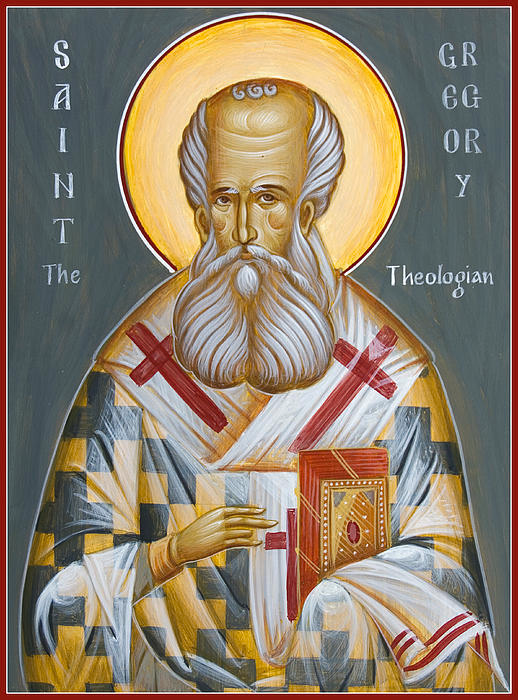
Gregory of Nazianzus

In his response to Andrew Loke, Pawl critiques the novelty of his model and the reinterpretation of terminology. But Pawl does go on to admit that “all the technical mechanics of the philosophical understanding of the doctrine of the incarnation were novel at some point or other.” 6 The history regarding the “standard terms” shows that they were anything but, undergoing revision over the centuries.

These exchanges in the book brought up an interesting question. What does count as orthodoxy? Even if we appeal to the ancient creeds and councils, does orthodoxy require all of the seven councils or just the earliest ones? Does it require only the creeds or should the canons, letters and other documents be included? Perhaps most interestingly, does orthodoxy require acceptance of the ancient metaphysics or is accounting for the broader claims made about the Trinity and Incarnation enough to count?

Continue reading →
Blogging Thru The Incarnation Four Views: Narrow Scope Negation (Part 1)

This summer I have been reading more about the Trinity and Christology. I was excited to see the newly published book that explores four different views on the Incarnation. It was edited by Andrew Hollingsworth and R.T. Mullins. I was unfamiliar with the four main contributors and was interested in seeing the different approaches each would take. This short blog series will cover each view with some of my thoughts.

Having read through the first entry and the responses I have a few observations regarding the book. Understanding that the authors were given a limited amount of space to make their points, they need to be judicious in describing their view. However, that should not have resulted in skipping defining key terms in detail. In addition, readers should know that when they crack the cover they are dropped into the middle of a rather deep philosophical discussion between the contributors. It can take some effort to get oriented. Finally, prior familiarity with the concepts that are part of the Trinitarian and Christological discussion is highly recommended.

View 1: Conciliar Narrow Scope Negation
Dr. Timothy Pawl is the first to present his view. He is a Professor in the Department of Philosophy at the University of St. Thomas and is noted for publishing two books on Conciliar Christology. Pawl argues that a Conciliar Christology is the foundation upon which any model of Christology should be built.

Continue reading →

The Memoirs of Peter on the Life of Jesus with John Mark

The earlier posts in this series (part 1) explored the early evidence that a person named Mark is the author of the book we call the Gospel of Mark. This author was further identified as John Mark who makes brief appearances throughout the NT (part 6).

There is a prevailing opinion that the Gospels were not written by eyewitnesses and that those who did write them did not consult the eyewitnesses. These authors simply wrote the stories that they had heard.

Even though there may well have been eyewitnesses alive some 35-40 years after Jesus’ death, there is no guarantee – or, I would argue, no reason to think – that any of them were consulted by the authors of the Gospels when writing their accounts. The eyewitnesses would have been Aramaic speaking peasants almost entirely from rural Galilee. Mark was a highly educated, Greek speaking Christian living in an urban area outside of Palestine (Rome?), who never traveled, probably, to Galilee. So the existence of eyewitnesses would not have much if any effect on his Gospel. (emphasis added) 1
– Bart Ehrman

While Mark was not a disciple of Jesus during His earthly ministry the extant evidence affirms that he wrote down what Peter was teaching and proclaiming. Peter was, of course, an eyewitness and one of the three closest disciples to Jesus. We have seen that Mark and Peter would have known each other over a period of decades. This familiarity would give the author of the Gospel of Mark lots of opportunities to talk with him, ask questions and to hear his teaching. In addition, Mark’s mother was hosting meetings where Christians would gather. There would be no reason to think that most of the people that assembled were also eyewitnesses of Jesus’ teaching and healing (Acts 2:22; 12:12). Mark would have met and conversed with them as well. That should counter any idea that eyewitnesses did not have much effect on what was written.

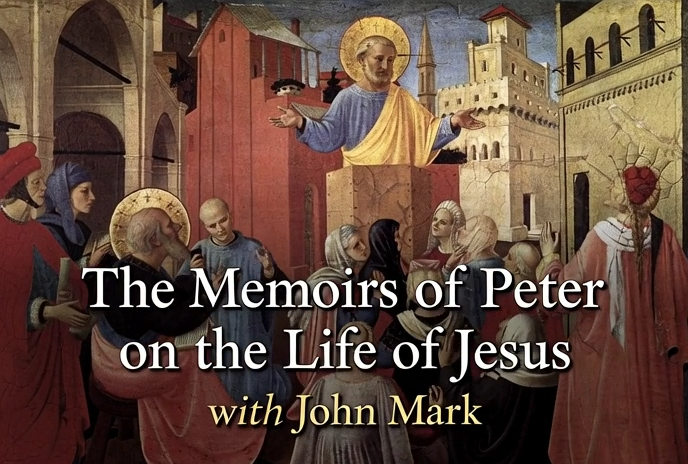
AI generated image from the Fra Angelico painting of St Peter Preaching in the Presence of St Mark
Continue reading →