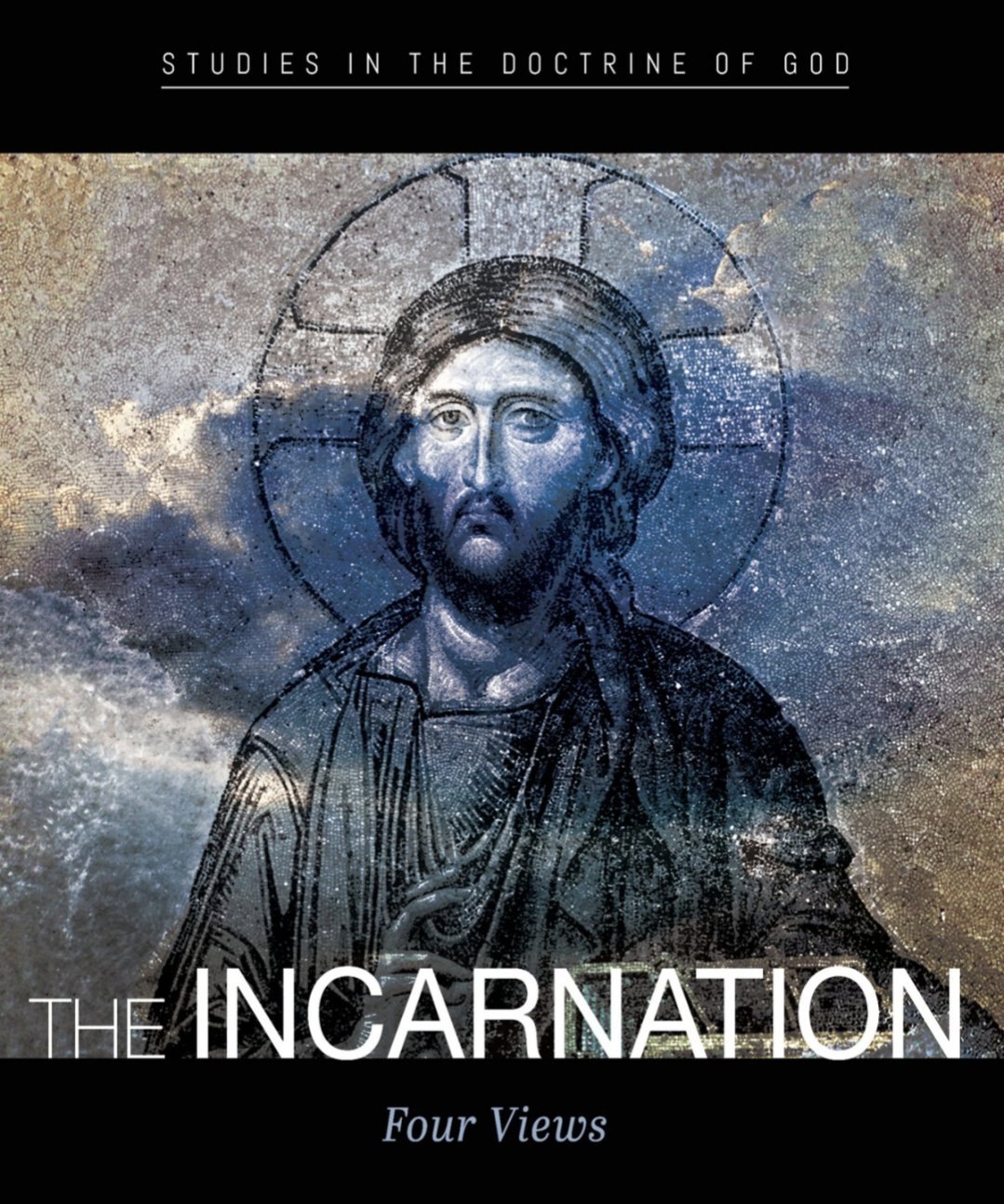
Blogging Thru The Incarnation Four Views: Kenotic Christology (Part 3)

This is part of a series of posts exploring each of the views presented in The Incarnation Four Views edited by Andrew Hollingsworth and R.T. Mullins. In part one we explored the Narrow Scope Negation model. In part two we explored the Divine Preconscious model.

View 3: Kenotic Christology
C. Stephen Evans is a Professor of Philosophy and Humanities at Baylor University. He was editor, as well as an author, for a collection of essays published in Exploring Kenotic Christology: The Self-Emptying of God.

Like Andrew Loke, Evans notes that his model for the Incarnation may not be “the correct account of how God became human.” 1 Rather his model may be one of several possible models that could be true since it demonstrates that “the doctrine of the incarnation is [not] incoherent.” 2

Evans, like Loke, builds a model of the Incarnation on the idea of kenosis. He also notes, like Loke, that his model is not compatible with a strong view of classical theism. 3 However, he also argues that his model, like Pawl’s, is consistent with the conciliar understanding of Jesus.4

In evaluating Evans’ essay, the other contributors noted a lack of precision in several areas. These include what parts of the conciliar affirmations are required for orthodoxy and which can be set aside and what model of kenosis is adopted.5 To this I would add his essay lacked a clear definition of how he understands “nature” and “person”. 6

What is a nature?
Evans clearly holds that Jesus is fully human and fully divine possessing the essential properties of both. 7 However he rejects that Jesus has two concrete natures. Remember from part 1 that a concrete nature is, itself, a particular entity and is the instantiation of a universal abstract nature. For example, Socrates the human is a concrete nature in whom the abstract universal of “humanness” is real.

For the first two contributors the person Jesus, as incarnate, is a unique entity that possesses two concrete natures, which are themselves entities. Jesus has a concrete divine nature and assumes a concrete human nature, giving Him two natures in which there was no mixture or confusion. 8

Continue reading

Blogging Thru The Incarnation Four Views: Narrow Scope Negation (Part 1)

This summer I have been reading more about the Trinity and Christology. I was excited to see the newly published book that explores four different views on the Incarnation. It was edited by Andrew Hollingsworth and R.T. Mullins. I was unfamiliar with the four main contributors and was interested in seeing the different approaches each would take. This short blog series will cover each view with some of my thoughts.

Having read through the first entry and the responses I have a few observations regarding the book. Understanding that the authors were given a limited amount of space to make their points, they need to be judicious in describing their view. However, that should not have resulted in skipping defining key terms in detail. In addition, readers should know that when they crack the cover they are dropped into the middle of a rather deep philosophical discussion between the contributors. It can take some effort to get oriented. Finally, prior familiarity with the concepts that are part of the Trinitarian and Christological discussion is highly recommended.

View 1: Conciliar Narrow Scope Negation
Dr. Timothy Pawl is the first to present his view. He is a Professor in the Department of Philosophy at the University of St. Thomas and is noted for publishing two books on Conciliar Christology. Pawl argues that a Conciliar Christology is the foundation upon which any model of Christology should be built.

Continue reading

A Machete Order Reading of the Bible (OT): The Story of Israel

Many people make it an annual goal to read the Bible all the way through. Most who attempt this do so literally, starting at page one and reading the books in the order they appear in the table of contents. There is nothing wrong with that approach but is it the best way to read it?

Reading the Bible, regardless of the order, is better than not reading it. Still, there is nothing wrong with exploring different approaches to how we read Scripture, especially if those approaches might help us better understand what we are reading.

Many years ago, I put together a New Testament “machete” reading order, inspired by the suggestion on the best way to watch the Star Wars movies. You can find this NT reading plan at this link. Putting that reading plan together was fairly straightforward. The NT is a small corpus that covers a short period of history.

Attempting something similar with the Old Testament has always been a bit more daunting. It has been over a decade and I am just getting to it now. What makes it a more difficult project? There are a few things. For starters, the story of Israel occurs over a span of at least two millennia stretching across the Bronze and Iron Ages. Since the order of books are not arranged chronologically it can be difficult for a reader to follow Israel’s story as it moves from Abraham to Malachi. Long genealogies and extended sections of legal material can also make it hard for the reader to follow the story as they interrupt the narrative flow.

Continue reading