
This is part 4 of the series blogging through the book On the Incarnation by Athanasius. You might want to start with part 1 and work your way through the series.
On Feb 14, 1990, Voyager 1 sent back its famous image of the “pale blue dot”, capturing how large and vast the universe is. This was taken some 3.7 billion miles from the sun as the probe left our solar system. 1 However, the idea that the universe was larger than our solar system, something we take for granted as a well established fact, was still a debated idea until Jan 1, 1925.2
When we affirm that the heavens declare the glory of God, we have a very different mental model and understanding of these heavens than Athanasius and his contemporaries did living in the fourth century. However, that doesn’t mean that in each age the creation doesn’t “make known, and witness to, the Father of the Word, Who is the Lord and Maker of these [things]” 3

In noting that “it is first necessary to speak about the creation of the universe and its Maker”, Athanasius quickly affirms creation ex nihilo, an act performed by the Father through the Word.
God is not weak, but from nothing and having absolutely no existence God brought the universe into being through the Word 3
On the Incarnation chap 3
In On the Incarnation, Athanasius explores creation as it relates to the incarnation and the cross. A topic that we will explore later in this series. In Against the Gentiles the emphasis is on how creation declares a Creator. It is in this earlier work that we get a brief description of how Athanasius understands the universe. That will be the focus on this particular entry in the blogging series.
For Athanasius, as noted already, the model of the universe was very different from what we know today. It would be incredibly smaller, at least from our point of view. In a prior series we explored ancient cosmology and the major characteristics from the point of view of a person living in the fourth century5
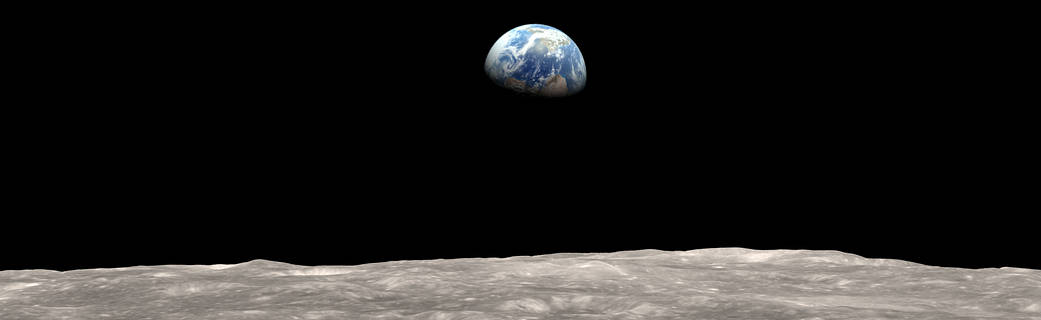
Some of these characteristics included:
- a small universe that would comprise only part of our solar system
- a geocentric model where the earth is stationary and at the center of the universe
- a universe made up of four or five elements – fire, water, air, earth and aether
As Athanasius describes the universe we can see these characteristics.
For the Sun is carried round along with, and is contained in, the whole heaven, and can never go beyond his own orbit, while the moon and other stars testify to the assistance given them by the Sun… the earth is not supported upon itself, but is set upon the realm of the waters, while this again is kept in its place, being bound fast at the centre of the universe. And the sea, and the great ocean that flows outside round the whole earth, is moved and borne by winds wherever the force of the winds dashes it. And the winds in their turn originate, not in themselves, but according to those who have written on the subject, in the air, from the burning heat and high temperature of the upper as compared with the lower air, and blow everywhere through the latter. (ch 27) 6
Later in chapter 36, Athanasius will write:
Or who that sees the earth, heaviest of all things by nature, fixed upon the waters, and remaining unmoved upon what is by nature mobile, will fail to understand that there is One that has made and ordered it, even God? … And again, earth is very heavy, while water on the other hand is relatively light; and yet the heavier is supported upon the lighter, and the earth does not sink, but remains immoveable.
From these brief descriptions, we find at the center of the universe a stationary earth floating in the celestial waters. In these waters the Sun, moon and stars orbit the earth along with some of the core elements.
Athanasius dedicated a fair amount of space in the prequel to On the Incarnation attempting to show how creation pointed to a Creator. He does this using the common understanding of the universe, the science of his day, to drive home his points. His arguments can be summarized into two major categories.
- God does not consist of parts as the universe does (ch 27-29)
- The order and harmony of the universe require One that can bring that about (ch 35-38)
God is a Whole and not a number of Parts
Starting in chapter 27, Athanasius directs his argument against those who “stand in awe of Creation” yet worship the parts of the universe, such as the sun, moon or earth, instead of the Creator.
His argument can be broken down as describing the parts of the universe and then comparing that to God.
- each part of the universe is dependent on the others
- each part of the universe can overpower other parts of the universe
- each part of the universe is unlike other parts, having a different function
- each part of the universe is visible
But God is:
- self-sufficient and not dependent on others, all things depend on Him
- almighty and overpowers all things
- not comprised of parts but rather is a singular whole that can’t be separated
- an invisible and spiritual Being
These excerpts will highlight the case in Athanasius’ own words.
First he asserts that worshipping any part of the universe, such as the sun, is foolish. For clearly each part of the universe is dependent on the others.
For if men are thus awestruck at the parts of Creation and think that they are gods, they might well be rebuked by the mutual dependence of those parts; … For if a man take the parts of Creation separately, and consider each by itself … he will certainly find that not one is sufficient for itself but all are in need of one another’s assistance, and subsist by their mutual help. (ch 27)
How then can these things be gods, seeing that they need one another’s assistance? Or how is it proper to ask anything of them when they too ask help for themselves one from another? (ch 28)
In a later section he shows how each part is both dependent and over-powered by other parts of creation.
For when the sun is under the earth, the earth’s shadow makes his light invisible, while by day the sun hides the moon by the brilliancy of his light. And hail ofttimes injures the fruits of the earth, while fire is put out if an overflow of water take place. And spring makes winter give place, while summer will not suffer spring to outstay its proper limits, and it in its turn is forbidden by autumn to outstep its own season. If then they were gods, they ought not to be defeated and obscured by one another, but always to co-exist, and to discharge their respective functions simultaneously. (ch 29)
Athanasius asks us to consider how we can treat the parts of the universe as gods for surely a God would not need help from others.
For if it is an admitted truth about God that He stands in need of nothing, but is self-sufficient and self-contained, and that in Him all things have their being, and that He ministers to all rather than they to Him, how is it right to proclaim as gods the sun and moon and other parts of creation, which are of no such kind, but which even stand in need of one another’s help? (ch 28)
He will then move the argument along asking suppose “our opponents admit [the parts] are dependent” and then decide to argue that taken together they “will say that the whole is God” and is no longer dependent on anything else.
Athanasius then advances the argument that even the universe taken as a combination of the parts is an inferior god. It may be reading into Athanasius’ argument if we assume that he is agreeing to all of the concepts that are involved with Divine Simplicity. It isn’t clear, for example, that Athanasius would argue from this that all of God’s attributes (just, loving, omniscient etc) are in some way identical to all the other attributes of God.
However, Athanasius is certainly arguing that God is not composed of diverse parts. The parts of the universe are clearly distinct and have different functions. These individual parts must be brought together to form the whole. For Athanasius, the Being that brings the parts together is one that can also separate them. It is this Being that has power over them and is truly God.
For if the combination of the parts makes up the whole, and the whole is combined out of the parts, then the whole consists of the parts, and each of them is a portion of the whole. But this is very far removed from the conception of God.
For God is a whole and not a number of parts, and does not consist of diverse elements, but is Himself the Maker of the system of the universe. … For if He consists of parts, certainly it will follow that He is unlike Himself, and made up of unlike parts. For if He is sun, He is not moon, and if He is moon, He is not earth, and if He is earth, He cannot be sea: and so on, taking the parts one by one, one may discover the absurdity of this theory of theirs.
…but each of these has its own function, and a single body is composed of these distinct parts — having its parts combined for use, but destined to be divided in course of time when nature, that brought them together, shall divide them at the will of God, Who so ordered it (ch 28)
He then advances his argument succinctly pointing out that God is not visible as the parts of the universe are, nor can anything have power over Him as the various parts of the universe have over each other.
For if God is incorporeal and invisible and intangible by nature, how do they imagine God to be a body, and worship with divine honor things which we both see with our eyes and touch with our hands? And again, if what is said of God hold true, namely, that He is almighty, and that while nothing has power over Him, He has power and rule over all, how can they who deify creation fail to see that it does not satisfy this definition of God? (ch 29)
We may not draw much from these arguments as we rarely find people who worship creation as did those Athanasius argues against. However, we can learn a lot about how Athanasius understood the universe and more importantly how he understood God.
For Athanasius, though his conception of the universe may differ from what we know today, the heavens still declare the glory of God and …
it suffices that Creation almost raises its voice against them, and points to God as its Maker and Artificer, Who reigns over Creation and over all things, even the Father of our Lord Jesus Christ; Whom the would-be philosophers turn from to worship and deify the Creation which proceeded from Him, which yet itself worships and confesses the Lord Whom they deny on its account. (ch 27)
- Voyager’ 1’s Pale Blue Dot
https://science.nasa.gov/resource/voyager-1s-pale-blue-dot ↩︎ - “January 1, 1925: The Day We Discovered the Universe”
https://www.discovermagazine.com/the-sciences/january-1-1925-the-day-we-discovered-the-universe ↩︎ - Athanasius, Saint, Patriarch of Alexandria. On the Incarnation: Saint Athanasius (Popular Patristics Series Book 44) (p. 48-49). St Vladimir’s Seminary Press. Kindle Edition ↩︎
- In a prior series we explored what is the expanse as well as a series looking at Basil’s Hexameron. On the more creative side, a portion of Job was reimagined for a modern cosmology
https://deadheroesdontsave.com/2022/06/07/what-is-the-expanse/
https://deadheroesdontsave.com/2022/09/01/ancient-theologians-weigh-in-on-genesis-basils-reflections-on-creation-part-1/
https://deadheroesdontsave.com/2022/07/20/have-you-understood-the-expanse-how-the-lord-might-answer-job-today/ ↩︎ - All quotes from Against the Gentiles from New Advent translation unless otherwise noted.
https://www.newadvent.org/fathers/2801.htm ↩︎
 Dead Heroes Don't Save