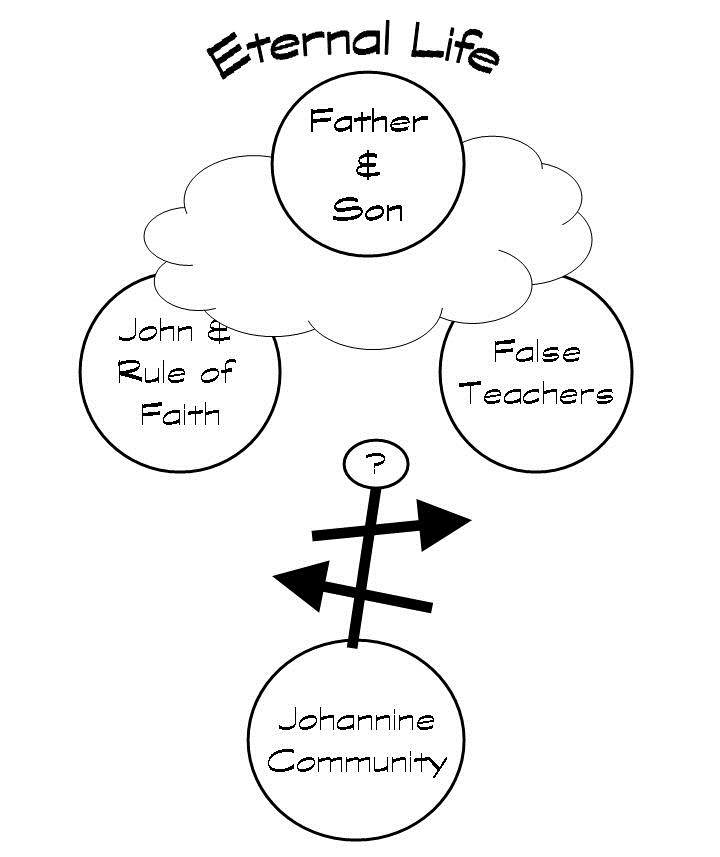
In part 1 (which you might want to read if you haven’t already) I suggested that how we understand the community and false teachers (two of the three groups) addressed in the book shapes which interpretive framework we will use to interpret 1 John. This proposal is based on John’s writing containing a series of tests, which are written out as a comparison of competing claims. One set of claims is made by John (and the apostles). The other set of claims is made by the false teachers.
For example, the test for whether a person’s claim to know God is true or false is based on obeying the commandments (2:3-4) and the test for whether a person is abiding in the light is based on loving and hating others (2:9-11).
In posing the tests in this way John is asking the community – who do you have more in common with – the apostles (who know God, abide in light etc) or the false teachers (who do not know God, abide in light etc)? Whom you choose to partner (or fellowship) with (1:3-7) through shared beliefs and common practices will speak volumes about you. It will be the basis on which you may know whether you are saved (Test of Life) or mature (Test of Fellowship). This idea of asking the community to choose who they are partnering with draws some support from 2 John 1:7,10-11 as well. Here John warns the community not to partner with the same false teachers.
If both the community that John writes to and the false teachers whom he refutes are both considered reborn and in possession of eternal life then the Test of Fellowship framework, which evaluates our spiritual walk and maturity, fits the book. 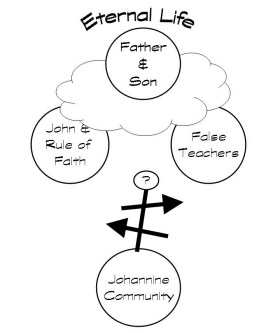
However, if John assumes that the false teachers are unsaved and writes to encourage the community, whom are saved but struggling with assurance because of the counter claims of the false teachers, then the Test of Life view, which evaluates whether we have eternal life or not, is a better framework. Continue reading →

 Dead Heroes Don't Save