All Dead, Mostly Dead, or Not Dead?

Miracle Max and the Man in Black

In the movie the Princess Bride, as the story unfolds, we find ourselves confronted with a dire situation. Our hero, The Man in Black, is dead and our damsel in distress, Buttercup, is being forced to marry someone she does not love. Indigo brings our hero to Miracle Max to see if there is any chance he can help.

Indigo: He’s dead. He cant’ talk.

Max: Oh, look who knows so much. Well it just so happens that your friend here is only mostly dead. There’s a big difference between mostly dead and all dead. … Mostly dead is slightly alive.

Theologians, like Miracle Max, have also come up with 3 general categories for describing the nature of man and his ability to initiate a relationship with God. These states are “Not Dead”, “Mostly Dead”, and “All Dead”. Like Max theologians find that there is a big difference between these stages of being dead.

When we probe the nature of man we generally want to understand how to answer the following questions: Continue reading

The Antioch Incident (Two Views) part 3

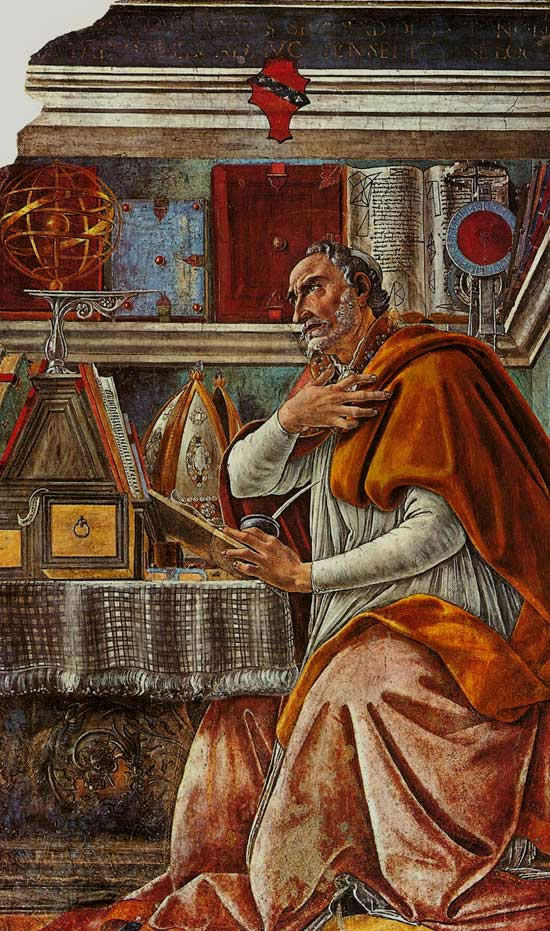
This is part 3 of a series of posts recreating the debate between Jerome and Augustine over the passage in Galatians 2:11-14. Think of it as the “cliff notes” to a series of letters written between them as a series of blog comments. You might want to start with part 1 and read Jerome’s blog post and the earlier comments.


Comment Section for the Antioch Incident


Jerome

Augustine, I will attempt to explain my view more clearly so that you, and those you seek to impress, don’t assume that my opinion rests on the writings of other theologians but on my own careful study of the Scriptures.

Peter, not Paul, was the primary agent through which God taught us that the Law was no longer binding after the gospel of Christ. This can be clearly seen in the events recorded in Acts. It was Peter that had the vision regarding the ability to eat all foods, and it was he that first brought the gospel to the Gentiles when he visited Cornelius and his family (Acts 10:1-48). It was Peter that brought this news to the rest of the apostles and dealt with the criticism of the Jews who found this difficult to accept (Acts 11:1-18). Finally it was Peter that carried the argument during the Council of Jerusalem persuading those in attendance that the Law was obsolete and no longer binding (Acts 15:1-11). Therefore Peter, not Paul, was the author of the rule – that neither the Jews nor Gentiles should obey the Law (Galatians 2:14).

Since Peter knew this rule we can conclude that he only pretended to observe the Law because he was fearful that some Jewish believers would leave the faith (Galatians 2:12). Continue reading

The Antioch Incident (Two Views) part 2

This is part 2 of a series of posts recreating the debate between Jerome and Augustine over the passage in Galatians 2:11-14. Think of it as the “cliff notes” to a series of letters written between them as a series of blog comments. I added some interaction with more recent debates to highlight how the issues we face today are not much different than those faced in the early centuries of Christianity. The comments are based on how I thought the theologians might respond to modern theological issues based on the point of view they expressed in their letters. You might want to start with part 1 and read Jerome’s blog post and the earlier comments.


Comment Section for the Antioch Incident


Augustine, Bishop of Hippo

Jerome, the high esteem that others hold you in is well deserved. Here in northern Africa we eagerly await your next set of translations of the Scriptures and ancient commentaries into the Latin. Thanks for updating everyone of your progress in your blog.I do hope you saw my comments regarding the use of the LXX that I left.

Regarding the events that took place in Antioch, you have appealed to the writings of those in the past and have asked if anyone holds to my opinion.The path you are taking us down is one well traveled. Like you Rob Bell, a popular writer, claims his views are orthodox appealing to the pool of diverse opinions that can be found among the ancient writers. He can even find many of the opinions he holds in Origen, yet that does not end the debate on “the fate of every person who ever lived”. Nor will it be the end to our debate.

I know that you hold Origen in high regard and where he holds to the truth we should accept him, but even you have had problems with some of his opinions on other matters. I only wish that you would apply your great learning and knowledge of this man and catalog his heresies for all to plainly see.

I, however, am not without support in the ancient writers. Continue reading