
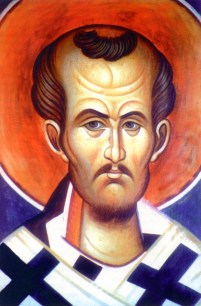
 John Chrysostom, a 4th century theologian, served as Bishop of Constantinople and was known for his preaching and ascetic lifestyle. What made him a noteworthy teacher was his ability and desire to be understood by the lay person and his rejection of allegorical interpretation.
Chrysostom predated the Pelagian and Semi-Pelagian debates that dominated the 5th century but was around during the disputes with the Manicheans.
The Manicheans were a heretical group that held to dualism. The founder claimed to be an apostle.
Augustine was a Manichean for nearly a decade before coming to Christ. He spent much of his early Christian experience refuting them in numerous works. At this time Augustine refuted the Manichean deterministic idea that “evils and sins are thereby connected, as by a sort of chain, to God” by arguing that actions that were determined and not performed through a willing agent did not deserve condemnation.
While ministering in Antioch, Chrysostom wrote Homilies (or sermons), which consist of verse by verse expositions of the Scriptures. Chrysostom, did not author major works against the Manicheans as Augustine did, but noted in his sermons those passages which these (and other heretical groups) wrongly interpreted. Continue reading
 Dead Heroes Don't Save