Wednesday with Wesley: Perseverance of the Saints & Arminianism

Can a true disciple of Christ later commit apostasy? Will those who commit apostasy perish? Can someone who was at one time placed in Christ be removed? How one answers these questions depends on how they view eternal security (outline of views).

holdFirm2While most proponents of Arminianism hold to a view that a true believer can commit apostasy and thus forfeit salvation, the Arminian camp allows proponents to hold different views on eternal security. Despite holding these different views, it must be understood, Classical Arminianism does affirm that a true believer will possess enduring faith. There is no such thing, Ashby will write, in his essay in “Four Views on Eternal Security”, as a “saved unbeliever”.

Based on early writings, Classical Arminians held that one of two things must be true: Continue reading

The Good Electrician: An Illustrated look at Soteriology

Both Calvinists and Arminians hold that forgiveness of sins and eternal life come through faith in Jesus Christ. However they offer very different descriptions of how God’s grace works in salvation and what role a person plays in responding to the gospel.

In order to illustrate these two contrasting views on salvation we can use an electrical circuit. In order for a light bulb to be lit the wires in the circuit must be connected and form a closed loop. This allows current to flow and the bulb to be lit. When the loop is broken there is no way that the light bulb can be turned on.

In this example the junction box, wires, and light bulb represent a person. When the light bulb is lit the person has exercised saving faith. When the light bulb is off the person is in a state of darkness and unbelief.

DHDS_UnWired

Both Calvinists and Arminians hold to the inability of man to respond to the gospel in his natural state. This can be illustrated by an electrical circuit in which the wires in the junction box are disconnected. Without a reconnecting of the wires the current cannot flow through the circuit and the light can not be turned on. There can be no positive response to the gospel. Continue reading

(Almost) Wednesday with Wesley: The Reasonable Faith is of Grace

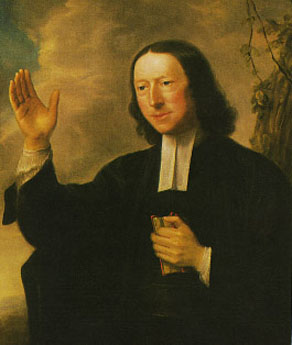
As theologians we can often get wrapped up in thinking about God and the Scriptures. We want to understand our Creator and the truths that He has revealed. In order to do that we must use logic and reasoJohn_Wesleyn. John Wesley cautioned those who would minimize the need for reason in theology and in living a virtuous life.

Wesley was a strong proponent of the use of reason. But was wise in reminding us of its limitations. Continue reading