Opening my inbox, I saw an email that caused me to pause. The subject line was Arminian Theology and the author was Robert Picirilli. Expecting anything but an email from the noted theologian of that name, I clicked to read it. To my surprise it was from the Robert Picirilli. And he was asking me to review his book. I was more than happy to accept.
Robert Picirilli (link), the former Academic Dean of the Graduate School at Free Will Baptist Bible College (now Welch College), has authored numerous books and commentaries, including one on Romans from an Arminian perspective (amazon). He has also written the book Grace, Faith, Free Will (amazon), one of the best and most accessible books (IMO) on the Calvinism/Arminianism debate. Picirilli was also a contributor to Grace for All, a book that was blogged through on this site (link).

The topic of free will is challenging. It is one of the areas that is debated and discussed in philosophical, theological, and scientific circles. One of the difficulties is that the word itself has been defined and redefined by various participants in the debate. Given this rather short work on such a diverse and difficult topic it is important to understand what drove Picirilli to write and what he sought to accomplish in this book.
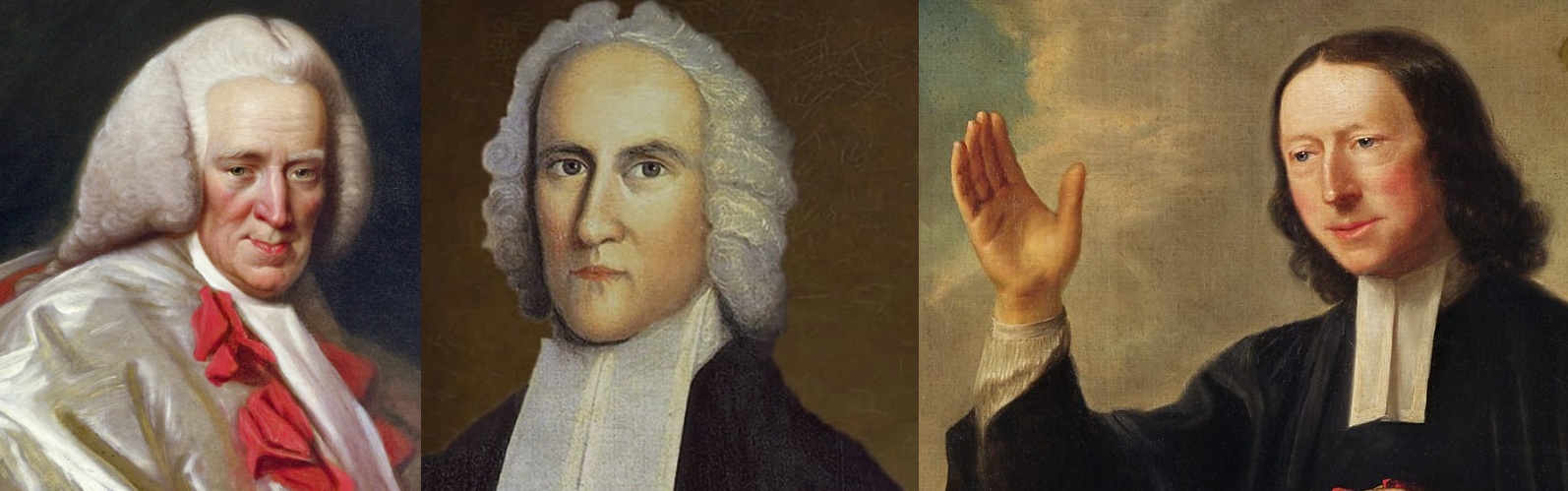
The aim can be discerned by the subtitle a Respectful Response to Luther, Calvin, and Edwards. This book seeks to explore free will as understood by these esteemed theologians who each have written extensively on this subject.
I determined on a specific approach: namely, to deal with the subject as it was argued, specifically, by Luther, Calvin, and Edwards. I picked them because each of these theological masters wrote a volume against free will … [1]
In interacting with these authors, Picirilli wants the reader to not only understand each of their arguments against free will, but to offer a rebuttal to each of the major objections.
Is it possible that such beings have a will that is free to make choices between alternative courses of action? To answer this is the purpose of this work. [2]

This book is about free will but it is not a general survey on this subject. This work is about the debate between Calvinism and Arminianism, but it is not written to deal with all of the theological topics that are part of that debate. The intent of this work is to deal with the intersection of these two areas: specifically how free will is viewed within Calvinism and Arminianism.
An outline of the book
The book is written in four parts.
- Part One: Defining the Issues
- Part Two: The Case against Free Will
- Part Three: The Major Issues
- Part Four: In Conclusion
The first part provides a brief introduction to the ideas and terms involved in the discussion of free will. Key concepts include free will, determinism, compatiblism, certainty, and necessity. The second part of the book is the strength of the book. It outlines each of the major works on free will written by Luther, Calvin, and Edwards.
- Martin Luther’s Bondage of the Will
- John Calvin’s The Bondage and Liberation of the Will
- Johnathan Edwards’ Freedom of the Will
In each chapter Picirilli presents 1) the historical context of the writing; 2) an outline of the work with a summary of each section; 3) the main ideas comprising the case against free will, and 4) offers a definition of free will that the theologian was arguing against. This last point is important. A key thesis in this book is that the versions of free will that Luther, Calvin, and Edwards wrote against was not the same as that offered by Arminius, Wesley and other Biblically sound theologians. This section offers minimal rebuttals, leaving that for later in the work.
It is important to note, as Picirilli does in the preface, that the arguments and interactions in this book are based primarily on how each theologian presented and argued against free will in the one work dedicated to that subject. Picirilli does not engage points about free will the authors may have made in their other works. For example, the chapter on Martin Luther deals with what is written in The Bondage of the Will, without examining what was written in On the Freedom of a Christian.
The third part of the book is where Picirilli interacts with the arguments of the theologians, demonstrating where they are wrong. He does this by grouping similar points made by Luther, Calvin, and Edwards and dealing with them together. This is done in several chapters as follows:
- Free Will, Foreknowledge, and Necessity
- Free Will, Human Depravity, and the Grace of God
- Free Will, and the Sovereignty and Providence of God
- Free Will and the Logic of Cause and Effect
These chapters provide good, concise rebuttals to Luther, Calvin, and Edwards. The main thrust of each counter-point would be familiar to those well-read on the debate between Calvinism and Arminianism. The book concludes with a summary of the arguments against free will and a summary of Picirilli’s arguments for our ability to choose among possible alternatives. Continue reading →

 Dead Heroes Don't Save