Free Will, Frankfurt, and the Force

Harry Frankfurt is a philosopher noted for defending a compatibilistic view of free will. He is widely recognized for his paper “Alternate Possibilities and Moral Responsiblity” (link) in which he  argues that the principle of alternate possibilities (PAP) is not necessary to assign moral responsibility. He does this through examples that have become quite popular, even being referred to as Frankfurt stories. This approach is considered, by some, to have successfully shown how moral responsibility can be assigned in a world in which PAP does not exist. Since Reformed theology affirms determinism and a compatibilistic view of free will (link), the Frankfurt stories are sometimes used to bolster their position (see this post as an example). But do Frankfurt stories do what their proponents claim?

What is PAP?

Frankfurt offers the following definition, which aligns with the idea of a libertarian free will (LFW).

This principle states that a person is morally responsible for what he has done only if he could have done otherwise.

He follows that with the following assessment:

the principle of alternate possibilities is false. A person may well be morally responsible for what he has done even though he could not have done otherwise.
Continue reading

Why could God not have made men such that they always freely choose the good?

Why is there so much evil and suffering in the world if the Judaeo-Christian God exists? This question presents us with the challenge known as the logical problem of evil. The solution to this problem, Scripturally and logically, is the high value placed on significantly free (ie libertarian free will (LFW)) people (see post).

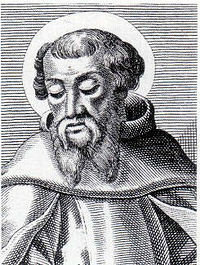
Irenaeus

Irenaeus

A common challenge to the free will defense (FWD) is that God could create a world in which significantly free people never “go bad”.  The FWD, as posited by philosopher Alvin Plantinga, however, rests on the idea that creating people with LFW makes such a world impossible (quotes).

God can create free creatures, but He can’t cause or determine them to do only what is right. For if He does so, then they aren’t significantly free after all. … He can’t give these creatures the freedom to perform evil and at the same time prevent them from doing so.

C.S. Lewis would agree with Plantinga, a world in which people are significantly free yet never do anything but good is not possible, even for an omnipotent God. Continue reading

C.S. Lewis on Reading “old books”

In a letter to a pastor, John Wesley, cautions him about his lack of reading: (link)

What has exceedingly hurt you in time past, nay, and I fear to this day, is want of reading. I scarce ever knew a preacher read so little. And perhaps, by neglecting it, you have lost the taste for it. [Your preaching] is lively, but not deep; there is little variety; there is no compass of thought. Reading only can supply this …

In the introduction to Athanasius’ On the Incarnation (amazon, online), C.S. Lewis talks about the importance of what we are reading (introduction). Particularly, he warns us against reading that is comprised of an “exclusive contemporary diet”, instead encouraging us to read books from the past (emphasis added).

There is a strange idea abroad that in every subject the ancient books should be read only by the professionals, and that the amateur should content himself with the modern books. … this mistaken preference for the modern books and this shyness of the old ones is nowhere more rampant than in theology.

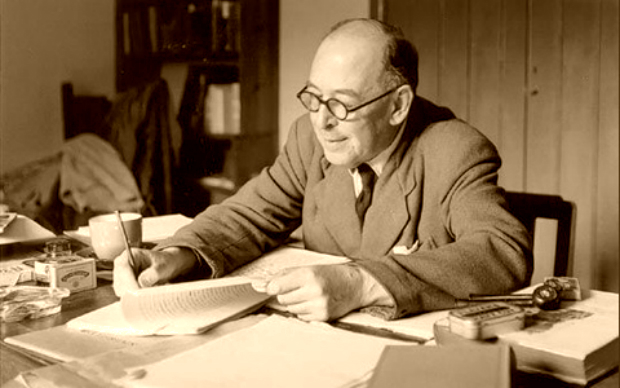
CSLewis

Continue reading