An Ancient Theologian tackles John 6 and Romans 9

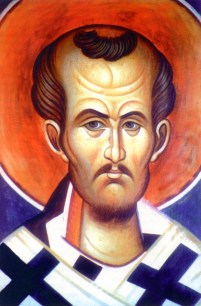
st-john-chrysostom-71John Chrysostom, a 4th century theologian, served as Bishop of Constantinople and was known for his preaching and ascetic lifestyle. What made him a noteworthy teacher was his ability and desire to be understood by the lay person and his rejection of allegorical interpretation.

Chrysostom predated the Pelagian and Semi-Pelagian debates that dominated the 5th century but was around during the disputes with the Manicheans.

The Manicheans were a heretical group that held to dualism. The founder claimed to be an apostle.

Augustine was a Manichean for nearly a decade before coming to Christ. He spent much of his early Christian experience refuting them in numerous works. At this time Augustine refuted the Manichean deterministic idea that “evils and sins are thereby connected, as by a sort of chain, to God” by arguing that actions that were determined and not performed through a willing agent did not deserve condemnation.

While ministering in Antioch, Chrysostom wrote Homilies (or sermons), which consist of verse by verse expositions of the Scriptures. Chrysostom, did not author major works against the Manicheans as Augustine did, but noted in his sermons those passages which these (and other heretical groups) wrongly interpreted. Continue reading

3 Characteristics of Predestination

In “The Softer Face of Calvinism” (Christianity Today), it is argued that rather than appealing to theologians to understand Reformed theology, one should use the Reformed confessions and creeds.

The confessions, therefore, form an important framework that help us see both what is fundamental and what is not fundamental.

Following that advice, chapter three of the Westminster Confession makes two assertions:

  • God from all eternity, did, by the most wise and holy counsel of His own will, freely, and unchangeably ordain whatsoever comes to pass …
  • Although God knows whatsoever may or can come to pass upon all supposed conditions; yet has He not decreed anything because He foresaw it as future, or as that which would come to pass upon such condition

In a nutshell, God decreed (ordained, predestined) everything in eternity past. And His decrees were not based on His foreknowledge of the actions of those whom He would create. Continue reading

Minority Report: Unconditional Election and the PreCrime Department

Minority Report is a blockbuster movie (based on a Philip K. Dick short story) that examines determinism and free will. In the movie the PreCrime Dept. is tasked with identifying and arresting criminals before they commit a crime. They do this based on information provided by the Precogs, three humans who have the ability to see into the future. Danny Witwer of the DOJ  is evaluating PreCrime and questions the premise on which it is based:

Danny Witwer: I’m sure you all understand the legalistic drawbacks to Precrime methodology. … let’s not kid ourselves: we are arresting individuals who have broken no law.

Jad: But they will.

Gordon Fletcher: The commission of the crime itself is absolute metaphysics.

The questions that the movie wrestles with is whether the future can be changed or not. Are the Precogs, who are similar to Laplace’s Demons, accurately seeing the future because all future events are determined? And what does determinism mean if it is possible for a future event to be prevented by the choices made be PreCrime agents. After all they arrest a criminal prior to the crime thus the determined event is never committed.

I couldn’t help but think that the PreCrime Dept. makes for an interesting (though imperfect) analogy to consider the Reformed doctrine of unconditional election. Continue reading