Grace for All: Predestination in the New Testament (Is it one big script?)

In the last post blogging through the book, Grace for All, we saw David Clines present to us the big picture of how one might understand predestination in the Old Testament. In this post I. Howard Marshall gives us a view of “predestinarian thought” in the New.

Marshall is a NT415xXkjORGL scholar and Professor Emeritus at the University of Aberdeen, Scotland. He has authored numerous commentaries and works of theology including the 2005 ECPA Gold Medallion winner New Testament Theology.

Marshall reminds us of the challenge that everyone who reads Scripture and studies theology has regardless of the views one holds.

it is one thing to state what Scripture says; it is another to understand it and to bring it into relation with the rest of what Scripture says.

In debates over soteriology, often a verse like Ephesians 1:4-5 is presented as a proof text for unconditional election because it states that we are chosen and predestined. Continue reading
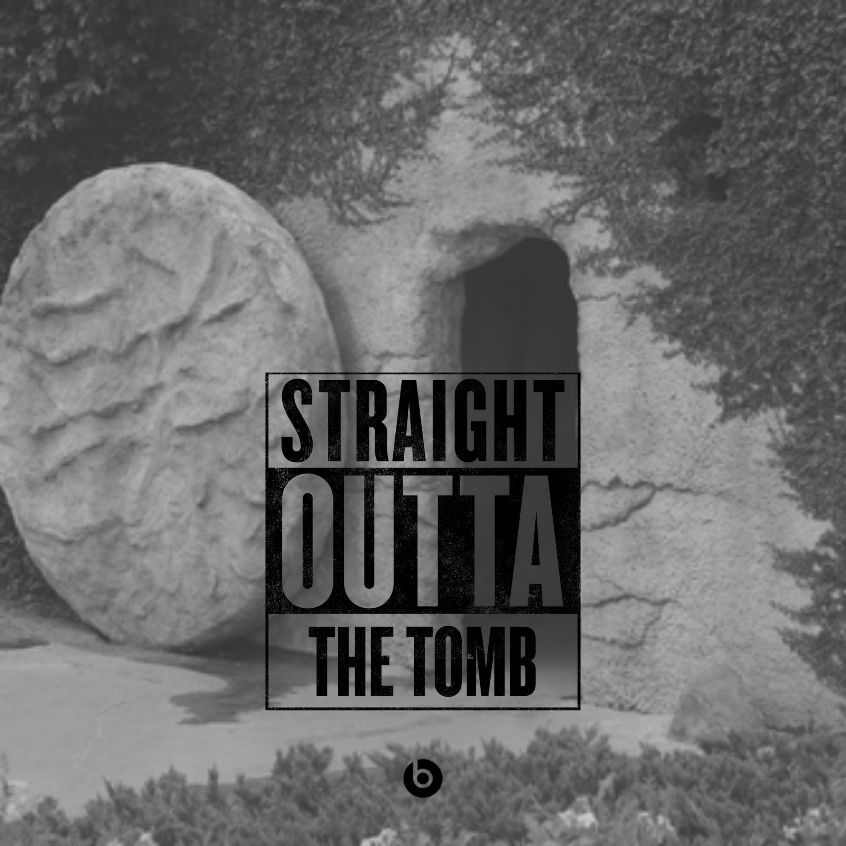
Straight Outta the Tomb

StraightOuttaTomb

My point is … a first-century Jew, faced with the crucifixion of a would-be messiah, or even of a prophet who had led a significant following, would not normally conclude that this person was the Messiah and that the kingdom had come. He or she would normally conclude that he was not and that it had not.

Why did Christianity even begin, let alone continue, as a messianic movement, when its Messiah so obviously not only did not do what a Messiah was supposed to do but suffered a fate which ought to have showed conclusively that he could not possibly have been Israel’s anointed? Why did this group of first-century Jews, who had cherished messianic hopes and focused them on Jesus of Nazareth, not only continue to believe that he was the Messiah despite his execution, but actively announce him as such in the pagan as well as the Jewish world, cheerfully redrawing the picture of messiahship around him but refusing to abandon it? Their answer, consistently throughout the evidence we possess, was that Jesus, following his execution on a charge of being a would-be Messiah, had been raised from the dead.

– NT Wright (Christian Origins and the Resurrection of Jesus)

Grace for All: Exploring Predestination in the Old Testament

David A. Clines, Emeritus Professor (link) at the University of Sheffield, has specialized in the Hebrew language and study of the Old Testament. In Grace for All, David seeks to summarize the predestinarian ideas found in the OT.

415xXkjORGLHe does this, not by focusing on a few passages, but by analyzing the larger themes found in four major collections of the Hebrew Scriptures.

  • Patriarchal histories in Genesis
  • Primeval histories in Genesis
  • Proverbs/Wisdom literature
  • Prophetic literature

In the essay Clines defends this approach and asks the reader to consider how they approach this topic in the Scriptures.

No doubt there are many reasonable inferences that may be made from biblical statements about predestination. But to be faithful to the Bible means in part to follow the Bible’s emphases and not erect mere inferences into essential biblical doctrine.

Continue reading