Blogging thru On the Incarnation: The Prequel (part 2)

This is part 2  of the series blogging through the book On the Incarnation by Athanasius. You might want to start with part 1 and work your way through the series.

The opening statements of the first chapter in On The Incarnation refer to a prior work of Athanasius. That work is Against the Gentiles.
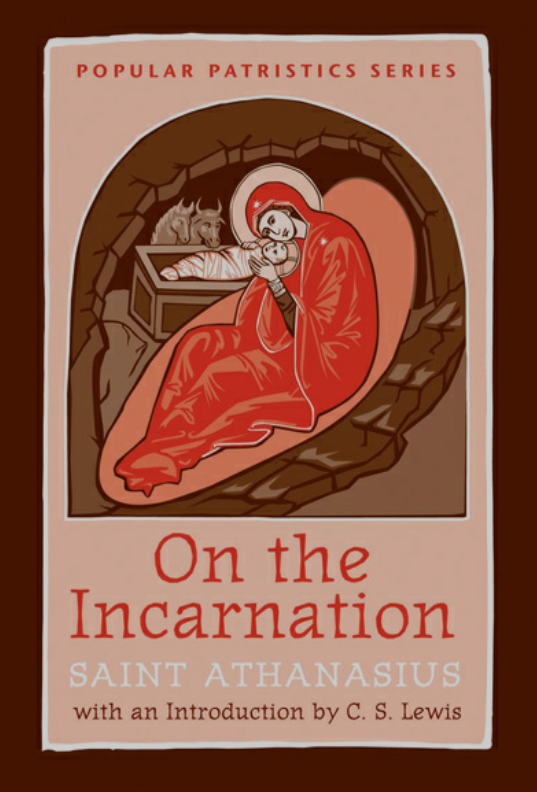
In what preceded we have sufficiently treated a few points from many, regarding the error of the Gentiles concerning idols and their superstition, how their invention was from the beginning, and that out of wickedness human beings devised for themselves the worship of idols.

On the INcarnation chap 11

The translator Behr suggests that “[both works] need to be considered together, for the first work sets up the problem that the second resolves.”2 Therefore, before reading On the Incarnation, I took the time to read Against the Gentiles.

In Against the Gentiles, Athanasius explores how idolatry came into existence and then spends a great portion of the work refuting it in all of its forms. If I were to summarize the work, Against the Gentiles is a full length treatment of the concepts laid out in Romans 1:18-28. Athanasius will start by explaining the power all people have to direct their attention to God. He will then show that each person knows God but suppresses the truth that is available. He then traces the history of futility as mankind traded the Creator for the created. An exchange that leads down a path deeper and deeper into darkness, accepting various forms of idolatry and adopting sinful behaviors. He will also point to our need to avail ourselves of the ability we have to turn back to God. Throughout the work, Athanasius focuses on the rationality that exists in mankind. Therefore he dedicates part of the work toward defending the existence of the soul, for him the seat of rationality. He concludes by showing that Nature reveals a Creator.

Continue reading

Blogging thru On the Incarnation: Who is Athanasius? (part 1)

With Christmas coming, I decided to take C.S. Lewis’ advice and read an old book, tackling On the Incarnation by Athanasius during Advent. Up to now I’ve only read excerpts from this work (post), but I plan on reading and blogging through the entire book. I will be using the translation published as part of the Popular Patristics Series. This edition is translated by John Behr and contains the famous preface by C.S. Lewis (see blog post on that here).

Every age has its own outlook. It is specially good at seeing certain truths and specially liable to make certain mistakes. We all, therefore, need the books that will correct the characteristic mistakes of our own period. And that means the old books.

Preface by C.S. Lewis

On the Incarnation

On the Incarnation is considered an apology (or defense) of the cross and is the sequel to an earlier work entitled Against the Gentiles. 1 The dating for On the Incarnation is debated, with some favoring an early date prior to the Council of Nicaea, citing the lack of mentioning Arius. 2 Others suggest it was probably written sometime after the council, given that the author would have been writing at a very young age if it was earlier.3 These provide a range of time for the composition that would fall somewhere between 318 and 337 AD.

that you may be able to know the cause of the manifestation in the body of such and so great Paternal Word, … that, being by nature bodiless and existing as the Word, by the love for humankind and goodness of his own Father he appeared to us in a human body for our salvation.

On the INCARNATION 1

Who was Athanasius?

Athanasius contra mundum

Continue reading

Ancient Theologians weigh in on Genesis: Basil’s reflections on creation (part 6)

This post is part of a series looking at Basil’s views on the creation account in Genesis. If you have not already read it, I recommend starting with part 1.

In prior posts we have seen how Basil understood the waters of creation. In this concluding post we will once more touch on these concepts as we look at how Basil understood the firmament itself.

The earth was created underwater

Source: NASA.gov

During his homily Basil explores why the earth was “invisible and without form”. The use of the term “invisible” instead of “empty” may indicate that Basil is using the LXX (ἀόρατος καὶ ἀκατασκεύαστος) instead of the Hebrew text. While it could be debated whether the Hebrew term encompasses the idea of being invisible or just that the earth was barren prior to the rest of creation, Basil is working off of that text and translation.

As nothing of all this [growth of all kinds of plants] yet existed, Scripture is right in calling the earth without form.

The formless earth was also invisible because it was submerged under a large body of water.

The earth was invisible … because being submerged under the waters which over-flowed the surface, it could not be seen, since the waters had not yet been gathered together into their own places, where God afterwards collected them, and gave them the name of seas.

… The earth was invisible. Why? Because the deep was spread over its surface. What is the deep? A mass of water of extreme depth. But we know that we can see many bodies through clear and transparent water. How then was it that no part of the earth appeared through the water? Because the air which surrounded it was still without light and in darkness. The rays of the sun, penetrating the water, often allow us to see the pebbles which form the bed of the river, but in a dark night it is impossible for our glance to penetrate under the water. Thus, these words the earth was invisible are explained by those that follow; the deep covered it and itself was in darkness.

HOMILY II

 Let us understand that by water water is meant;

Basil (Homily III)

What is the firmament?

As Basil tackles the creation of the firmament (or expanse) which separates the waters, he notes that this entity is also called “heaven”. He reflects on the opening passage where it states that God created “the heavens and the earth” and asks “does the firmament that is called heaven differ from that [which] God made in the beginning?”

Basil acknowledges that within the church there are differing opinions.

Continue reading