Continuing Thoughts Upon Necessity and the views of Lord Kames

Having read Wesley’s “Thoughts Upon Necessity”, I decided to read more of Lord Kames’ essay “On Liberty and Necessity”. This post is a follow-up to the post Wednesday with Wesley: Thoughts Upon Necessity, which introduces us to both the essays.
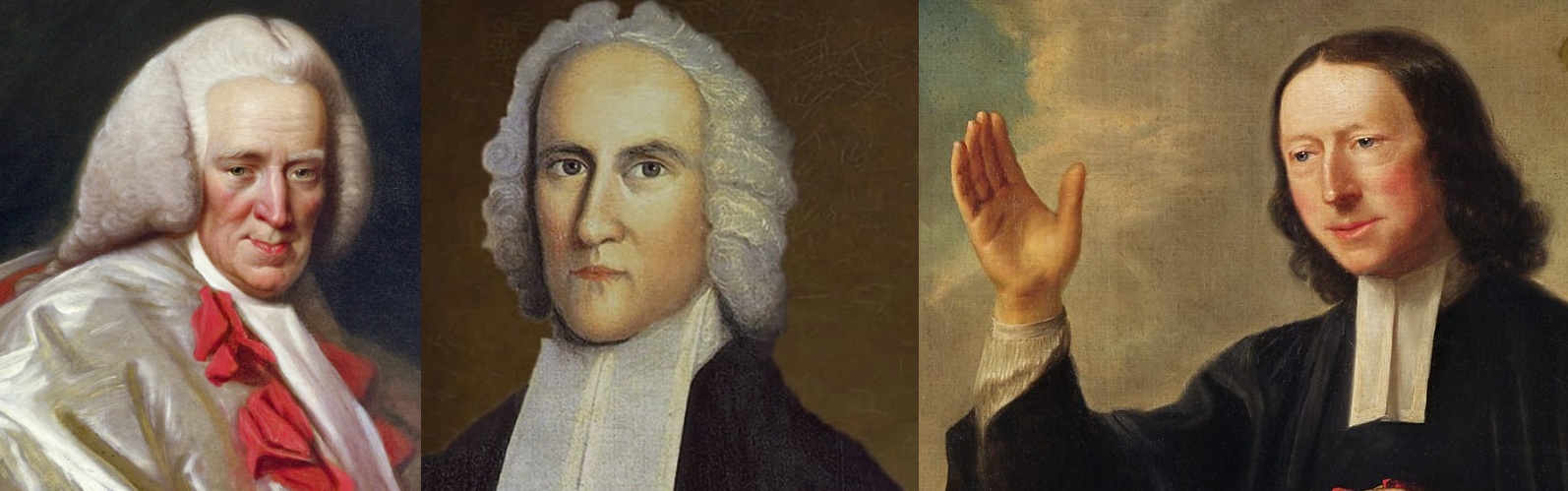
In the last post, we highlighted portions of Lord Kames’ position to provide enough content in which to frame Wesley’s argument against it. We also provided a condensed format of Wesley’s argument. In this post we will focus on Kames’ view that we are given a “delusive Sense of a Liberty of Contingence, to be the Foundation of all the Labour, Care and Industry of Mankind” and the responses to that idea from both Jonathan Edwards and John Wesley.1

The position taken by Lord Kames
In the prior post we relied primarily on Wesley’s quotes from Kames’ essay. Here we will add a more expansive summary taken directly from Kames’ work “Liberty and Necessity“. 2

Lord Kames will assert a basic principle: “that nothing can happen without a cause” and that “nothing that happens is conceived as happening of itself, but as an effect produced by some other thing.” 3

This principle is applied to both the natural and moral worlds, however, it will be made clear that the fixed laws that govern each are not the same.

Taking a view of the natural world we find all things there proceeding in a fixed and settled train of causes and effects. It is a point which admits of no dispute, that all the changes produced in matter, and all the different modifications it assumes, are the result of fixed laws. Every effect is for precisely determined, that no other effect could, in such circumstances, have possibly resulted from the operation of the cause: which holds even in the minutest changes of the different elements [as these are the] necessary effect of pre-established laws.4

The result, Kames admits, is that “in the material world, there is nothing that can be called contingent but everything must be precisely what it is.” In the moral world, which is the realm in which “man is the actor”, we find things “do not appear so clearly.”

Continue reading

Wednesday with Wesley: Thoughts Upon Necessity

In 1774, Wesley wrote an essay titled “Thoughts Upon Necessity“.1 This essay dealt with arguments put forth by contemporary authors regarding what we would label determinism.

The opening paragraph states clearly the questions that Wesley will explore in the essay.

Is Man a Free-Agent, or is he not?
Are his Actions free or necessary?
Is he Self-determined in Acting; or is he determined by some other Being?
Is the principle which determines him to act, in himself or in another?
This is the question which I want to consider.

The work will critique and challenge the deterministic view that our actions are rendered certain by a causal chain.

[It has been] affirmed with one mouth that from the beginning of the world, if not rather from all eternity, there was an indissoluble chain of causes and effects, which included all human Actions. And that these were by fate so connected together, that not one link of the chain could be broken.

Continue reading

Blogging thru On the Incarnation: Athanasius, Faith and Free Will

This is an addendum to the series blogging through the book On the Incarnation by Athanasius. You might want to start with part 1 and work your way through the series. This is also an extension to a series of posts that explored The Early Church on Free Will. These can be found in the Series page under that heading.

In both Against the Gentiles and in On the Incarnation, Athanasius was primarily focused on articulating the reasons for the cross of Jesus. Since he is writing to believers to demonstrate the rationality of faith in Christ it isn’t surprising that he does not spend much space elaborating on how one would become a follower of Jesus.

so let the one not believing the victory over death accept the faith of Christ and come over to his teaching, and he will see the weakness of death and the victory over it. (On the Incarnation Chap 28)

In Against the Gentiles he does offer some thoughts on the decision making capability that is inherent in people made in the image of God. Whether one would anachronistically label this libertarian free will or not, Athanasius’ viewpoint would not readily align with the doctrines of original sin that would be debated nearly a century later by Augustine against Pelagius. His view on decision making also falls in line with his contemporaries and predecessors.

In chapter 4, he notes that people are “by nature mobile”. That is an odd turn of phrase. Given it is an underlying part of his understanding of humankind we should quickly touch on what Athanasius means by this claim.

For being by nature mobile … 1

Athanasius does not explain the phrase, however the idea he has in mind is likely related to the Greek philosophical ideas of motion. We saw how Athanasius draws on the idea of eudaimonia as well as motion in the series that explored On the Incarnation.

Continue reading