History of Hell (Christian History)

Saw this tweet from Mark Driscoll and thought I would share since I have blogged and taught on Love Wins a bit.

http://twitter.com/#!/PastorMark/status/98581362067521536

The link refered to is from Christian History Magazine which has put out a resource (pdf) on various views of hell.

A quick summary of some of the early writers based on the article (italics are my additions):

  • Justin Martyr – potential father of inclusivism – writings inspired later thinkers to speculate on fate of unbelievers who did not have access to gospel.
  • Irenaeus – eternal punishment awaited those who rejected Jesus
  • Tertullian – eternal punishment awaited unbelievers
  • Origen father of universalism / postmortem evangelismwritings speculate on fires of hell as purifying
  • Athanasius – potential father of annilationism
  • Augustine – eternal punishment awaited unbelievers

and a summary on some of the reformers:

  • Huldrych Zwingli – reformed inclusivism –  those elect by God are saved (even if they don’t hear the gospel)
  • Martin Luther – eternal separation awaited unbelievers
  • John Calvin – eternal separation awaited unbelievers (unelect)

The article contains many more as well as a list of books that have added to the discussion on the after-life.

The Gospel according to Love Wins

Will only a few – select – people make it to heaven?

Will billions and billions of people burn forever in Hell?

How do you become one of the few? 

How do I become one of the few? What must I do to be saved? How can I inherit eternal life? No matter how it is asked – it is a question asked over and over again in the pages of Scripture (Acts 2:37; 16:30; 22:10; Luke 3:10,12,14; 10:25; 18:18;  John 6:28). Bell opens the book Love Wins dealing with how to become one of the few by jumping through passages and asking questions that challenge how salvation is worked out in each story.

So is it what you say that saves you? (Luke 7, 18, 23)

is it what you are? (John 3, Luke 20)

is it who you forgive? (Matthew 6)

is it doing the will of God? (Matthew 7)

is it standing firm? (Matthew 10)

This leaves the reader with the impression and nagging thoughts:

What is the gospel? And does how I live my life now matter?

These two questions are raised in the opening pages of Love Wins (page 6, 11) and determine the “fate of every person who ever lived”:

Some Christians believe and often repeat that all that matters is whether or not a person is going to heaven. Is that the message? Is that what life is about? Going somewhere else? If that’s the good news – if what Jesus does is get people somewhere else – then the central message of the Christian faith has very little to do with this life other than getting you what you need for the next one. …

Which leads to the far more disturbing question. So is it true that the kind of person you are doesn’t ultimately matter, as long as you’ve said or prayed or believed the right things? …

If the message of Jesus is that God is offering the free gift of eternal life through him – a gift we cannot earn by our own efforts, works, or good deeds – and all we have to do is accept and confess and believe, aren’t those verbs?

And aren’t verbs actions?

Accepting, confessing, believing – those are things we do.

In an interview with Lisa Miller, Bell is given an opportunity to answer these questions:

[Lisa Miller] So, if I’m an atheist who gives to the poor, helps little ladies across the street, spends all my free time in charitable works. Am I going to heaven?

[Rob Bell] Well, the essence of grace is Jesus saying, “Left to your own, we are all in deep trouble. We have made a mess of this place. We are all sinners. No one has clean hands.” So, the essence of his gospel was, Trust me, I’ll take care of it. Just trust me.

Now, how exactly does that work out? Because he [Jesus] is unbelievably exclusive. He says these things like, “I’m the way and the truth and the life, and no one comes to the Father but through me.” He says things like, “If you’ve seen me, you’ve seen God.” He’s very exclusive. He’s also fantastically inclusive; he says things like, “I have other sheep.” He says “there will be a renewal of all things — I’ll be lifted up and draw all people to myself.” So he’s like in-ex-clusive. That’s a word I just made up. …  And how exactly that pans out? That’s God’s job.

Bell expands on that theme in the book (page 154-155):

[Jesus said] “I am the way and the truth and the life. No one comes to the Father except through me”

This is a wide and expansive a claim as a person can make.

What he doesn’t say is how, or when, or in what manner the mechanism functions that gets people to God through him. He doesn’t even state that those coming to the Father through him will even know that they are exclusively coming through him. He simply claims that whatever God is doing in the world to know and redeem and love and restore the world is happening through him.

At this point, if I were not a Christian but was interested in what Bell or Love Wins had to say because of the popularity and the controversy I would be left in a very confused state. How do I become one of the few? What is the gospel? Does how I live matter?  Is something as important as a person’s eternal destiny and after-life left to the notion (and Marine/Special Forces quote) –  “Let God sort em out”?

Does the choice to accept or reject God really matter?

Love demands freedom. It always has, and it always will. We are free to resist, reject, and rebel against God’s ways for us. We can have all the hell we want. [page 113]

If the mechanism is not defined that gets people to God then how do we know that we have a choice?

  • Maybe we don’t and the universalists are right – God lovingly takes us into heaven (after all all things are reconciled and renewed right?).

And if we do have a choice – to accept or reject God’s ways for us – then how do I choose?

  • implicitly (but if I don’t even know I am choosing to accept God is that really a choice?)
  • explicitly (but then I must understand my options and what the gospel message is?)

And when I choose to accept God’s ways what determines that I have made that choice?

  • Is it to trust God has already taken care of it (but then trust is an action and now I am doing something right?)
  • Is it having a personal relationship with God (the relationship that isn’t in the Bible (page 10) but is the whole point of love (page 178)?)
  • Is it to do good for others (but then how does an atheist who helps little old ladies across the street accept a God they reject exists?)

When do I have to choose?

  • now or in the after-life (and if I get eternal choices why worry about it now – God will sort it out later right?)

And if the “only thing left to do is trust” because  “Jesus forgives them all, without their asking for it” and “not because of anything we’ve done”  (page 188-190) then why do I have to choose again?

Oh, because trust is an action and a choice.

I understand that Bell is in many cases trying to provoke people to think and to generate discussion but in the end, a reader has to ask – just what is the gospel according to Love Wins?

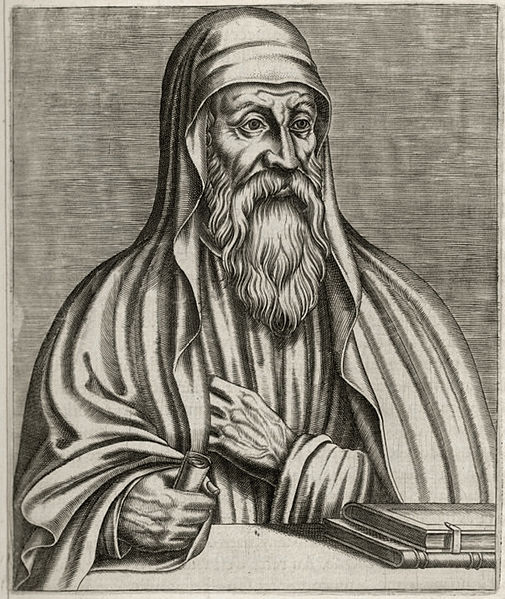
What is Orthodoxy? [Part 4] Is Origen Orthodox?

OrigenIn the book Love Wins, Rob Bell speculates on what happens in the after-life opening up the door on various ideas claiming in an interview with George Stephanopoulos of ABC News:

I think that the orthodox, historic, Christian tradition is this vast, diverse, conversation that’s been going on for thousands of years and I think Jesus can handle the discussion. It think he can handle the debate.

Based on these comments we have looked at the orthodox, historic, Christian tradition – or the Rule of Faith – in a series of posts exploring whether it is something that should be considered wide (vast/diverse) or narrow.

Now to this discussion I would like to look at Origen. Why? Because, Origen is considered one of the earliest writers who speculated on the after-life suggesting many ideas found in Love Wins. Origen (185-254) lived primarily in Alexandria, Egypt. His writings are later than the previous two apologists that we have examined and unlike Irenaeus and Tertullian, Origen is not writing against heresies. One might argue that rather he is creating them. In First Principles he is laying out a systematic theology of sorts.

Origen: On the After-Life

In this book Origen speculates on the after life. Before recording his ideas on this topic he writes:

But since the discourse has reminded us of the subjects of a future judgment and of retribution, and of the punishments of sinners, according to the threatenings of holy Scripture and the contents of the Church’s teaching—viz., that when the time of judgment comes, everlasting fire, and outer darkness, and a prison, and a furnace, and other punishments of like nature, have been prepared for sinners—let us see what our opinions on these points ought to be. [2.10.1]

From this two observations regarding the judgment and the punishment of sinners can be made – according to Origen:

  • they are according to Scripture.
  • they are according to the Church’s teaching.

Rather than jump into his opinions on the after-life, Origen next establishes that there is an after-life and a resurrection of the body:

there will be no absurdity in restating a few points from such works [other treaties he has composed], especially since some take offence at the creed of the Church, as if our belief in the resurrection were foolish, and altogether devoid of sense; and these are principally heretics, … [2.10.1]

From this two more observations can be – according to Origen:

  • a creed documenting the Church’s doctrine is in existence.
  • those who reject it are heretics.

Having established the resurrection of the dead and the immortality of the soul, Origen states that after we die God will raise out of up the natural body “a spiritual one capable of inheriting the heavens” for those that deserve it, while those that are “destined to everlasting fire or to severe punishments” are given a body that “cannot be corrupted or dissolved”. Based on this, Origen would certainly reject the annihilationist view of the after-life. Having established that the church teaches that there is an “everlasting fire”, he moves on to to “see what is the meaning of the threatening of eternal fire” [2.10.3].

Origen suggests that there are two possibilities [2.10.5]:

  1. psychological/emotional – the conscience torments the soul because it accuses/convicts the person of all the sin committed.
  2. physical – the pains of general punishment.

However it is his “opinion that another species of punishment may be understood to exist”. Here the pain is likened to the body being torn apart since the soul recognizes it is not connected to God and is in a disordered condition. This state when it has “been tested by the application of fire” will result in “restoration”. Here Origen is advocating the post-mortem evangelistic view.

He bases the restoration on:

  • “God our Physician, desiring to remove the defects of our souls”  will like a doctor take extreme measures to cure us and restore us. [2.10.6]
  • “Nothing is impossible to the Omnipotent, nor is anything incapable of restoration to its Creator” so the “destruction of the last enemy” is when the soul/body ceases to be an enemy and to be dead, but is rather restored. [3.6.5]

What should we make of these ideas in regard to orthodoxy?

Does that fact that Origen wrote out his ideas make them part of the historic, orthodox, Christian faith? Or are they one man’s ideas on what the after-life could be like. More importantly can the speculations withstand the teaching of the Scriptures and the church which even Origen acknowledged were to be the source of truth in his preface to First Principle:

Since many, however, of those who profess to believe in Christ differ from each other, not only in small and trifling matters, but also on subjects of the highest importance […] it seems on that account necessary first of all to fix a definite  limit and to lay down an unmistakable rule regarding each one of these [areas that are in disagreement].

seeing there are many who think they hold the opinions of Christ, and yet some of these think differently from their predecessors, yet as the teaching of the church, transmitted in orderly succession from the apostles, and remaining in the churches to the present day, is still preserved, that alone is to be accepted as truth which differs in no respect from ecclesiastical and apostolical tradition. [preface]

Then he goes on to list what he considers plain and explicit doctrine clearly communicated by the apostles. Here is how they line up with the Apostles’ Creed.

Apostle’s Creed De Principiis (Preface)
I believe in God the Father, Almighty, Maker of heaven and earth there is one God, who created and arranged all things, and who, when nothing existed, called all things into being […]
And in Jesus Christ, his only begotten Son, our Lord This just and good God, the Father of our Lord Jesus Christ […]
Who was conceived by the Holy Ghost, born of the Virgin Mary He in the last times, divesting Himself (of His glory), became a man, and was incarnate although God, and while made a man remained the God which He was; that He assumed a body like our own, differing in this respect only, that it was born of a virgin and of the Holy Spirity
Suffered under Pontius Pilate; was crucified, dead and buried […] that this Jesus Christ was truly born, and did truly suffer, and did not endure this death common (to man) in appearance only, but did truly die;
He descended into hell
The third day he rose again from the dead that He did truly rise from the dead; and that after His resurrection He conversed with His disciples,
He ascended into heaven, and sits at the right hand of God the Father Almighty and was taken up (into heaven).
From thence he shall come to judge the quick and the dead the apostolic teaching is that the soul, having a substance and life of its own, shall, after its departure from the world, be rewarded according to its deserts, being destined to obtain either an inheritance of eternal life and blessedness, if its actions shall have procured this for it, or to be delivered up to eternal fire and punishments
I believe in the Holy Ghost the apostles related that the Holy Spirit was associated in honour and dignity with the Father and the Son.
I believe in the holy catholic church: the communion of saints [clearly acknowledges the teaching of the Church as the basis of truth]
The forgiveness of sins
The resurrection of the body And the life everlasting. that there is a time of resurrection from the dead […]
Amen.

When Origen writes about his opinions on the after-life he shows that he is familiar with teachings that some will be raised to “eternal fire and punishments”. He then speculates that these punishments are restorative in nature. Even thought he attempts to support his ideas with Scripture he does not claim that these speculations are part of the Rule of Faith/creed. Therefore it is reasonable to conclude that even Origen would not have considered his ideas or conclusions regarding “restorative punishment” as orthodox but rather his explanation to things that were (in his view) outside of the clear and plain teachings of Jesus and the apostles.

Is orthodoxy narrow or wide?

Is Origen’s list of clear teachings a good basis for orthodoxy? Can they be supported with Scripture?

Is there anything you agree with or disagree with in his list?