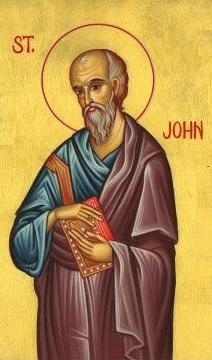
5 observations on the Prologue in 1 John

The Apostle JohnJohn opens his writing with what Raymond Brown calls a “grammatical obstacle course”. Here are 5 observations that will help you navigate this challenging passage without breaking too much of a sweat.

1. The main verb – we proclaim to you – occurs in the third verse. It is buried beneath numerous relative clauses (that which …). These clauses expand on the idea communicated by the main verb. They (along with the prepositional phrase) will tell us what is being proclaimed. Continue reading

Whosoever has Enduring Faith?

The passage John 3:16 is perhaps the most popular and well known verse in the Scriptures. Most of you reading this probably have the familiar words forming in your mind right now.

For this is the way  God loved the world: He gave his one and only  Son, so that everyone who believes in him will not perish but have eternal life. (NET)

Many call it the “gospel in a nutshell”. Max Lucado describes the passage in his book 3:16 as

[a] twenty-six word parade of hope: beginning with God, ending with life, and urging us to do the same. Brief enough to write on a napkin or memorize in a moment, yet solid enough to weather two thousand years of storms and questions.

Continue reading

Do we need enduring faith?

While Paul was in prison in Rome he wrote a letter to the church at Colossae. In the letter he is urging the church to reject false philosophies and points to why we need Jesus. In verses 1:21-23 he presents us with a conditional statement that could be written out as follows:

if you really continue in the faith and do not shift from the gospel (enduring faith)
then you are reconciled by Jesus’ death and will be presented holy and blameless before him

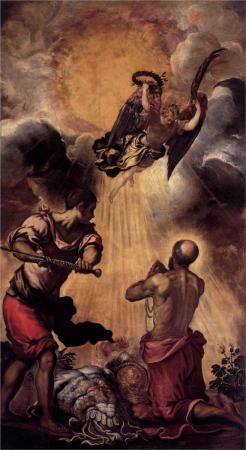
The Martyrdom of Paul

The Martyrdom of Paul

In a conditional statement, like the one here, the if-clause is known as the protasis and the then-clause is called the apodosis. The apodosis can often be expressed as a statement that can stand independent of the protasis. Read Colossians 1:21-22 as if it had a period at the end of verse 22 and you see that this is a complete thought. It can stand on its own. However, the occurrence of an if-clause, like the one we have in 1:23, attaches a condition to this otherwise independent statement.

Continue reading