Einstein: Know your History

I finished reading The Trouble with Physics by theoretical physicist Lee Smolin. In this book Smolin tackles the current state of physics and its lack of progress in solving the five fundamental questions.albert-einstein It was an interesting read, though if you are not someone who tackles popular works of science I would recommend Brian Greene’s Elegant Universe first.

Toward the end of the book, Smolin laments the inability of the scientific community to jump start another series of great discoveries, like those of the early twentieth century, to help move science forward toward finding the grand Theory of Everything (TOE). He attributes this to an academic system that rewards master craftsman who don’t challenge the current theories, while also failing to promote an environment for seers to flourish. Continue reading

Why doesn’t God present the Gospel so all will believe?

Came across an old post (2006) by Sam Storms today as I was drinking my coffee. Storms, a Calvinist and contributor to Parchment & Pen, notes that the two traditions – Calvinism and Arminianism – “share a considerable amount of common theological ground, even when it comes to the issue of salvation.”

In sum, the Wesleyan Arminian analysis of fallen human nature does not differ fundamentally from the Calvinistic one. So wherein do they differ? Why do Wesleyan Arminians affirm conditional election and Calvinists affirm that election is unconditional? The answer is what is called prevenient (or preventing) grace

Throughout the post Storms is fair and accurate in his presentation. He quotes from several Arminian theologians (Wesley, Oden, Thiessen) as he accurately describes prevenient grace as providing “people with the ability to choose or reject God.”

Presenting prevenient grace properly does not mean Storms agrees with it. As he sees it there are numerous problems. Most are rooted in suspending God’s sovereign work “on the will of man” and giving people a reason to boast about their part in salvation.

BruceAlmighty2

Continue reading

Why could God not have made men such that they always freely choose the good?

Why is there so much evil and suffering in the world if the Judaeo-Christian God exists? This question presents us with the challenge known as the logical problem of evil. The solution to this problem, Scripturally and logically, is the high value placed on significantly free (ie libertarian free will (LFW)) people (see post).

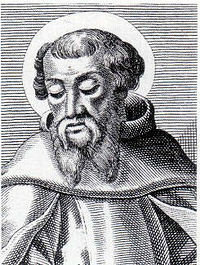
Irenaeus

Irenaeus

A common challenge to the free will defense (FWD) is that God could create a world in which significantly free people never “go bad”.  The FWD, as posited by philosopher Alvin Plantinga, however, rests on the idea that creating people with LFW makes such a world impossible (quotes).

God can create free creatures, but He can’t cause or determine them to do only what is right. For if He does so, then they aren’t significantly free after all. … He can’t give these creatures the freedom to perform evil and at the same time prevent them from doing so.

C.S. Lewis would agree with Plantinga, a world in which people are significantly free yet never do anything but good is not possible, even for an omnipotent God. Continue reading