The Third Peacock and Theodicy

In The Third Peacock, Robert Farrar Capon presents the reader with an interesting exploration of the problem of evil in the face of a good God (theodicy).
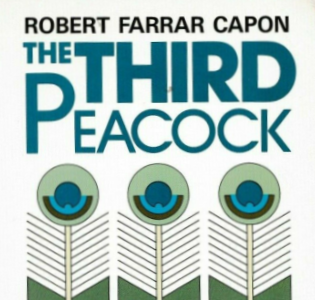
Capon writes with an easy prose that sounds more like the conversation one would have while sitting and enjoying a beer together (or whatever your drink of choice might be). He dispenses with theological jargon, offering instead a plain spoken, no holds barred assessment of the rough and tumble world we live in. How can this world possibly align with a good God? The reader may not agree with everything that is written, I didn’t, but this book does offer some insights for anyone that asks questions – either silently or aloud – about why there is so much suffering, both moral and natural, in creation.

I should warn you that this post is part book review and part blogging through a book. It summarizes many of the main points made in the book and thus contains spoilers.

The book opens with the sentence – “Let me tell you why God made the world.” By the middle of the next page we find the Trinity drinking wine, telling jokes and throwing olives at each other. With this analogy, which even Capon admits is crass, the author seeks to present the reader with the theology of delight. This attempts to overturn ideas of God as a cosmic kill-joy or stern judge. Perhaps it could serve as a rebuttal to the servant in Matthew 25 who sees God as overly harsh. The theology of delight offers up creation as one big party in which God took, and continues to take, great delight in what He has created.

Continue reading
Twas a Tale of Two Falls

A theological poem using the rhyme scheme known as anapaestic tetrameter found in Twas the Night Before Christmas.

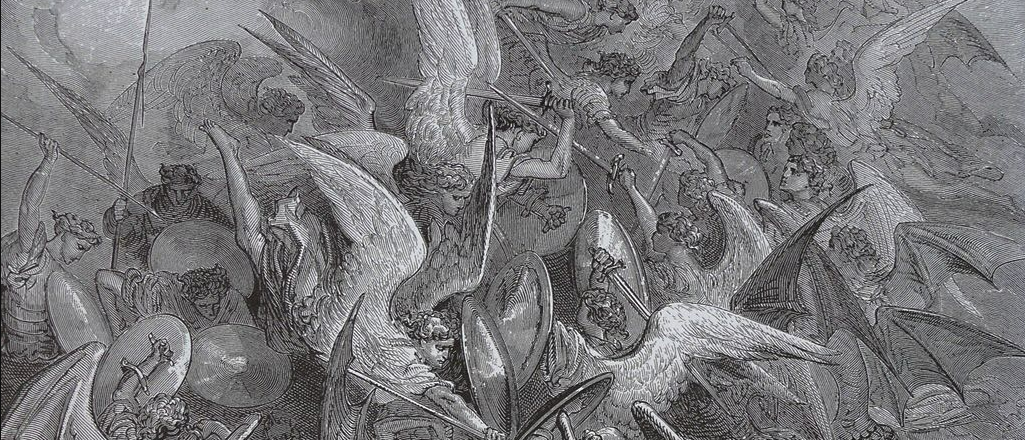
Illustration for John Milton’s “Paradise Lost“ by Gustave Doré

Twas before the beginning when God formed a plan
to create heavens and earth and even a man.
Before earth’s big debut, there was a prior start.
The angels were created and given a part.
Praising the Ancient One in His glorious light. 
The winged creatures serve Him all day, there’s never night.

But wait. How can we know the order of these things?
Can angels rejoice before they’re made by the King?
For eternity has no before or after.
It’s one endless now without former or latter.
Now, if time is the space that’s between two events, 
then to order them ask: when did the clock commence?
Before earth and sky are spoken into being,
what else can give things chronological meaning?

Let’s go back to the start before our inception 
when angels were pure and were without deception.

Continue reading

Ancient Theologians weigh in on Genesis: Basil’s reflections on creation (part 6)

This post is part of a series looking at Basil’s views on the creation account in Genesis. If you have not already read it, I recommend starting with part 1.

In prior posts we have seen how Basil understood the waters of creation. In this concluding post we will once more touch on these concepts as we look at how Basil understood the firmament itself.

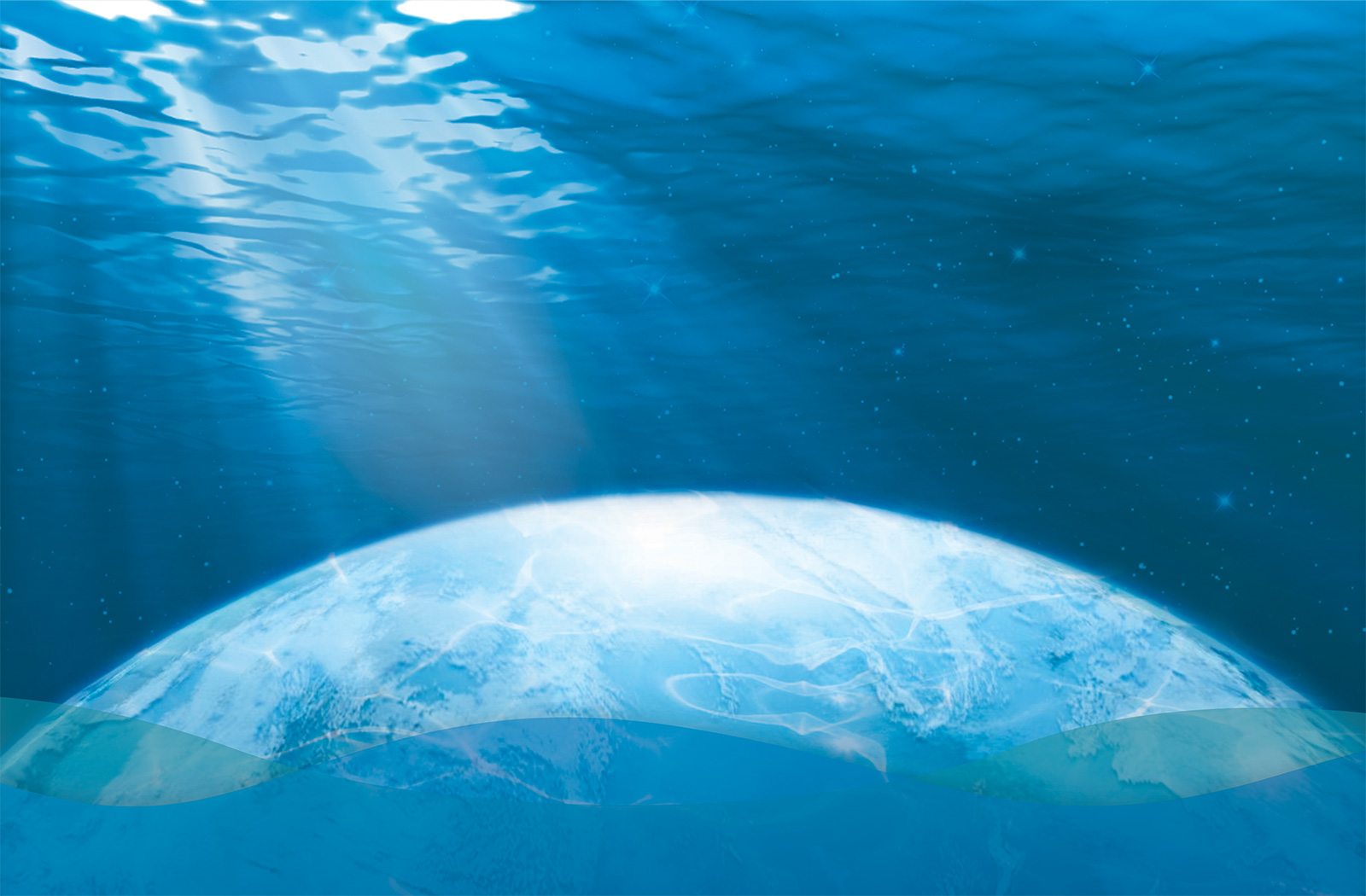
The earth was created underwater

Source: NASA.gov

During his homily Basil explores why the earth was “invisible and without form”. The use of the term “invisible” instead of “empty” may indicate that Basil is using the LXX (ἀόρατος καὶ ἀκατασκεύαστος) instead of the Hebrew text. While it could be debated whether the Hebrew term encompasses the idea of being invisible or just that the earth was barren prior to the rest of creation, Basil is working off of that text and translation.

As nothing of all this [growth of all kinds of plants] yet existed, Scripture is right in calling the earth without form.

The formless earth was also invisible because it was submerged under a large body of water.

The earth was invisible … because being submerged under the waters which over-flowed the surface, it could not be seen, since the waters had not yet been gathered together into their own places, where God afterwards collected them, and gave them the name of seas.

… The earth was invisible. Why? Because the deep was spread over its surface. What is the deep? A mass of water of extreme depth. But we know that we can see many bodies through clear and transparent water. How then was it that no part of the earth appeared through the water? Because the air which surrounded it was still without light and in darkness. The rays of the sun, penetrating the water, often allow us to see the pebbles which form the bed of the river, but in a dark night it is impossible for our glance to penetrate under the water. Thus, these words the earth was invisible are explained by those that follow; the deep covered it and itself was in darkness.

HOMILY II

 Let us understand that by water water is meant;

Basil (Homily III)

What is the firmament?

As Basil tackles the creation of the firmament (or expanse) which separates the waters, he notes that this entity is also called “heaven”. He reflects on the opening passage where it states that God created “the heavens and the earth” and asks “does the firmament that is called heaven differ from that [which] God made in the beginning?”

Basil acknowledges that within the church there are differing opinions.

Continue reading