The Early Church can be bumpers on the bowling alley of theology

When ever we approach a passage in Scripture or a particular doctrinal claim we want to understand what the correct meaning is or whether that claim is correct. There are a variety of factors that are involved in working through that process.

640px-BowlingballImagine that the process is like tossing a bowling ball down the narrow alley.

We want to get a strike (the correct interpretation or assessment of a doctrine). If we can’t do that we would like to get as close as possible.

For us bad bowlers, we are happy to knock down some pins and often end up throwing gutter balls. In a game that might be fine, but from a theological perspective that would mean we are pretty far off the mark.

In a post last year, I proposed an Agile Manifesto for theology and doctrine. The goal was to offer up some principles to help us approach our theology and doctrine in the best way possible.

One of the proposed principles was: favor tradition and the historic Rule of Faith over novel theological views.  BillAndTed_NapoleanBowling Continue reading

An Ancient Theologian tackles John 6 and Romans 9

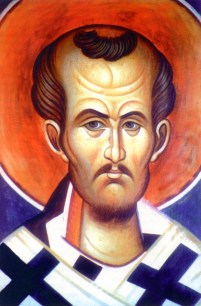
st-john-chrysostom-71John Chrysostom, a 4th century theologian, served as Bishop of Constantinople and was known for his preaching and ascetic lifestyle. What made him a noteworthy teacher was his ability and desire to be understood by the lay person and his rejection of allegorical interpretation.

Chrysostom predated the Pelagian and Semi-Pelagian debates that dominated the 5th century but was around during the disputes with the Manicheans.

The Manicheans were a heretical group that held to dualism. The founder claimed to be an apostle.

Augustine was a Manichean for nearly a decade before coming to Christ. He spent much of his early Christian experience refuting them in numerous works. At this time Augustine refuted the Manichean deterministic idea that “evils and sins are thereby connected, as by a sort of chain, to God” by arguing that actions that were determined and not performed through a willing agent did not deserve condemnation.

While ministering in Antioch, Chrysostom wrote Homilies (or sermons), which consist of verse by verse expositions of the Scriptures. Chrysostom, did not author major works against the Manicheans as Augustine did, but noted in his sermons those passages which these (and other heretical groups) wrongly interpreted. Continue reading

Justin Martyr: The Problem of Evil (Christmas Edition)

Do not be afraid! Listen carefully, for I proclaim to you good news that brings great joy to all the people

In explaining the meaning of Christmas, Justin tackles the problem of evil by examining the massacre of infants ordered by Herod. Think for a moment about what life would have been like in Bethlehem for parents with young children.

BookCover_UnholyNightIf you have trouble imagining what it might be like, Unholy Night, the mashup by Seth Grahame-Smith (of Abraham Lincoln Vampire Hunter fame) may help. In this book he relates some of the horrors unleashed by Herod.

a woman in dark robes, running barefoot toward them down one of the cobblestoned streets. Running faster than she’d run in her life, because nothing in her life had ever been as important. …

There was a baby in her arms.

Naked. Tiny. Held to its mother’s breast as she ran from the horse. The black horse galloped after them with a soldier on its back, his armor clanging around him, his sword drawn.

That image should make you recoil. Continue reading