What if William Lane Craig of Reasonable Faith wrote the lyrics to Panama by Van Halen? If he is right about Molinism and middle knowledge then there must have been a possible world where this happened. So I offer you what those lyrics might have looked like in some other world that we have not had the blessing to see actualized. Apologies to William Lane Craig, Van Halen and Luis de Molina.
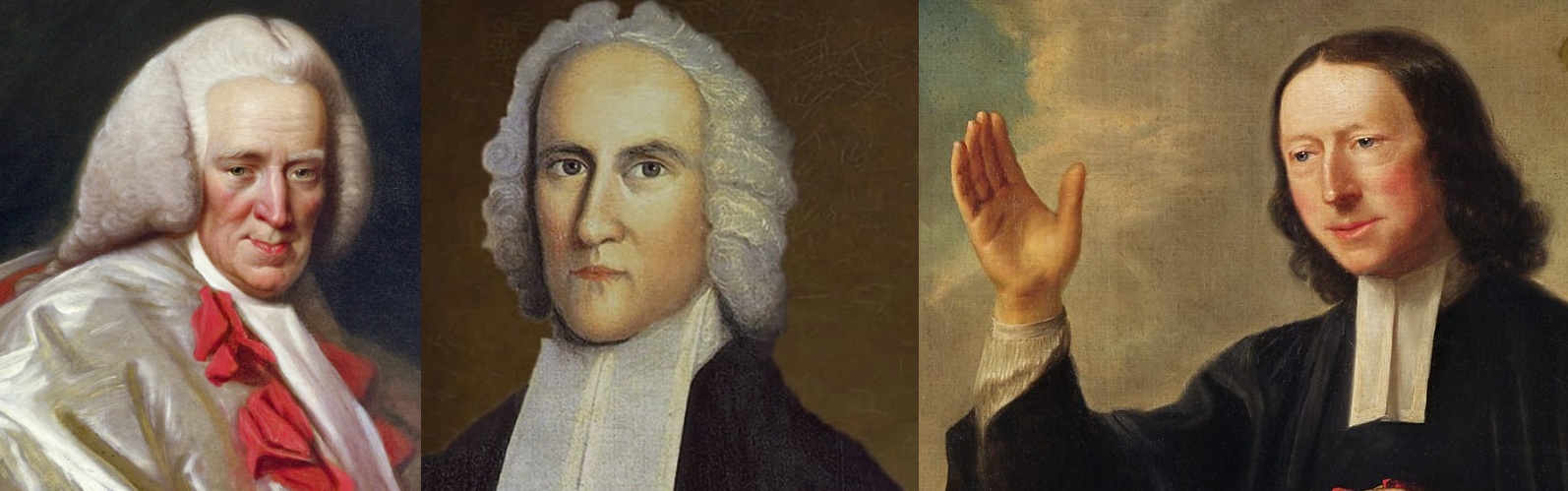
This post is part 4 of a series that has explored the three essays on the topic Liberty and Necessity by John Wesley, Jonathan Edwards and Lord Kames. This series started with this post Wednesday with Wesley: Thoughts Upon Necessity
In the last post, we found that both Edwards and Lord Kames put forth a position where all of our actions are morally necessary and that they are just as certain as any found in the natural world. Both of these theologians further propose that every act is a “going forth of the will” which “is always determined by the strongest motive.”1
Where these theologians disagreed with each other was on how the concept of liberty should be defined. Lord Kames will assert that “liberty [is] opposed to moral necessity.” 2 Edwards recoils at this idea, arguing that liberty is not only not opposed to moral necessity but requires it.3 Lord Kames ascribes to the term liberty “a power [to act] without or against motives.”4 Edwards rejects this noting that an action done without a motive is no liberty at all.5
It is anachronistic to attempt to label the Lord Kames and Edwards with terms used in modern debates about free will. 6 Any identification attempted here would be based on a limited exposure to the corpus of either thinker and based primarily on these essays. However, by breaking down their essays into a series of premises we can deduce where they fall within the debate and gain some clarity on why these theologians have opposing ideas about liberty, necessity and moral accountability.
Taking these into account, I would suggest that Lord Kames is an incompatibilist as he seems to find moral necessity and moral obligation incompatible.
Having read Wesley’s “Thoughts Upon Necessity”, I decided to explore more of Lord Kames’ essay “On Liberty and Necessity”. That led to reading Jonathan Edwards remarks on the essay as well. This post is part 3 of a series which started with this post Wednesday with Wesley: Thoughts Upon Necessity
In the last post Lord Kames’ position was explored and summarized using excerpts from his essay “On Liberty and Necessity”. Wesley represented Lord Kames’ view reasonably well In his own essay, In this post we will explore how Jonathon Edwards and Lord Kames differ.
Lord Kames presented us with what he considered the fixed law of the moral world.
[our mind must] necessarily be determined to the side of the most powerful motive … in this lies the necessity of our actions 1
On this Lord Kames and Jonathan Edwards are agreed. Here is a similar statement found in the more popular work “Freedom of the Will” by Edwards.
It is that motive, which, as it stands in view of the mind, is the strongest, that determines the will. … I suppose the will is always determined by the strongest motive.2


 Dead Heroes Don't Save