Clear and Present Danger

Clear and Present Danger is not just a good book and later movie but got its start in the Supreme Court of the U.S. (SCOTUS) way back in 1919. Justice Oliver Wendell Holmes Jr., writing the unanimous opinion for the SCOTUS in the case Schenck v. United States, gave us the clear and present danger test. It states in essence that there are times when the 1st Amendment right to free speech may be restricted. The test was actually refined through additional cases as a means to protect speech unless the immediate threat of illegal activity was present.

The question in every case is whether the words used are used in such circumstances and are of such a nature as to create a clear and present danger that they will bring about the substantive evils that Congress has a right to prevent. It is a question of proximity and degree.  (emphasis added)

Martin Luther (Lucas Cranach the Elder 1526)

In Luther’s introduction to his commentary on Galatians, he articulates his own test for clear and present danger when it comes to matters of theology. Continue reading

Some thoughts on Theological Debate from Galatians

I will be studying and teaching through the book of Galatians during the summer. As I work through the book I plan to share observations and thoughts.

Paul, an apostle— not from men nor through man, but through Jesus Christ and God the Father, who raised him from the dead—and all the brothers who are with me,

To the churches of Galatia (Gal 1:1-2 ESV)

Apostle Paul (painting by Andrei Rublev)

Apostle Paul (painting by Andrei Rublev)

Paul wrote the letter to the Galatians in order to deal with some teachers who arrived some time after he left. These teachers were distorting the gospel that Paul had preached and had introduced the churches to the idea that “real” Christians must be circumcised and follow the Mosaic Law. Their teaching had persuaded many in the church to adopt this view. Continue reading

The Five Act Hermeneutic (Scripture and the Authority of God by N.T. Wright)

This is part 6  of the series blogging through the book Scripture and the Authority of God by N.T. Wright. You might want to start with part 1 and work your way through the series.

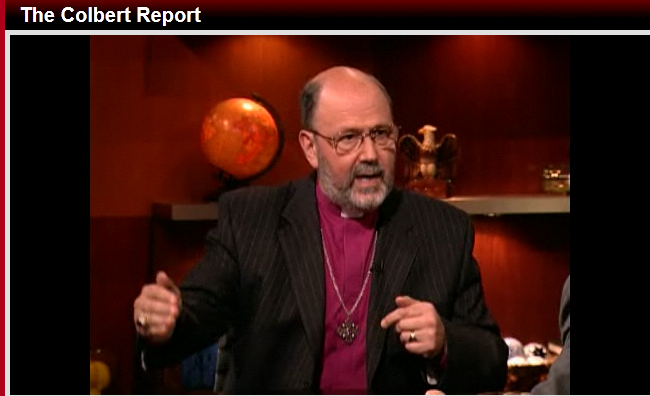
N.T. Wright on Colbert Report

Wright (and this series) started off posing the following questions:

  • If Jesus has authority, what do we mean by authority?
  • How does Jesus exercise His authority through the Bible?
  • Since the Bible is mostly narrative, how can a story be authoritative?

Wright also posed the problem that whenever we go to the scriptures to dig out ‘timeless truths’ rather than the ‘story’ we run the risk of letting something else possess the “real” authority. As he chronicles the various hermeneutic approaches throughout church history (chapters 3 through 6) he unpacks what that something else is: Continue reading