
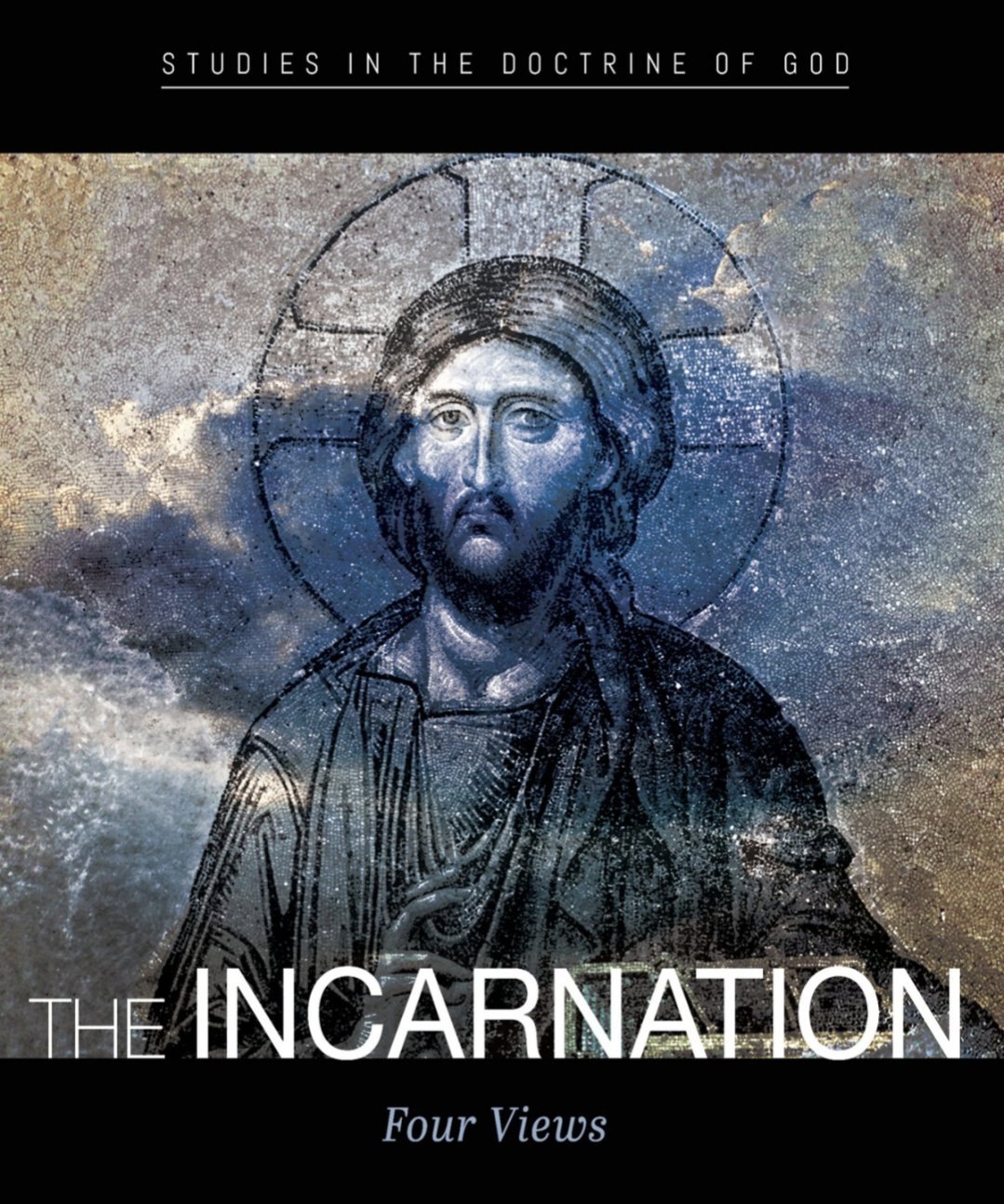
This is part of a series of posts exploring each of the views presented in The Incarnation Four Views edited by Andrew Hollingsworth and R.T. Mullins.
View 4: Relative Identity
Joseph Jedwab is an Associate Professor of Philosophy and Government at Kutztown University. He has published several papers, including a review of Timothy Pawl’s In Defense of Conciliar Christology.
Jedwab has the unusual position of writing and defending a model that he does not hold.1 In fact he admits that he doesn’t endorse any model, but does encourage the proposal of many possible models to solve the challenges of the Incarnation.2
Examining the Relative Identity (RI) model he presents is going to be a challenge due to its complexity. Two of the contributors, Loke and Evans, note that they are confused. 3 The other contributor, Pawl, admits that Jedwab’s essay is “daunting”.4 And, I remind you, these are philosophy professors.
One more thing worth noting is that RI, like NSN, sees the Incarnation as a logic problem and relies on formal logic to present the premises in a way that is non-contradictory. Unlike the two kenotic models, RI does not provide a positive explanatory story about how Jesus can be fully divine and human. A point that Jedwab concedes.
The RI model, though, leaves us with a mystery. We cannot fully understand how it could be that different persons are the same being or that different beings are the same person. 5
In his essay Jedwab presents several pages of logical premises and conceptual truths that present apparent contradictions. He also presents several formulas related to RI relations to work through a possible solution.
An example of an apparent contradiction might be (numbering carried over from the essay):
- P1: The Son is divine and human 6
- P2: Everything divine is uncreated
- P3: Everything human is created
The RI model seeks to solve for the contradictory claim that the Son is both uncreated and created.
Before digging into the basics of what RI relations can offer Christology as a solution, I will do my best to explain what the RI model sets out to do more broadly first.
Identity
The philosophical problem of identity is brought to the forefront in this proposed model. The absolute (or standard) model of identity has four major properties.7
- reflexivity
- everything is identical to itself, and no other (x=x)
- indiscernibility (Leibniz’s Law)
- if x and y are numerically identical they have all the exact same properties as each other (x=y)
- symmetry
- if x is identical to y, then y is identical to x (x=y, y=x)
- transitivity
- if x is identical to y and y is identical to z, then x is identical to z (x=y, y=z, x=z)
Walking through an example with a superhero is probably a useful illustration to begin to understand this concept.
Let’s start with the claim:
- Bruce Wayne is Batman
This statement taken as an absolute identity claim asserts that Bruce Wayne and Batman are the same person. They are numerically identical.
Indiscernibility is a consequence of making a claim of absolute identity. If we assert that Bruce Wayne is 6’2″ tall then indiscernibility tells us that Batman must also be 6’2″ tall.

Let’s add another identity claim:
- Bruce Wayne is Batman
- Batman is the Dark Knight
Transitivity means that Bruce Wayne is identical to the Dark Knight. Batman, Bruce Wayne and the Dark Knight are numerically identical. They are all the same person. And they are all 6’2″ tall. 8
When making an absolute identity clam, if two objects (x & y) are the same N as each other then they are identical (indiscernible) to each other.
- if x is the same N as y then x = y
When making an identity claim the N should refer to a particular instance of something instead of a universal type, property or role. For the objects x & y to be identical they must refer to the same particular N.
This formula provides a useful test. If both claims are true then x = y.
- x is an N iff x is the same N as y 9
Let’s test these formulas with Batman.
- x = Bruce Wayne
- y = the person who defeated the Joker
- N = Batman
Let’s test that.
- Bruce Wayne is Batman (x is an N)
- the person who defeated the Joker is Batman (y is an N)
Now let’s ask is x the same N as y:
- Is Bruce Wayne the same Batman as “the person who defeated the Joker”?
If that question can be answered with a yes then Bruce Wayne and the “person who defeated the Joker” refer to the same Batman. The x & y both refer to the same particular entity so these entities are numerically identical and all of these entities refer to the same person. And the Dark Knight is 6’2″ tall.
Let’s look at an example where this doesn’t work. When Dick Grayson dons the cowl, we might be tempted to say something like:
- Bruce Wayne is Batman
- Dick Grayson is Batman
Breaking that out as variables
- x = Bruce Wayne
- y = Dick Grayson
- N = Batman
We need to test that just as we did before.
- Bruce Wayne is Batman (x is an N)
- Dick Grayson is Batman (y is an N)
- Is Bruce Wayne the same Batman as Dick Grayson?
If we answer yes then absolute identity would require Bruce to be the same person as Dick (x=y).
But we know that Bruce Wayne is not Dick Grayson. They are not the same person.
- Bruce Wayne ≠ Dick Grayson
Bruce Wayne is Batman. Dick Grayson is Batman. But Bruce isn’t the “same Batman” as Dick. We actually have two distinct persons filling the same role at different times.
This shows that even if Bruce and Dick are an N that it does not mean that they, or any two objects (x & y) we are considering, are the same N as each other. This allows us to introduce the term sortal. A sortal is something that provides a criterion of identity, telling us what counts as being the same individual of that sort.
Relative Identity
Relative identity (RI) proposes that identity is relative to a particular sortal (criterion of identity. Two objects (x & y) can be the same N without having numerically identical in an absolute sense.
- x is the same N as y, but x ≠ y 10
The x and y therefore can be the same N while also being discernible from one another.
The RI proposal is that x & y objects may be the same under one sortal (F) and distinct under a separate sortal (G).
- x is the same F as y
- x is not the same G as y
The Ship of Theseus and Relative Identity
As an example of RI relations we can examine the popular paradox the Ship of Theseus. The ship was a thirty-oared galley that brought the ancient Greek hero Theseus back from Crete to Athens. Each year the Athenians would commemorate the event by taking the ship to the island of Delos and back to fulfill a vow made to Apollo before Theseus set off on his quest. During this commemorative trip all executions in Athens were suspended until it returned. Philosophy fans know that it was this event that delayed the execution of Socrates.11
As the years went on the older wooden planks of Theseus’ ship were replaced. Eventually the remodeling of the ship resulted in all of the original wood being replaced. Philosophers would then muse whether the ship that continued to sail each year to Delos was the “same ship” as the one Theseus sailed on. The question about whether this was the “same ship” had became a popular thought experiment to explore theories of identity. In the 17th century Thomas Hobbes added to the paradox by suggesting that all of the original wooden planks were used to build an exact replica of the ship.
We would then have two ships, a remodeled one and reconstructed one.
- Which ship can claim to be the “same ship” as Theseus’ original ship?
Let’s consider this as a way to explore relative identity.
- Let O be the original ship Theseus sailed back from Crete on
- Let R be the remodeled ship that is currently in use to sail to and from Delos
- Let M be the reconstructed ship that is built out of the original ship’s materials
We then can make the following claims:
- the remodeled ship is the same as the original (O=R)
- the reconstructed ship is the same as the original (O=M)
- the remodeled ship is not the same as the reconstructed ship (R≠M)
It would seem that we have a problem. We are claiming that both the remodeled (R) and the reconstructed ship (M) are the “same ship” as the original (O). However, identity is transitive and that doesn’t hold.
if R=O and O=M then we should be able to assert that R=M. But there are two distinct ships that are not identical (R≠M). We have a paradox based on absolute identity. We want to claim that two ships are numerically identical to the original ship but they are discernible from each other.
This is where examining the paradox as a set of RI relations can offer a potential solution. It would tell us that there is a relationship (criterion of identity) where these ships are identical and also a relationship (criterion of identity) where they are not identical.
Now lets define two sortals for the ship of Theseus.
- Let F represent ships used annually traveling to and from Delos to honor Apollo
- Let G represent ship building material
Then we can represent the relationships between the three entities as follows:
- x is the same F as y
- x is not the same G as y 12
Now, we can ask questions like is the remodeled ship’s (R) building material (G) the same as the original ship’s (O) building material. The answer is clearly no. These two ships are not built with the same particular wooden planks.
It also allows us to ask is the remodeled ship (R) making the same trip as the original ship (O). The answer is yes. These ships both are used to honor Apollo by travelling to and from Delos. The same questions can be asked about the reconstructed ship (M) and its relation to the original ship (O).
The complete set of RI relations:
- R is the same F as O
- R is not the same G as O
and
- M is not the same F as O
- M is the same G as O
That allows us to show R and M have identity claims based on different sortals. There is a RI relation (F) in which the remodeled ship (R) is the same ship as the original (O). But there is another RI relation (G) in which the reconstructed ship (M) is the same ship as the original (O).
Yet we can also claim that the remodeled ship (R) is not the same as the reconstructed ship (M). Besides the fact that the remodeled and reconstructed ships don’t have the same properties, we can derive their distinctness through transitivity.
- Is the reconstructed ship (M) the same building material (G) the original ship (O)?
- Is the remodeled ship (R) the same building material (G) as the original ship (O)?
The answers are yes and no, respectively.
Yet:
- If the remodeled ship (R) were the same building material (G) as the reconstructed ship (M)
- if (R=M)
- and the reconstructed ship (M) were the same building material (G) as the original ship (O)
- and (M=O)
- then by transitivity the remodeled ship (R) would have to be the same building material (G) as the original ship (O)
- then (R=O)
But the remodeled ship (R) is not the same building material (G) as the original ship (O). Therefore, the remodeled ship (R) and the reconstructed ship (M) are not the same ship and transitivity doesn’t hold.
There is a sense in which both ships can be identified as the Ship of Theseus. That is what perplexed philosophers who were thinking about absolute identity. However RI relationships show us that both ships can be identified as the Ship of Theseus without logical contradiction when considered under different sortals.
This illustration gives us a taste of what RI is doing (assuming I am understanding it).
Christology and Relative Identity
What does any of this have to do with Christology? The presentation Jedwab gives in his essay relies on numerous premises and conceptual truths as they relate to the Trinity and Christology. I will attempt to present a barebones outline of how relative identity is used to attempt to solve contradictory claims in the Incarnation.
What is a nature and what is a person?
Jedwab accepts the metaphysical view that natures are concrete. He defines a nature as a being. And he defines a being as that which has causal powers.13 A person is a rational being. Rational here involves having an intellect and a will. 14 From this we can see that an entity that is a person is metaphysically a concrete nature (aka being). Jedwab prefers the use of the term “being” rather than “nature” throughout his essay.
The terms Son and Jesus are used as descriptions to differentiate the divine being from the human being. That means the incarnate 2nd Person of the Trinity can be described as follows:
- s is the Son who is divine, a person and a being
- j is Jesus who is human, a person and a being15
Jedwab seems to distance himself from arguments, such as Pawl and Aquinas, that metaphysically try to define things so that the assumed human nature is not also considered a person.16 This is a cleaner metaphysical claim but it does raise an important question. How can two distinct beings be one person if personhood is defined as being a rational being?
Jedwab suggests that in assuming the person Jesus this process causes the Son to be the same person as Jesus but not the same being. 17 This is a mystery that is accepted as part of describing the Incarnation in terms of RI.
That yields two conceptual truths (numbering carried over from the essay):
- CT11: If x assumes y, then x is divine and y is human.
- CT12: If x assumes y, then x and y are the same person but different beings 18
The term Christ in then introduced as a term to designate the one Person that is both the Son and Jesus. This is the result of the Incarnation when the Son assumed a human nature (ie Jesus). 19
- c is Christ, a definite description for a person that is s and j 20
These are considered truths because they account for the widely held Christian claim that Christ is a single person that is both fully divine and fully human.
How many Persons?
When we say that Christ is human and divine we are noting that He is “composed” of two beings (natures). However, using Jedwab’s definition that seemingly yields two persons, not one.21
- Is the Son a person? Yes. He is a divine person.
- Is Jesus a person? Yes. He is a human person.
Simple math gives us two persons. 22 And transitivity shows us that the Son and Jesus are discernable entities.
Let z = “the one that does not know the day of His return”
- if the Son is identical to Jesus (s=j)
- and Jesus is identical to “the one does not know the day of His return” (j=z)
- then the Son, based on transitivity should be identical to “the one does not know the day of His return” (s=z)
However the Son as a divine being is omniscient and does know the day of His return.
- the Son ≠ “the one does not know the day of His return”
This is true for other like “created” and “can hunger and tire”. These are all properties that Jesus bears but the Son, in His divine nature, possesses none of these.
At this point it seems that this model risks Nestorianism, a view which proposed that Christ was two persons and was rejected during the Christological debates.
Jedwab, however, proposes counting by identity instead of by mere instantiation. 23
- Are the Son and Jesus the same person?
If we use P as the placeholder for the sortal Person and use the conceptual truth (CT12) listed above we have the RI relation:
- s is the same P as j
If the Son is the “same Person” as Jesus then they are identical on this RI relation. And that means we can count them as one person. 24 It is because this relation holds that the term Christ is suggested to refer to the one person that is both the Son and Jesus.
How many Beings?
After exploring the sortal Person, we now need to ask another question.
- Are the Son and Jesus the same being?
No. The Son is a divine being and Jesus is a human being.
If we use B as the placeholder for the sortal Being and use the conceptual truth (CT11) listed above we have the RI relation:
- s is not the same B as j
If the Son is not the “same Being” as Jesus then they are not identical on this RI relation so we count them as two beings. Remembering that by “being” Jedwab means a concrete nature, the claim that the Son and Jesus are different beings is to simply say Christ has both a divine and a human nature. This is how that claim can be demonstrated using relative identity.
Relative Identity and discernability
We have examined two RI relations related to the 2nd Person of the Trinity:
- s is the same P as j
- s is not the same B as j
This demonstrates that the Son and Jesus have identity claims based on different sortals. There is a RI relation (P) in which the Son and Jesus are the same Person. But there is another RI relation (B) in which the Son and Jesus are not the same Being.
Notice this is the same move that was made regarding the ship of Theseus. The remodeled ship (R) and the original ship (O) were identical based on the RI relation (F). They are the “same ship” that sails annually around Delos. However they are not identical when based on the RI relation (G). They are not built from the “same material”.
Remember that the RI model makes this claim:
- x is the same N as y, but x ≠ y
Applying this to the Incarnation we find that on the RI relation Person (P), we would have a problem if we assumed an absolute identity. The entities Son and Jesus are the “same Person” but they are not indiscernible. They are different Beings and have different properties. Which is what we need. It is on the Person sortal (P) that we can say that the Son and Jesus are the “same Person” but do not have the exact same properties (s ≠ j). We can logically say that the Son has such properties as being uncreated, immutable and knowing the day and hour of his return. And we can say that Jesus lacks those properties. We can further add that Jesus has the properties of being created, mutable and not knowing the day and hour of his return. Properties that the Son lacks.
Predicating properties to one Person
The communication of idioms allows us predicate something true of one being or nature onto the person as a whole. 25
Jedwab describes this as:
if a personal singular term refers to one of two beings that are the same person, then that singular term comprehends the properties of both of those beings.26
Let’s break that down.
“A personal singular term that refers to one of two beings” would fit the Son, Jesus and Christ as they have been defined.
- Jesus refers to the human being and not the divine being
“One of two beings are the same person” would refer to the Son and Jesus which we have demonstrated are the “same person”.
- Jesus is the same Person as the Son
The “singular term” can “comprehend the properties of both of those beings” means that uncreated can be predicated onto Jesus, even though it is a property of the divine being. This is possible because Jesus and the Son are the same person.
- Jesus is uncreated
All of this is also true of the term Christ who is the “same person” as both the Son and Jesus.
We know that the Son, as divine, knows the day of His return. We also know that Jesus, as human, does not. However we can take properties from one nature and ascribe it to the term that refers to the “same person.” The Son’s knowledge gets predicated to Jesus even though He does not know this as a human being. Jesus’ lack of knowledge can be predicated to the Son by the same mechanism. We can also predicate things like passibility from the human nature and impassibility from the divine nature, to each of the three terms.
Under absolute identity this would result in contradictions because being the “same person” would require both entities to be indiscernible. But that is what relative identity seeks to solve by setting aside that requirement.
Conclusion
In the end, understanding identity according to RI relations can be used to show how a set of apparently contradictory statements can belong to the same person by explaining how we can formulate claims consistently. It is, however, only a logical defense. Just as narrow scope negation and the reduplicative strategy are logical approaches. RI relations may formally address the apparent logical contradictions that arise when we talk about the Son incarnate, but does not provide any explanatory mechanisms for how one person can simultaneously be omniscient and not know the day or hour of his return. Nor does it provide any metaphysical reasoning for how the assumption would cause two persons to become the “same person”.
[< Part 3]
- Hollingsworth, Mullins, The Incarnation Four Views, Wipf and Stock Publishers Kindle edition (p 242) ↩︎
- Ibid 297 ↩︎
- Ibid 285, 294 ↩︎
- Ibid 272 ↩︎
- Ibid 265 ↩︎
- Ibid 244 ↩︎
- Relative Identity, Stanford Encyclopedia of Philosophy
(source https://plato.stanford.edu/entries/identity-relative/) ↩︎ - Ibid ↩︎
- The Incarnation Four Views (p 247) ↩︎
- Ibid 249 ↩︎
- Plato Phaedo 57b–58c
(source:https://www.perseus.tufts.edu/hopper/text?doc=Perseus%3Atext%3A1999.01.0170%3Atext%3DPhaedo%3Asection%3D58b) ↩︎ - Relative Identity, Stanford Encyclopedia of Philosophy ↩︎
- The Incarnation Four Views (p 242, 245, 249) ↩︎
- Ibid 249 ↩︎
- Ibid 255 ↩︎
- Ibid 245 ↩︎
- Ibid 255-256 ↩︎
- Ibid 253 ↩︎
- Ibid 255-256 ↩︎
- Ibid 255 ↩︎
- Ibid 244 ↩︎
- Ibid 273
Pawl notes that this in his response to Jedwab’s essay ↩︎ - Ibid 258 ↩︎
- Ibid 258 ↩︎
- Ibid 261 ↩︎
- Ibid 261 ↩︎


Pingback: Blogging Thru The Incarnation Four Views: Kenotic Christology (Part 3) | Dead Heroes Don't Save