
This is part of a series of posts exploring each of the views presented in The Incarnation Four Views edited by Andrew Hollingsworth and R.T. Mullins
Having covered each of the models of the Incarnation presented in the Four Views book, I thought I would extend the series by exploring some of the topics that were brought up.
In the first essay Timothy Pawl defined Conciliar Christology as that which was “officially endorsed by the seven ecumenical councils.” 1 He argues that “Conciliar Christology is therefore the traditional, orthodox Christology of the Christian faith” and “is our shared intellectual and theological heritage.” 2
In his critique of Evans’ essay, Pawl asks the question “what counts as orthodoxy.” This was a pointed question raised against Evans’ assertion that his model was orthodox and consistent with the creedal claims about Jesus. 3 Pawl goes on to assert that orthodoxy regarding Christology goes beyond the statements made in the creeds and should include other conciliar documents.4 He argues that one should outline what conciliar documents are being considered, what the councils taught and how one’s model is consistent with them to justify the claim.5
For it is one thing to be persuaded
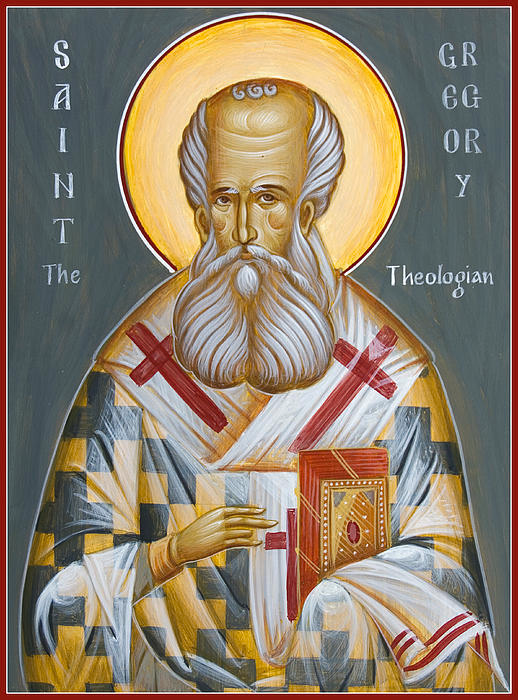
Gregory of Nazianzus
of the existence of a thing,
and quite another to know what it is.
In his response to Andrew Loke, Pawl critiques the novelty of his model and the reinterpretation of terminology. But Pawl does go on to admit that “all the technical mechanics of the philosophical understanding of the doctrine of the incarnation were novel at some point or other.” 6 The history regarding the “standard terms” shows that they were anything but, undergoing revision over the centuries.
These exchanges in the book brought up an interesting question. What does count as orthodoxy? Even if we appeal to the ancient creeds and councils, does orthodoxy require all of the seven councils or just the earliest ones? Does it require only the creeds or should the canons, letters and other documents be included? Perhaps most interestingly, does orthodoxy require acceptance of the ancient metaphysics or is accounting for the broader claims made about the Trinity and Incarnation enough to count?
This post will not seek to answer all of these questions. But it will explore whether there is a possible way forward by scoping out the boundaries set by Conciliar Christology. Boundaries that could be used to assess whether a particular model fits a broader conciliar Christology. Boundaries that might allow one to describe the Trinity and Incarnation without adopting the ancient metaphysics.
In the introduction to the Four Views book the history of ecumenical councils is summed up succinctly and accurately.
There is a sense in which part of the history of Christology is a search for the right vocabulary to adequately describe the reality of God incarnate in Jesus Christ. Christians found themselves needing to debate terms like person, nature, will, as well as figure out the meaning of what it is to be human and divine.7 … What is important to note is that there was still a great deal of ambiguity over which christological terms were acceptable for orthodoxy, and a great deal of ambiguity over what those terms mean.8
In the opening to Jesus in Trinitarian Perspective, Fred Sanders reminds us that the affirmations and anathematizations made by the ecumenical councils are not infallible teachings.
The maneuvering and posturing that went on in some of them, on all sides apparently, is not always an edifying subject of study. No wonder the sixteenth-century Thirty-Nine Articles of Religion of the Church of England said of the ecumenical councils, “forasmuch as they be an assembly of men, whereof all be not governed with the Spirit and word of God, they may err and sometime have erred, even in things pertaining to God.” 9
In his essay and response to the critiques, Evans pointed readers to “Is Kenosis Orthodox?” This is an essay by Stephen Davis that gives a robust argument for why kenotic models of the incarnation are orthodox.10
Davis deals more fully with what it might mean to “count as orthodox” exploring the use of Scripture, tradition and how to deal with different interpretations. I wanted to narrow my focus to what Davis thought would count for orthodoxy as it relates to the tradition. Davis affirms the importance of tradition:
… tradition remains indispensable in interpreting scripture. I believe that all who do serious exegesis or theology must be knowledgeable about the history of Christian thought and practice. This creates a barrier against private or eccentric interpretations …11
For my own thoughts on this see “The Early Church can be bumpers on the bowling alley of theology” and the four part series on “What is Orthodoxy?”.
Davis directs his attention to the creeds and Chalcedon in particular. He identifies the following four major points as a boundary marker (each bullet is quoting his essay). 12
- Jesus Christ is one unified person
- in whom two natures coexist, a divine and a human nature
- these natures are neither confused with each other nor separated from each other in him
- he is accordingly at once truly divine and truly human
He notes that the councils do not provide models or even an explanation on how all of this is possible but rather they marked out what “any Christology [that] is acceptable [will affirm].” 13 The focus on the creeds of Nicaea and Chalcedon would certainly fall under Pawl’s charge of being only a subset of what the councils affirmed.
One way we can establish the boundaries set by Conciliar Christology is to focus on the major competing views that these councils anathematized. The rejection of various claims about the Trinity and the Incarnation helped the early church refine what they wanted to say about them. In addition we can lay out how the terminology evolved over the centuries. The terminology was often vague, misunderstood and was often revised in light of how they were being interpreted or used. If we understand how novel and fluid things were through the conciliar period we might be more accepting of other ways to express and model how we conceive of God. Particularly if different metaphysics and models can avoid the same major heresies that the councils did. This approach is unlikely to satisfy those with a strong commitment to the authority of the councils, classical theism and/or the ancient metaphysics used.
The creeds of the councils lay out many positive statements about what must be affirmed about the Father, Son and Spirit. But the next section will explore what views and claims were being made and refuted at each council.
Nicaea and Arianism
The first council of Nicaea (325) was held to deal with Arianism. Advocates of the Arian view were emphasizing that there was one God while arguing that there “was a time when the Son was not.” 14 They understood God to have created the Son, who was an ontologically different being, reducing the Son to a creature.15
The creed that was adopted made it clear that the Son was “true God from true God”. It included specific terminology to argue that the Son was “of one substance with the Father (ὁμοούσιον τῷ Πατρί).” 16 This term was homoousios which can translated as “same substance” (ousia). The idea was variously understood but in the word ousia was the notion of telling us “what something is”. The ambiguity in what was affirmed by the word at the council would create challenges as we shall see, but was commonly understood as a claim that the Son was fully divine and not a creature.
The anathematization at the end of the creed adopted at Nicaea is clearly directed against the Arian teachings.
But those who say, “There was a time when he did not exist,” and “Before being begotten he did not exist,” and that he came into being from non-existence, or who allege that the Son of God is of another hypostasis or ousia, or who is alterable or changeable, these the Catholic and Apostolic Church condemns.17
It should be noted here that this anathematization considers the terms hypostasis and ousia as synonyms.18 Decades later these terms would begin to be differentiated in what is commonly referred to as the Cappadocian settlement.19
From this council we can make two affirmations that set some clear boundaries:
- there was never a time when the Son of God was not (He is uncreated)
- the Son of God is fully divine, begotten not made
In making it clear that Jesus was fully divine, Sanders argues, the council was establishing that “God alone can save.” 20
The First Council of Constantinople
The creed associated with the first council of Constantinople (381) has a complex and debated history. 21 It was a small group of 150 eastern bishops that met and it was not originally intended to be an ecumenical council. In fact it was not until much later that it was fully recognized as an ecumenical council. 22 There are also debates about whether the Nicene creed was revised at the council in 381 or not.23
The first canon of the council anathematized several different views related to the Trinity and Incarnation. 24
The Faith of the Three Hundred and Eighteen Fathers assembled at Nice in Bithynia shall not be set aside, but shall remain firm. And every heresy shall be anathematized, particularly that of the Eunomians or [Anomæans, the Arians or] Eudoxians, and that of the Semi-Arians or Pneumatomachi, and that of the Sabellians, and that of the Marcellians, and that of the Photinians, and that of the Apollinarians.25
There are several views being anathematized here.
The Pneumatomachi denied that the Holy Spirit was fully divine and thus was not of the “same substance” (ousia) as the Father and the Son. The creed affirmed the divinity of the Spirit noting that He “proceeds from the Father” and “is to be worshipped and glorified.” 26 The Synodical Letter of 382 made the consubstantiality (same ousia) of the Spirit more explicit than the creed itself. 27
Many of the other groups cited struggled with the Nicene term homoousios. The Marcellians and Sabellians put forth views largely understood as modalism. They understood homoousios as meaning “identical” and taught that the Father and the Son were numerically one, denying a real and eternal distinction.28 These views went as far back as Praxeas against whom Tertullian wrote in the early third century. 29
[Praxeas] insisted on divine unity to such a degree that he destroyed the Trinity. Crudely expressed, his position was that the Father alone was God, and that all the experiences undergone by Jesus in His earthly life were undergone by the Father. The other two Persons in the Trinity were reduced to mere modality. … his heresy was to spring up later with Sabellius, from whose name it comes to be called Sabellianism. 30
The group identified as Semi-Arians sought to avoid calling the Son a created being, rejecting Arianism. They also sought to distance themselves from any notion that the Father and the Son were “identical” rejecting Sabellianism. 31 To do that they rejected the term homoousios and were associated with the word homoiousios, saying that the Son is similar but not the same as the Father. They wanted to make it clear that there were distinctions between the Father, Son and Spirit. 32 The Eudoxians, like the Semi-Arians, rejected homoousios as too Sabellian. They argued that the Son was like the Father (homoian). This made a far weaker claim than even the Semi-Arians as they resisted using the term ousia and thus any claim that the Father and the Son were the “same substance”.33
The Five Theological Orations written by Gregory of Nazianzus, around the time just prior to this council, were directed primarily against Eunomius. The Eunomians or Anomæans argued that the Son is unlike the Father in ways similar to the Arians.34 They pushed back against the creedal homoousios instead arguing for dissimilarity (ἀνόμοιος). 35
The ambiguity of homoousios was not the only issue. The use of ousia and hypostasis were also problematic. These terms had predominantly been understood as synonymous at the time of Nicaea.36 The Cappadocians, which included Basil the Great, Gregory of Nyssa and Gregory of Nazianzus, would begin to distinguish these terms in the years prior to the council. Basil is credited with introducing a distinction between the terms ousia and hypostasis, noting the former refers to what was common and the latter to what was particular or individuated. 37
In his treatise, “Not Three Gods”, Gregory of Nyssa admits there is a great difficulty in trying to explain how there can be three enumerated Persons in one Godhead. It seems to force a choice between three Gods and denying the Godhead of the Son and Spirit. 38 Among his answers he notes that the Persons are distinguished by origin, not by nature. The Father is uncaused and the Cause, while the Son and Spirit are from the Cause.
Gregory of Nazianzus also admits there are challenges arguing that “the Divine Nature cannot be apprehended by human reason” and that to “define Him in words is an impossibility”. But he rejected a purely apophatic approach, arguing that more must be said than what God is not. “For it is much easier, and more concise to show what a thing is not from what it is, than to demonstrate what it is by stripping it of what it is not. And this surely is evident to every one.” 39 In the Fifth Oration he would clarify the distinction to be held between the two terms as referring to different aspects of God.40 It should be noted that Gregory uses physis, yet another synonym of ousia, when talking about the “substance” or “nature” of God. The term physis, as well as ousia, would be used to describe what there is one of in the Godhead. This is distinguished from hypostasis, which would now refer to what there is three of in the Godhead.
the distinction of the Three Persons (ὑποστάσεων) may be preserved in the one nature (φύσει) and dignity of the Godhead. … For neither is the Son Father, for the Father is One, but He is what the Father is; nor is the Spirit Son because He is of God, for the Only-begotten is One, but He is what the Son is. The Three are One in Godhead, and the One Three in properties (ἰδιότησιν); so that neither is the Unity a Sabellian one, nor does the Trinity countenance the present evil distinction. 41
This terminology revision was not readily accepted in the years leading up to the council. Jerome complains about the “unheard-of formula of three hypostases” which goes against “the definition of Nicæa.” Although writing in Latin he transcribes the Greek word arguing that “in the whole range of secular learning hypostasis never means anything but essence (substantia). And can any one, I ask, be so profane as to speak of three essences or substances in the Godhead?”42 It should be noted that Jerome does affirm the concept of distinguishing between Father, Son and Spirit writing that if by hypostasis they mean “three persons subsisting. I rejoin that this is my belief.” Here was that terminology, more than the concepts, were causing problems.
The terminology in the Cappadocian settlement would not become part of the conciliar data until it was included in a letter addressed to a synod in 382 as a summary of what the council had affirmed the year prior. 43 In that letter the emphasis was that all that was done was in alignment with “the three hundred and eighteen fathers at Nicæa in Bithynia” which is the “true faith” and the “ancient faith.” 44 In this letter are contained the anathemas found in canon one to which it is added here an explicit disambiguation. The ousia is what there are one of in the Godhead and the hypostases is to be what there are three of in the Godhead. In this letter the term hypostases is also linked with the term prosopon.
According to this faith there is one Godhead, Power (δυνάμεως) and Substance (οὐσίας) of the Father and of the Son and of the Holy Ghost; the dignity being equal, and the majesty being equal in three perfect hypostases, i.e. three perfect persons (προσώποις).45 Thus there is no room for the heresy of Sabellius by the confusion of the hypostases, i.e. the destruction of the personalities; thus the blasphemy of the Eunomians, of the Arians, and of the Pneumatomachi is nullified, which divides the substance, the nature, and the godhead, and super-induces on the uncreated consubstantial and co-eternal Trinity a nature posterior, created and of a different substance. We moreover preserve unperverted the doctrine of the incarnation of the Lord, holding the tradition that the dispensation of the flesh is neither soulless nor mindless nor imperfect ..46
These would affirm the boundaries set in Nicaea as well as add:
- there is one God in substance (ousia, physis) but three in “person” (hypostases, prosopon)
- the Holy Spirit, like the Son is of the same substance (homoousios) as the Father
It should be noted that the terminology for what there is three of in the Godhead was an ambiguous term that was not well-defined. Decades later, in “On the Trinity”, Augustine finds himself at a loss for what to say writing:
[we say] one essence or substance and three persons: as many writers in Latin, who treat of these things, and are of authority, have said, in that they could not find any other more suitable way by which to enunciate in words that which they understood without words. … Yet, when the question is asked, What three? human language labors altogether under great poverty of speech. The answer, however, is given, three persons, not that it might be [completely] spoken, but that it might not be left [wholly] unspoken.47
Constantinople and Apollinarianism
When one reads about this council it is the anathematization of Apollinarianism that is generally highlighted. 48 We see that view called out in the last part of the quotation from the synodical letter above when it is noted that in the incarnation that Jesus “in the flesh is neither soulless nor mindless nor imperfect.” All of the prior views that were anathematized related to the ambiguity in homoousios and the fact that hypostases and ousia were synonymous. Apollinarianism brought a new challenge to the forefront that this council dealt with.
The other challenges required a defense of the full divinity of Christ and navigating the fact that in one Godhead the Father, Son and Spirit were distinct. Apollinaris’ teachings required the church to focus on the humanity of the Son.
Apollinaris was a bishop, prolific writer and a friend of Athanasius. 49 He rejected Arianism and wrote against Marcellus and Eunomius, both of whom had their views anathematized. 50
… the intelligent working clergy must have gained from the sinewy thought and stabbing sentences of Apollinaris a much more conquering assurance [than that offered by the Cappadocians] of the bankruptcy of Arianism. 51
It was his disputes with Diodore of Tarsus that would get him into trouble. Future debates would consider Diodore’s views similar to Nestorius. 52 Despite affirming that Christ had two natures, including the body and soul of humanity as well as a divine nature, he would describe these as working together in “partnership”. 53 Viewing Christ as two natures in partnership was understood as teaching that He was “two Sons” by Apollinaris and was vehemently rejected as an “inconceivable duality”.54
Apollinaris sought a unity proposing that Christ “is one nature (μία φύσις) since He is a simple, undivided Person (πρόσωπον). 55 Christ, he argued, was a “compounded single living entity” that was fused together and thus was not “two complete self-moving principles.” 56 Apollinaris’ describing the nature as “mia physis” would be an idea that would be picked back up in the 5th century by Cyril of Alexandria as he sparred with Nestorius. He would argue that Christ is “one nature, and that incarnate, of the divine Word” taking this from an Apollinarian treatise that he mistook as being written by Athanasius. 57 It is important to note that Cyril affirmed the full humanity of Christ that was lacking in Apollinarianism.
Prestige, while condemning his “heretical theory”, writes that Apollinaris was “a pioneer of thought” who was “in the main, magnificently right.” 58 Kelly acknowledges an “undeniable brilliance” and calls his view “the most subtle and thorough-going attempt to work out a theory of Christ’s Person in the fourth century.” 59 He understood that in the incarnation was a “divinely ineffable commixture” in which “God and flesh have formed one personality.” 60
Where did Apollinaris go wrong? In order to eliminate two complete self-moving principles, he eliminated the human soul as part of the incarnate Christ.
In a letter to Nectarius, Gregory of Nazianzus writes:
[Apollinaris] assumes that that Man who came down from above is without a mind, but that the Godhead of the Only-begotten fulfils the function of mind, and is the third part of this human composite, inasmuch as soul and body are in it on its human side, but not mind, the place of which is taken by God the Word.61
In this view we see Apollinaris affirms the Only-begotten Son is fully God, but sought to eliminate the possibility of there being two “persons” in Christ.62
Against this view, Gregory famously asserted that “that which He has not assumed He has not healed; but that which is united to His Godhead is also saved.” 63 In this first letter to Cledonius, it was argued that the Son must assume all of humanity. At this time that was generally understood as a composite of body and soul/mind. Gregory would argue that “without a mind, how is He man, for man is not a mindless animal?” 64 This was the major obstacle for considering Apollinaris’ view.
In the second letter to Cledonius he would argue that he does not affirm “Two Sons” but holds that in Christ there is One Son with two natures.
we are to believe that the Father, Son, and Holy Ghost are of one Godhead … And since a question has also been mooted concerning the Divine Assumption of humanity, or Incarnation, state this also clearly to all concerning me, that I join in One the Son, who was begotten of the Father, and afterward of the Virgin Mary, and that I do not call Him two Sons, but worship Him as One and the same in undivided Godhead and honour.
…
He is not two Persons. God forbid! For both natures are one by the combination, the Deity being made Man, and the Manhood deified or however one should express it.
He would go on to ask:
For how shall one thing contain two completenesses … Here is matter for inquiry; for indeed the question is worthy of much consideration.
In Oration 38, Gregory would proclaim that:
He came forth then as God with that which He had assumed, One Person in two Natures, Flesh and Spirit, of which the latter deified the former. … That which cannot be contained is contained, by the intervention of an intellectual soul, mediating between the Deity and the corporeity of the flesh. 65
It is clear that the terminology, including physis, ousia, hypostasis and prosopon, was fluid. How the two natures were distinguishable yet not two persons and how the natures might be “substantially conjoined and knit together” or “fused together” was not worked out. 66 Later generations would find these phrasings as too suggestive of Monophysitism. 67 While all sides sought to affirm a unity in the Son as a single living being there is no universal metaphysical description nor settlement on the terminology for how to understand the nature, person and will. Fifty years later another council would be held in Ephesus as new views regarding Christ as fully divine and human emerged.
What can we conclude regarding the boundaries a Conciliar Christology at this point from this second council?
- there is a reemphasis of the terminology and concept that the Father, Son and Spirit were of the “same substance” (homoousios)
- one must maintain a distinction between the Father, Son and Spirit (hypostases)
- Christ must assume the fullness of human nature for humanity to be fully healed
- Christ must be fully human, which can be understood as including both the human body and human soul/mind based on the rejection of Apollinarianism.
Conclusion
If the first council sought to insure that Jesus was fully divine, “begotten not made” and “true God from true God” the second reinforced these points while affirming that Jesus must also be fully human. It also emphasized the distinction between the Father and the Son must be preserved while insuring that the Spirit was also affirmed as being of the “same substance”.
This brief exploration of the various views deemed heretical through the first two councils helps shape some boundaries about what Christianity has historically sought to say about the Trinity and the Incarnation. It should be clear that the terminology and the best way to describe the Trinity and Christ were evolving throughout the centuries.
[More to come]
- Hollingsworth, Mullins, The Incarnation Four Views, Wipf and Stock Publishers Kindle edition (p 31) ↩︎
- Ibid 31 ↩︎
- Ibid 176 ↩︎
- Ibid 196-199 ↩︎
- Ibid 196 ↩︎
- Ibid 132-133 ↩︎
- Ibid 11 ↩︎
- Ibid 15 ↩︎
- Sanders, Fred; Issler, Klaus, Jesus in Trinitarian Perspective, B&H Academic, Kindle edition (p 15) ↩︎
- Four Views (p 231) ↩︎
- Davis, Stephen T, “Is Kenosis Orthodox?” an essay in Exploring Kenotic Christology edited by C. Stephan Evans (p 128) ↩︎
- Ibid 133-134 ↩︎
- Ibid 134 ↩︎
- Letham, Robert, The Holy Trinity In Scripture, History, Theology and Worship, P&R Publishing, Kindle edition (p 107) ↩︎
- Ibid 107-109 ↩︎
- The Creed of Nicaea
(source: https://earlychurchtexts.com/public/creed_of_nicaea_325.htm) ↩︎ - Letham (p 110) ↩︎
- Ibid 112-113 ↩︎
- Lienhard, Jospeh, Ousia and Hypostasis: The Cappadocian Settlement and the Theology of ‘One Hypostasis’
(source:https://www.academia.edu/48719790/Ousia_and_Hypostasis_The_Cappadocian_Settlement_and_the_Theology_of_One_Hypostasis_ ) ↩︎ - Sanders (p 17) ↩︎
- Schaff, Philip, The Seven Ecumenical Councils, T&T Clark (p 162-163) ↩︎
- Letham (p 163) ↩︎
- Sanders (p 17) and Letham (p 164) ↩︎
- Letham (p 163) ↩︎
- Schaff (p 172) ↩︎
- The Nicene Creed as agreed at the Council of Constantinople in 381
(source: https://earlychurchtexts.com/public/nicene_creed.htm) ↩︎ - Letham (p 170) ↩︎
- Ibid 117-118 ↩︎
- Schaff (p 175-176)
(source: https://ccel.org/ccel/schaff/npnf214/npnf214.ix.viii.ii.html) ↩︎ - Alexander Souter, Introduction, Tertullian Against Praxeas (p xvii)
(source: https://dn760008.eu.archive.org/0/items/tertullianagains00tertrich/tertullianagains00tertrich.pdf) ↩︎ - Latham (p 119-120); Schaff (p 173)
(https://ccel.org/ccel/schaff/hcc3/hcc3.iii.xii.ix.html) ↩︎ - Latham (p 120) ↩︎
- Ibid 120-121 ↩︎
- Ibid 117, 142 ↩︎
- The Five Theological Orations of Gregory of Nazianzus, Cambridge Patristic Texts (p x-xi)
(source: https://archive.org/details/fivetheologicalo00greg/page/n13/mode/2up) ↩︎ - Lienhard (p 106) ↩︎
- Lienhard (p 105-106) ↩︎
- Gregory of Nyssa, Not Three Gods
(source: https://www.newadvent.org/fathers/2905.htm) ↩︎ - The Second Theological Oration
(source: https://www.newadvent.org/fathers/310228.htm) ↩︎ - Lienhard (p 107) ↩︎
- Cross referenced the Greek in the text of the Cambridge Patristic Texts (page 156) with the New Advent translation of the Fifth Oration (29.9) ↩︎
- Jerome, Letter 15, To Damasus
(source: https://www.newadvent.org/fathers/3001015.htm) ↩︎ - Lienhard (p 100); Letham (p 170) ↩︎
- Schaff (p 189) ↩︎
- The Synodical Letter of 382, Fourth Century Christianity
(source: https://www.fourthcentury.com/synodical-letter-of-the-council-of-constantinople-ad-382/) ↩︎ - Schaff (p 189) ↩︎
- Augustine, On the Trinity Book 5 chapter 9
(source: https://www.newadvent.org/fathers/130105.htm) ↩︎ - Sanders (p 20) ↩︎
- Prestige, G.L., Fathers and Heretics, Internet Archive (p 201-203, 207)
(source:https://archive.org/details/bwb_T5-CRQ-108/page/202/mode/2up)
I want to thank the blog article Eclectic Orthodoxy for pointing me towards this book.
(source: https://afkimel.wordpress.com/2013/09/30/apollinarius-and-the-truncated-humanity-of-christ/) ↩︎ - Prestige (p 107); Kelly (p 289-290) ↩︎
- Prestige (p 213) ↩︎
- Kelly, J. N. D. Early Christian Doctrines, HarperCollins. (p.302-303)
(source: https://archive.org/details/pdfy-CY7YNVnvFwggDjnT/page/n301/mode/2up) ↩︎ - Prestige (p 238-239) ↩︎
- Kelly (p 290-292) ↩︎
- Ibid 293 ↩︎
- Ibid 292 ↩︎
- Ibid 319 ↩︎
- Prestige (p 237, 241) ↩︎
- Kelly (p 289, 295) ↩︎
- Prestige (p 246) ↩︎
- Gregory of Nazianzus, Letter to Nectarus
(source:https://www.newadvent.org/fathers/3103a.htm) ↩︎ - Schaff (p 174) ↩︎
- Gregory of Nazianzus, Letter to Cledonius ↩︎
- Ibid ↩︎
- Gregory of Nazianzus, Oration 38
(source: https://www.newadvent.org/fathers/310238.htm) ↩︎ - Kelly (p 297) ↩︎
- Ibid 298 ↩︎

