Augustine’s Evolving Views on Free Will

Augustine (354-430) is considered one of the most influential Christian theologians and philosophers. In the Parchment and Pen Top 10 theologian series, he was Saint_Augustine_Portraitranked #1.
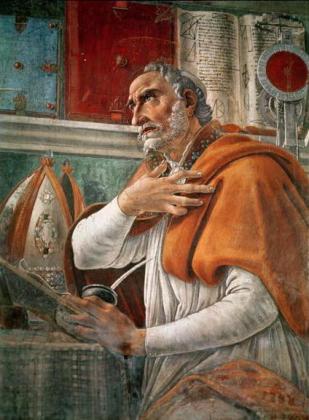
As a young man, Augustine studied rhetoric. During his studies he began his search for truth. That search led him to a group known as the Manichees, which held to a Gnostic dualism. In this system good and evil were two separate and opposing powers.

In 387, while teaching as a professor of rhetoric in Milan, Augustine became a Christian (largely due to the influence of Ambrose). Eventually he would go on to become the Bishop of Hippo (in North Africa).

As a Christian, Augustine wrote many works against Manichaeism in an attempt to help his friends understand the problems with that view and encourage them to become Christians.

In refuting the dualism of Manichaeism, Augustine explained that God was the Good Creator of all things and all that He created was also good. Evil was not a separate and opposing power (as they taught) but rather the absence of good. Man and the poor use of his free will was responsible for evil when he chose to sin. Continue reading

Sinners in the Hand of an Angry God (Seuss)

What if Jonathan Edwards memorable sermon “Sinners in the Hand of an Angry God” was written in the style of Dr. Seuss’ The Cat in the Hat? It might go something like this:

EdwardsInTheHatTo Fall In Due Time

We sat there in church.
We listened so well.
The preacher stepped up
to tell us about hell.

With tales of horror,
that sound like Stephen King,
We sat on the seat edge
with sweat that did cling.

The preacher he taught,
about our feet sliding.
Explaining the text,
no truth was he hiding.

To walk in a place
so slippery and wet.
A most foolish idea
you are sure to regret.

You’ll fall down
down
down
down
into a wide gaping pit.
And you will not like it.
Not one little bit. Continue reading

Tertullian on the Problem of Evil and Free Will

This is part of a series of posts that captures the early church views on free will and determinism. The idea for this series was motivated by Calvinist claims that their view was held by the early church.

Tertullian

Tertullian

Tertullian (160-225), a 2nd century theologian lived in North Africa, wrote numerous works explaining and defending Christianity. We explored his views of orthodoxy (or the Rule of Faith) already, in this post we will look at how he approached the problem of evil.

One of his works is The Five Books against Marcion. In Book 2, Tertullian explores the problem of evil because Marcion (the heretic of Pontus) was wrestling with how a good God could be the author of all the evil in the world (i.2).

The problem of evil, as stated by Marcion and presented by Tertullian goes, something like this (ii.5): Continue reading