Augustine Evolving Views on God’s Sovereignty (Part 2)

We have been examining Augustine’s changing views on faith, free will, and God’s sovereignty. His original views on these topics evolved from a synergistic model (where God and man cooperate in coming to faith) to a monergistic model (God alone causes man to come to faith) that became the foundation of Reformed theology.

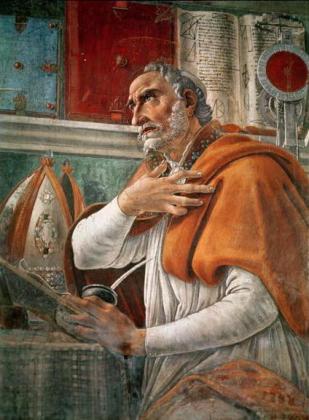
In the last post we delved into Augustine’s interpretation of 1 Timothy 2:3-4 based on what he wrote in from The Spirit and the Letter, written in 412 AD.Saint_Augustine_Portrait

In summary:

  • free will was given to us by God when He created us. Our free will was able to choose between faith and unbelief.
  • God desires all the people He created to be saved, but this desire is constrained so that people maintain their ability to freely choose to be saved. Our consent is required in order for God to save us.
  • The reality that all people are not saved does not thwart God’s will since it is also His will that those who remain in unbelief will perish. Only those who remain in unbelief and escape the penalty would truly thwart God’s will.

Before we consider his revised interpretation using quotes and observations from the Enchiridion of Faith, Hope, and Love written 10 years later, I want to address the idea that Augustine did in fact change his mind. Continue reading
Augustine Evolving Views on God’s Sovereignty (Part 1)

In a previous post we examined Augustine’s changing views on free will. His original view regarding free will and faith mirrored that of the other early church writers and theologians. But later, Augustine articulated views that we now kSaint_Augustine_Portraitnow as unconditional election and irresistible grace.

These changes coincided with Augustine’s shift in how he understood God’s sovereignty. We will continue to examine Augustine’s changing views by looking at how he interpreted the passage 1 Timothy 2:3-4 over time.

This is good, and it is pleasing in the sight of God our Savior, who desires all people to be saved and to come to the knowledge of the truth.

This first post will examine quotes and observations from The Spirit and the Letter, written in 412 AD. The second post will examine quotes and observations from the Enchiridion of Faith, Hope, and Love written 10 years later. Continue reading

Augustine’s Evolving Views on Free Will

Augustine (354-430) is considered one of the most influential Christian theologians and philosophers. In the Parchment and Pen Top 10 theologian series, he was Saint_Augustine_Portraitranked #1.

As a young man, Augustine studied rhetoric. During his studies he began his search for truth. That search led him to a group known as the Manichees, which held to a Gnostic dualism. In this system good and evil were two separate and opposing powers.

In 387, while teaching as a professor of rhetoric in Milan, Augustine became a Christian (largely due to the influence of Ambrose). Eventually he would go on to become the Bishop of Hippo (in North Africa).

As a Christian, Augustine wrote many works against Manichaeism in an attempt to help his friends understand the problems with that view and encourage them to become Christians.

In refuting the dualism of Manichaeism, Augustine explained that God was the Good Creator of all things and all that He created was also good. Evil was not a separate and opposing power (as they taught) but rather the absence of good. Man and the poor use of his free will was responsible for evil when he chose to sin. Continue reading