Book Review: The Atheist’s Fatal Flaw

“The main argument against the existence of God has always been the ‘argument from evil'”, argues Richard Swinburne, a philosopher who has written numerous works defending the existence of God .

For atheists like Sam Harris:

The problem of vindicating an omnipotent and omniscient God in the face of evil … is insurmountable. [1]

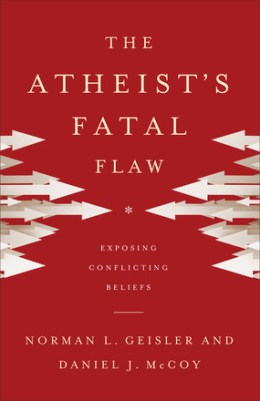
Based on this premise Norman Geisler and Daniel McCoy tackle this problem head on in The Atheist’s Fatal Flaw, published by Baker Books (available at Amazon).

For those familiar with Norman Geisler’s FatalFlawCoverwork, you may be wondering how this book differs from his previous book – Not Enough Faith to be an Atheist? Continue reading

Augustine’s Evolving Views on Free Will

Augustine (354-430) is considered one of the most influential Christian theologians and philosophers. In the Parchment and Pen Top 10 theologian series, he was Saint_Augustine_Portraitranked #1.

As a young man, Augustine studied rhetoric. During his studies he began his search for truth. That search led him to a group known as the Manichees, which held to a Gnostic dualism. In this system good and evil were two separate and opposing powers.

In 387, while teaching as a professor of rhetoric in Milan, Augustine became a Christian (largely due to the influence of Ambrose). Eventually he would go on to become the Bishop of Hippo (in North Africa).

As a Christian, Augustine wrote many works against Manichaeism in an attempt to help his friends understand the problems with that view and encourage them to become Christians.

In refuting the dualism of Manichaeism, Augustine explained that God was the Good Creator of all things and all that He created was also good. Evil was not a separate and opposing power (as they taught) but rather the absence of good. Man and the poor use of his free will was responsible for evil when he chose to sin. Continue reading

The $64,000 question and presuppositions

R.C Sproul, the popular Reformed pastor, author, and founder of Ligonier Ministries, asked the following question in his book: Chosen By God.

The $64,000 question is, “Does the Bible teach such a doctrine of prevenient grace? If so, where?”

And Tom Schreiner in his critique on prevenient grace (chapter 9 in Still Sovereign)  summed it up like this:

Prevenient grace is attractive because it solves so many problems, but it should be rejected because it cannot be exegetically vindicated

sproul_podium_actionBefore continuing I want to make three important observations:

1. Reformed and Arminian views both hold to the concepts and doctrine of original sin/total depravity. In summary that means that people, because of our fallen nature, cannot initiate a relationship with God or come to faith without God’s help.

2. Reformed and Arminian views both hold to the need for prevenient grace – a grace that precedes faith. This grace is given by God to restore our fallen nature and enable a person to come to faith.

3. The primary difference between Reformed and Arminian theologies is whether prevenient grace is resistible or not. Continue reading