The Memoirs of Peter on the Life of Jesus with John Mark

The earlier posts in this series (part 1) explored the early evidence that a person named Mark is the author of the book we call the Gospel of Mark. This author was further identified as John Mark who makes brief appearances throughout the NT (part 6).

There is a prevailing opinion that the Gospels were not written by eyewitnesses and that those who did write them did not consult the eyewitnesses. These authors simply wrote the stories that they had heard.

Even though there may well have been eyewitnesses alive some 35-40 years after Jesus’ death, there is no guarantee – or, I would argue, no reason to think – that any of them were consulted by the authors of the Gospels when writing their accounts. The eyewitnesses would have been Aramaic speaking peasants almost entirely from rural Galilee. Mark was a highly educated, Greek speaking Christian living in an urban area outside of Palestine (Rome?), who never traveled, probably, to Galilee. So the existence of eyewitnesses would not have much if any effect on his Gospel. (emphasis added) 1
– Bart Ehrman

While Mark was not a disciple of Jesus during His earthly ministry the extant evidence affirms that he wrote down what Peter was teaching and proclaiming. Peter was, of course, an eyewitness and one of the three closest disciples to Jesus. We have seen that Mark and Peter would have known each other over a period of decades. This familiarity would give the author of the Gospel of Mark lots of opportunities to talk with him, ask questions and to hear his teaching. In addition, Mark’s mother was hosting meetings where Christians would gather. There would be no reason to think that most of the people that assembled were also eyewitnesses of Jesus’ teaching and healing (Acts 2:22; 12:12). Mark would have met and conversed with them as well. That should counter any idea that eyewitnesses did not have much effect on what was written.
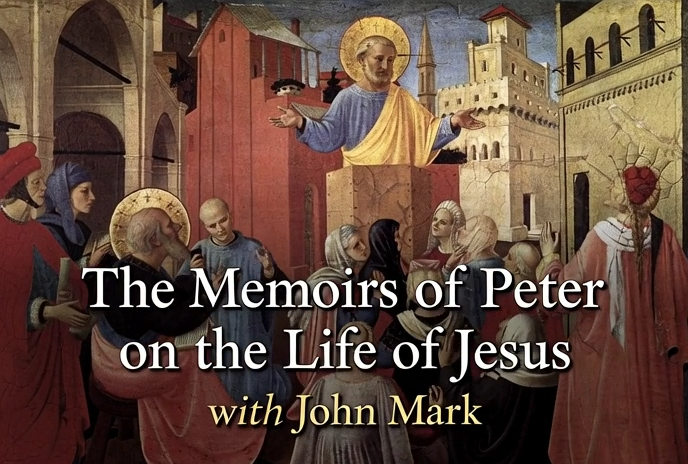
AI generated image from the Fra Angelico painting of St Peter Preaching in the Presence of St Mark
Continue reading

The Life and Times of John Mark or How to Date a Gospel (Part VI)

The earlier posts in this series (part 1) explored the early evidence that a person named Mark is the author of the book we call the Gospel of Mark.

The testimony was largely in agreement about the following information:

  • Mark was the author.
  • Mark was not a disciple of Jesus (while Jesus was alive).
  • Mark wrote down what Peter was teaching and proclaiming.
  • The book was written at the request of believers in Rome.

The testimony of the early church also notes that Mark was in Alexandria, Egypt planting churches.

Who is this person named Mark?

The extant testimony of the early church is unanimous that it was written by Mark, a person taken to be John Mark, the associate of Barnabas and Paul on the 1MJ.

One factor in favor of this being correct, notes Daniel Wallace, is that Mark is “by no means a major player in the New Testament.”1

The author identified as Mark is widely accepted as the person named John Mark that we find referenced throughout the NT.

In The New Testament in Its World, affirms that no alterative person has ever been suggested as the author.

Certainty is impossible, but John Mark is probably the best candidate, not least because his name, as a younger and less well-known early Christian, would not naturally occur to second-century Christians when seeking to name the book. No alternative figure has ever warranted consideration. 2

Continue reading

Just Launched: Action packed Graphic Novel version of the Gospel of Mark

One of my favorite books in the Bible is the Gospel of Mark. I have taught through it several times, including on a short term mission trip to Liberia. I love how it vividly portrays Jesus’ ministry, capturing all that He did through a short and action packed narrative.

The beginning of the gospel of Jesus Christ …

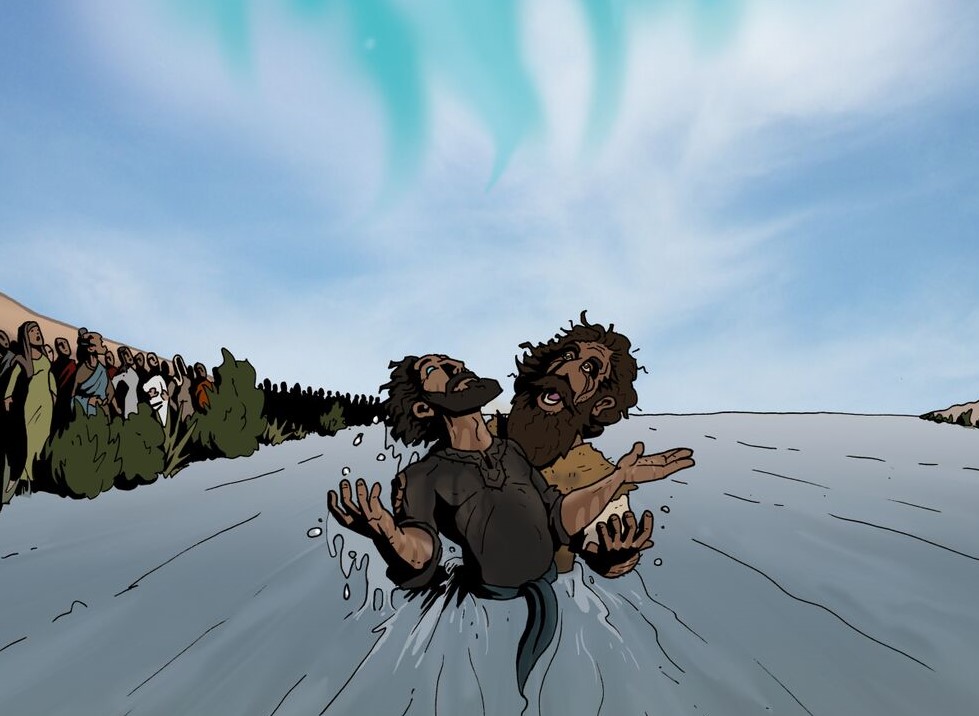
From the start the account jumps right in, starting with the ministry of John the Baptist and Jesus’ own baptism.

baptism-of-jesus-closeup

Jesus being baptized from the graphic novel by Simon Pillario (used with permission)

The Gospel, as noted theologian N.T. Wright explains is “the royal announcement that the crucified and risen Jesus, who died for our sins and rose again according to the Scriptures, has been enthroned as the true Lord of the world.” This is good news, not good advice and it needs to be shared because “something has happened as a result of which the world is a different place.”

The format of this gospel, with its focus on what Jesus is doing, readily lends itself to being illustrated in a graphic novel. And this format offers an opportunity to announce the good news, not only to Christians, but to people who may never have picked up a Bible, but would readily read a graphic novel.

And that is what Simon Amadeus Pillario illustrator of the Word for Word Bible Comic (link), is hoping to offer as he launches his KickStarter campaign.

The campaign page can be found here!

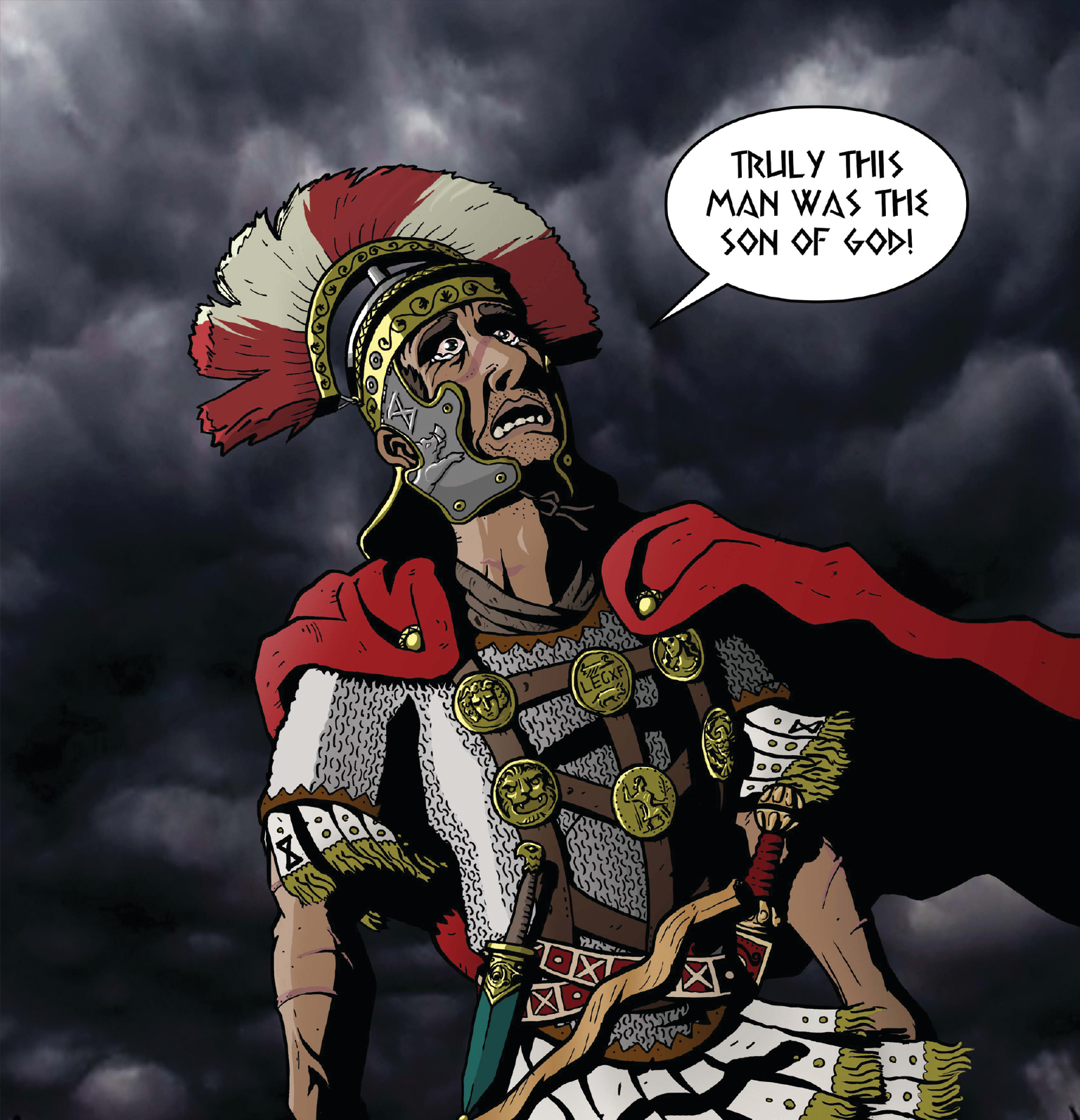
Through the graphic novel format Pillario hopes to present the stories of the Bible, using the actual words of Scripture, in ways that are “historically accurate, unabridged, and untamed”. There are no annotations, notes, or additions to the text of Scripture. When you pick up one of these novels you are reading the Bible. What you do get, with the text, are beautiful and carefully researched images that attempt to capture the power of the story in a historically accurate way. For more on the work that goes into each novel check out Simon’s blog.
centurion_at_cross
He has already successfully launched two campaigns on KickStarter (Judges and Joshua), so you can be confident that Simon will deliver what he promises. The best part about joining this campaign is that many options for backing it include receiving copies of the books Joshua, Judges, and Ruth. Two of these novels are available now, so, while you are waiting for the Gospel of Mark, you can enjoy some rewards right away.

I will leave you with this video. It captures some of Pillario’s thoughts on how he plans to illustrate all four of the gospels in such a way that there is a unity in how they present narratives that occur in more than one account.