Grace for All: John Wesley challenges Reformers on Reprobation

Just as Pinson examined the theology of Arminius Grace for All, Vic Reasoner explores the theology of John Wesley. Reasoner is the president of Southern Methodist College (link) and an author, having written a Wesleyan commentary on Romans (link).

415xXkjORGLReasoner starts off surveying the various scholars who have studied and interpreted John Wesley over the last 50+ years, highlighting Thomas Oden recently published 4 volume set that is considered “the first systematic exposition” of Wesley’s theology (amazon).

Reasoner, exploring numerous aspects of Wesleyan theology, starts off the affirming God’s sovereignty.

Wesleyan-Arminians affirm God’s sovereignty, but believe that God has the prerogative of not always exercising total sovereignty. Thus we have true libertarian freedom. Yet God never surrenders the consequences of our free choices to us. … God is so sovereign he can allow human rebellion, yet that rebellion does not thwart his ultimate purpose.
Continue reading

The Hard Hitting Word for Word Bible Graphic Novel (Review)

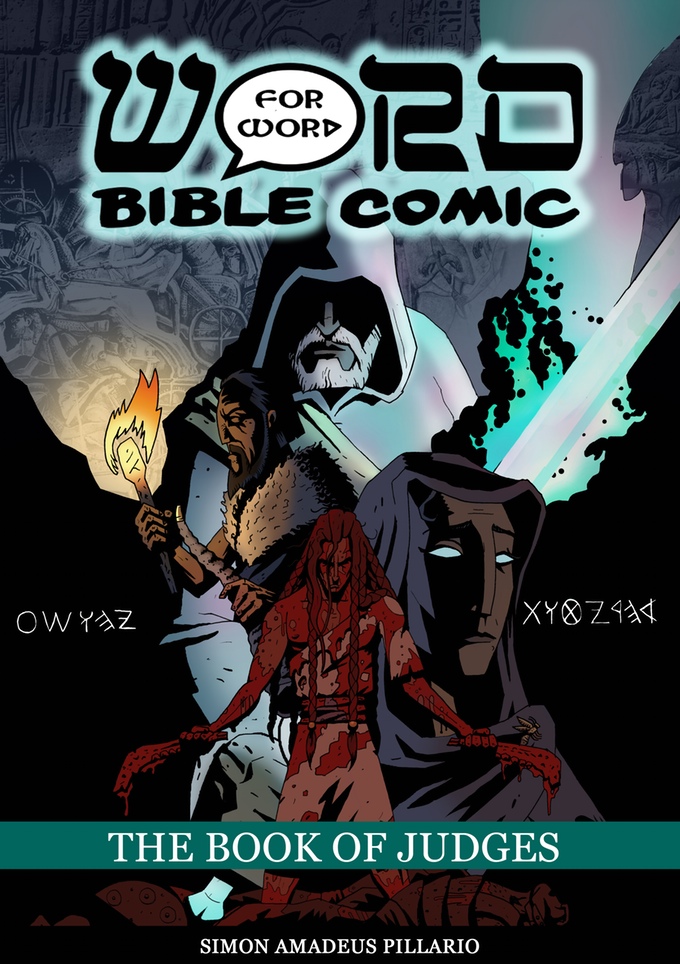
When you discover that you are about to read about a Bible comic, you may be tempted to skip this post. After all aren’t comic books just for kids. Some might be, but be warned graphic novels are not your typical comic. And this is not for young kids. It is actually rated for readers 15 and up.

Graphic novels as a medium are intense and visual ways to experience a story. And the stories they tell have been the basis for popular movies and shows. Robert Kirkman’s The Walking Dead, Frank Miller’s Spartan adventure 300, and Alan Moore’s V for Vendetta are among some of the most notable.

The Bible is filled with stories that are powerful and vivid. But in an age that is dominated by YouTube, blockbuster films, and special effects, the vibrancy of these stories can be lost on the modern reader. That is something Simon Amadeus Pillario is looking to change. He is the creator of the Word for Word Bible Comic (link), which hopes to present the stories of the Bible, using the actual words of Scripture, as a set of graphic novels that are “historically accurate, unabridged, and untamed”. One of Pillario’s goals is to invite graphic novel fans, many of whom may not otherwise read a Bible, to pick up the Scriptures. But, it is also for Christians who want to visually experience these familiar stories.

When I firsKickStarter_Judges_originalt heard of the Word for Word Comic, it was through Kickstarter. And I thought, what am amazing idea to create a graphic novel version of the Bible. I quickly backed the project.

The first Kickstarter, was back in May 2014, for the book of Judges. And while the project is not finished yet, the digital editions that have been sent to backers are incredible. If you are a fan of graphic novels and want to experience the Scriptures in a “hard-hitting” new way, then you are going to love the Word for Word Bible Comic. Continue reading

One Does Not Simply Fall Into a Tale: a Reformed Theologian’s take on the Script Analogy

In his essay on predestination, appearing in Grace for All, I. Howard Marshall compared divine determinism (see this post) to an author writing a script. A concept that was explored in this post using the Star Wars movies (link). At the end of the post, I asked readers, both proponents and opponents of meticulous sovereignty, if they thought Marshall’s analogy is accurate? A member of the Reformed Pub Facebook group affirmed the analogy was useful for understanding the idea, pointing me to a paper by Dr. James N. Anderson. Anderson (blog) is the Associate Professor of Theology and Philosophy (link) at Reformed Theological Seminary.

The article is entitled “Calvinism and the First Sin”, (available for download until it is published) and it explains the Reformed view of divine determinism and its relationship to theodicy (why God permits evil). It also compares it to other views (Molinism, Simple Foreknowledge, and Open Theism), before advocating it as the best option. A conclusion I would not agree with.

LOTR_ScriptHere is how Dr. Anderson describes divine determinism (emphasis added): Continue reading