The Early Church can be bumpers on the bowling alley of theology

When ever we approach a passage in Scripture or a particular doctrinal claim we want to understand what the correct meaning is or whether that claim is correct. There are a variety of factors that are involved in working through that process.

640px-BowlingballImagine that the process is like tossing a bowling ball down the narrow alley.

We want to get a strike (the correct interpretation or assessment of a doctrine). If we can’t do that we would like to get as close as possible.

For us bad bowlers, we are happy to knock down some pins and often end up throwing gutter balls. In a game that might be fine, but from a theological perspective that would mean we are pretty far off the mark.

In a post last year, I proposed an Agile Manifesto for theology and doctrine. The goal was to offer up some principles to help us approach our theology and doctrine in the best way possible.

One of the proposed principles was: favor tradition and the historic Rule of Faith over novel theological views.  BillAndTed_NapoleanBowling Continue reading

An Ancient Theologian tackles John 6 and Romans 9

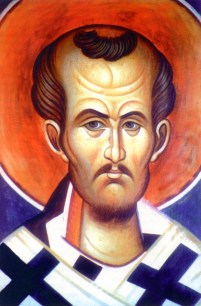
st-john-chrysostom-71John Chrysostom, a 4th century theologian, served as Bishop of Constantinople and was known for his preaching and ascetic lifestyle. What made him a noteworthy teacher was his ability and desire to be understood by the lay person and his rejection of allegorical interpretation.

Chrysostom predated the Pelagian and Semi-Pelagian debates that dominated the 5th century but was around during the disputes with the Manicheans.

The Manicheans were a heretical group that held to dualism. The founder claimed to be an apostle.

Augustine was a Manichean for nearly a decade before coming to Christ. He spent much of his early Christian experience refuting them in numerous works. At this time Augustine refuted the Manichean deterministic idea that “evils and sins are thereby connected, as by a sort of chain, to God” by arguing that actions that were determined and not performed through a willing agent did not deserve condemnation.

While ministering in Antioch, Chrysostom wrote Homilies (or sermons), which consist of verse by verse expositions of the Scriptures. Chrysostom, did not author major works against the Manicheans as Augustine did, but noted in his sermons those passages which these (and other heretical groups) wrongly interpreted. Continue reading

Augustine Evolving Views on God’s Sovereignty (Part 2)

We have been examining Augustine’s changing views on faith, free will, and God’s sovereignty. His original views on these topics evolved from a synergistic model (where God and man cooperate in coming to faith) to a monergistic model (God alone causes man to come to faith) that became the foundation of Reformed theology.

In the last post we delved into Augustine’s interpretation of 1 Timothy 2:3-4 based on what he wrote in from The Spirit and the Letter, written in 412 AD.Saint_Augustine_Portrait

In summary:

  • free will was given to us by God when He created us. Our free will was able to choose between faith and unbelief.
  • God desires all the people He created to be saved, but this desire is constrained so that people maintain their ability to freely choose to be saved. Our consent is required in order for God to save us.
  • The reality that all people are not saved does not thwart God’s will since it is also His will that those who remain in unbelief will perish. Only those who remain in unbelief and escape the penalty would truly thwart God’s will.

Before we consider his revised interpretation using quotes and observations from the Enchiridion of Faith, Hope, and Love written 10 years later, I want to address the idea that Augustine did in fact change his mind. Continue reading