
Originally published on Oct. 30, 2009
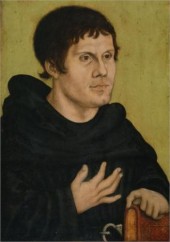
Martin Luther
On Oct. 31, 1517 Martin Luther (reportedly) nailed the 95 Theses to the door of the Castle Church in Wittenberg, Germany thus sparking the Protestant Reformation.
The immediate problem Luther was dealing with was the selling of indulgences to pardon sins and free souls from purgatory. This was an offense to the real good news that we are saved by grace through faith!
A few years after posting the 95 Theses Luther would write Concerning Christian Liberty describing the inner and outer man, and the relationship between faith and works. In this work he gives the following illustration:
To make what we have said more easily understood, let us set it forth under a figure. The works of a Christian man, who is justified and saved by his faith out of the pure and unbought mercy of God, ought to be regarded in the same light as would have been those of Adam and Eve in paradise and of all their posterity if they had not sinned. Of them it is said, “The Lord God took the man and put him into the garden of Eden to dress it and to keep it” (Gen. ii. 15). Now Adam had been created by God just and righteous, so that he could not have needed to be justified and made righteous by keeping the garden and working in it; but, that he might not be unemployed, God gave him the business of keeping and cultivating paradise. These would have indeed been works of perfect freedom, being done for no object but that of pleasing God, and not in order to obtain justification, which he already had to the full, and which would have been innate in us all.
So it is with the works of a believer. Being by his faith replaced afresh in paradise and created anew, he does not need works for his justification, but that he may not be idle, but may exercise his own body and preserve it. His works are to be done freely, with the sole object of pleasing God. Only we are not yet fully created anew in perfect faith and love; these require to be increased, not, however, through works, but through themselves.
Let’s remember the courage of Martin Luther and other reformers who took a strong stand for Jesus making sure that the truth of the Gospel was clearly taught at a time when it was dangerous to do so.
 Dead Heroes Don't Save