Grace for All: Paul, the Potter, and Perspective? (Romans 9)

This post is a part of a series that is examining each essay in the recently published book Grace for All. 


Dr. James D. Strauss, who passed in 2014, was Professor of Theology and Philosophy at Lincoln Christian Seminary (link). His essay, edited by John D. Wagner tackles the challenging argument that Paul presents in Romans 9.

This chapter starts off a section that is widely accepted as starting in chapter 9 and continuing through to the end of chapter 11.

By Ks.mini (Own work) via Wikimedia Commons

By Ks.mini via Wikimedia Commons

The section starts off with Paul’s concern for the Jewish people:

For I could wish that I myself were accursed, separated from Christ for the sake of my brethren, my kinsmen according to the flesh, who are Israelites … (Rom 9:3-4 NASB)

A concern that is marked throughout the section, as it is expressed again in chapter 10:

Brethren, my heart’s desire and my prayer to God for them is for their salvation. (Rom 10:1)

and again in chapter 11:

… Inasmuch then as I am an apostle of Gentiles, I magnify my ministry, if somehow I might move to jealousy my fellow countrymen and save some of them … (Rom 11:13-14)

It is within this context that Paul writes about God’s sovereign right to have mercy on whom He will, and harden whom He will (Rom 9:18) and to form His creation as He desires.

Has the potter no right to make from the same lump of clay one vessel for special use and another for ordinary use? (Rom 9:21)

In Arminius’s examination of Roman’s 9 he notes that it is important to settle the main thesis or question that Paul is addressing. He proposes the challenge that Paul will seek to refute is as follows:

Does not the word God become of none effect, if those of the Jews, who seek righteousness, not of faith, but of the law, are rejected by God.

Is that the right thesis that Paul is refuting?

On what idea does Paul base his argument? Continue reading

One Does Not Simply Fall Into a Tale: a Reformed Theologian’s take on the Script Analogy

In his essay on predestination, appearing in Grace for All, I. Howard Marshall compared divine determinism (see this post) to an author writing a script. A concept that was explored in this post using the Star Wars movies (link). At the end of the post, I asked readers, both proponents and opponents of meticulous sovereignty, if they thought Marshall’s analogy is accurate? A member of the Reformed Pub Facebook group affirmed the analogy was useful for understanding the idea, pointing me to a paper by Dr. James N. Anderson. Anderson (blog) is the Associate Professor of Theology and Philosophy (link) at Reformed Theological Seminary.

The article is entitled “Calvinism and the First Sin”, (available for download until it is published) and it explains the Reformed view of divine determinism and its relationship to theodicy (why God permits evil). It also compares it to other views (Molinism, Simple Foreknowledge, and Open Theism), before advocating it as the best option. A conclusion I would not agree with.

LOTR_ScriptHere is how Dr. Anderson describes divine determinism (emphasis added): Continue reading

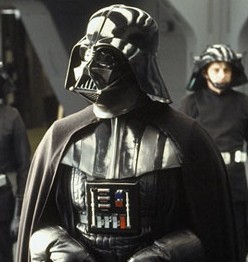
What if: Could Anakin Skywalker have chosen not to become Darth Vader?

In Star Wars Episode III, The Revenge of the Sith, Jedi Master Mace Windu and Sith Lord Palpatine (aka Darth Sidious) are engaged in battle when Anakin Skywalker enters the room. As Anakin watches on, Palpatine fires force lightning which Windu deflects with his light saber. Locked in this struggle, the Sith looks at Anakin and cries out that he must choose whom he will help.

The young Jedi is faced with a decision.

  1. Help Mace Windu defeat Palpatine.
  2. Help Palpatine defeat Mace Windu.

In choosing to help Mace Windu, Anakin can reject the Dark Side and fulfill the prophecy that, as the Chosen One, he would bring balance to the Force. However, Anakin is fearful of losing Padme and wants Palpatine’s help. In helping the Sith Lord, Anakin would be completing his journey to the Dark Side and becoming Darth Vader.

It appears that Anakin has an important choice to make. Or does he? Continue reading