
Having read Wesley’s “Thoughts Upon Necessity”, I decided to read more of Lord Kames’ essay “On Liberty and Necessity”. This post is a follow-up to the post Wednesday with Wesley: Thoughts Upon Necessity, which introduces us to both the essays.
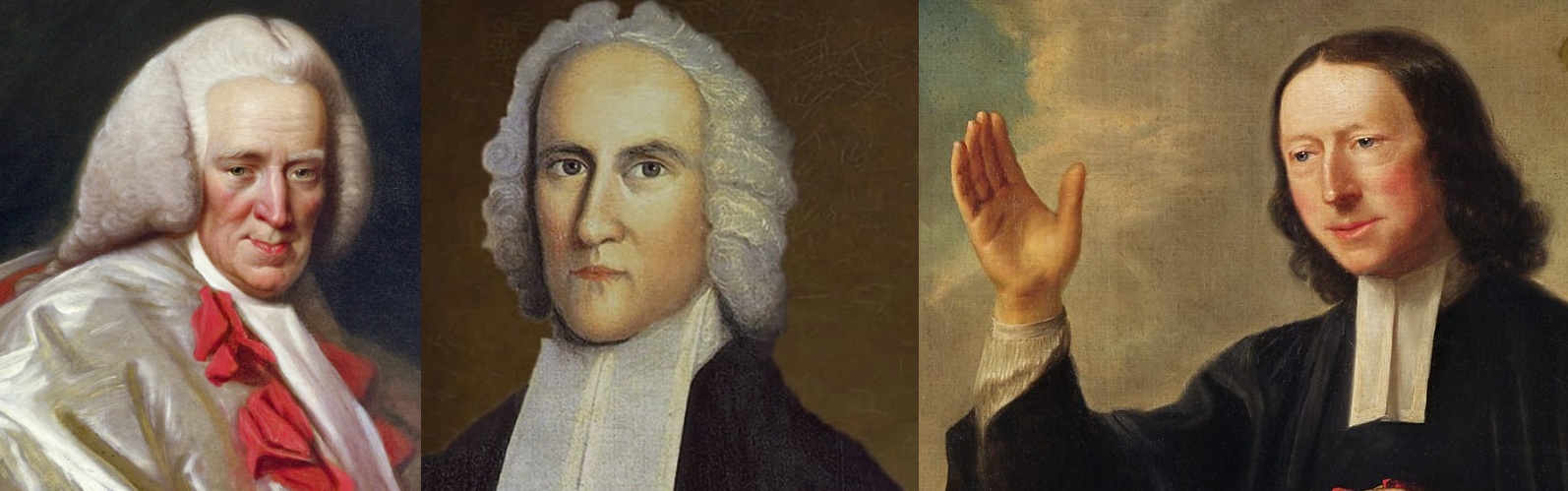
In the last post, we highlighted portions of Lord Kames’ position to provide enough content in which to frame Wesley’s argument against it. We also provided a condensed format of Wesley’s argument. In this post we will focus on Kames’ view that we are given a “delusive Sense of a Liberty of Contingence, to be the Foundation of all the Labour, Care and Industry of Mankind” and the responses to that idea from both Jonathan Edwards and John Wesley.1
The position taken by Lord Kames
In the prior post we relied primarily on Wesley’s quotes from Kames’ essay. Here we will add a more expansive summary taken directly from Kames’ work “Liberty and Necessity“. 2
Lord Kames will assert a basic principle: “that nothing can happen without a cause” and that “nothing that happens is conceived as happening of itself, but as an effect produced by some other thing.” 3
This principle is applied to both the natural and moral worlds, however, it will be made clear that the fixed laws that govern each are not the same.
Taking a view of the natural world we find all things there proceeding in a fixed and settled train of causes and effects. It is a point which admits of no dispute, that all the changes produced in matter, and all the different modifications it assumes, are the result of fixed laws. Every effect is for precisely determined, that no other effect could, in such circumstances, have possibly resulted from the operation of the cause: which holds even in the minutest changes of the different elements [as these are the] necessary effect of pre-established laws.4
The result, Kames admits, is that “in the material world, there is nothing that can be called contingent but everything must be precisely what it is.” In the moral world, which is the realm in which “man is the actor”, we find things “do not appear so clearly.”
Continue reading
 Dead Heroes Don't Save