What do we mean when we say “God”?

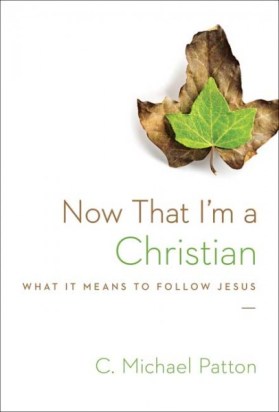
Now-that-im-a-Christian-406x600

This quarter we are going teaching on the Foundations of the Christian Life. We are using C. Michael Patton’s book, Now That I’m a Christian, as a guide (see review here). I also used Thomas Oden’s Classic Christianity as a reference.

This week we examined the topic of God and tackled the question: What do we mean when we say God?

A.W. Tozer (in Knowledge of the Holy) writes:

What is God like? If by that question we mean ‘What is God like in Himself?’ there is no answer. If we mean ‘What has God disclosed about Himself that the reverent reason can comprehend?’ there is, I believe, an answer both full and satisfying. For while the name of God is secret and His essential nature incomprehensible, He in condescending love has by revelation declared certain things to be true of Himself. These we call His attributes.

It would seem to be necessary … to define the word attribute …an attribute of God is whatever God has in any way revealed as being true of Himself. … If an attribute is something true of God, it is also something that we can conceive as being true of Him. God, being infinite, must possess attributes about which we can know. An attribute, as we can know it, is a mental concept, an intellectual response to God’s self-revelation.

but let him who boasts boast of this, that he understands and knows Me that I am the LORD – Jeremiah 9:24

In this class we primarily tackled the Essential attributes of God and how we can know them.

We come to know God by:

  • Examining His actions
    • Studying Creation (Rom 1:20)
    • Sending His Son reveals how much God loves people and wants them to be saved (John 3:16; 1 Tim 2:4)
  • Studying the statements made by Prophets
    • you cannot tolerate wrongdoing (Habakkuk 1:13)
    • I the Lord do not change (Malachi 3:6)
  • Examining the Life of Christ
    • Anyone who has seen me has seen the Father (John 12:45; 14:7-9)
    • The more clearly God is seen in Christ, the less ambiguously God is seen everywhere else. – Thomas Oden
  • Studying the Names of God
    • El-Roi (God who Sees) highlights God’s omnipresence and His care for us in troubles first used by Hagar in the wilderness (Gen 16:13)
    • Yahweh-Jirah (The Lord provides) highlights God’s care and provision for us first used by Abraham when a ram was provided as a substitute for Isaac (Gen 22:14)

Attached are the slides used in class for those that are interested (Foundations God)

C.S. Lewis on Humility

I have been reading (actually listening on my commute) C.S. Lewis’ classic the Screwtape Letters. These letters are insightful and challenging looks at how to live out the Christian life.

CSLewis

They are written from the perspective of how demons might seek to tempt and pull us away from our relationship with God (known as the Enemy).

In letter #14 we find the master tempter Screwtape instructing his nephew, Wormwood, on how to deal with a problem. The person (aka the patient) that has been assigned to Wormwood, whom he is responsible for tempting and discouraging, is growing in his Christian walk.

Your patient has become humble

The first line of attack that Screwtape encourages his nephew to consider is to get his patient to focus on his humility. In this way they might attempt to draw out the vice pride as the man would suddenly start to think: I am being humble. Continue reading

Top Posts in 2015

Thanks readers for spending time exploring theology with me on the blog. I hope it helped you in your walk and worship!

This year I was able to publish 53 posts. I was pretty excited about keeping up with the goal of averaging a post a week. Part of the year was spent blogging through the new book Grace for All, which is a good collection of essays exploring theology from an Arminian point of view. I was happy to have 9 posts published on the Society of Evangelical Arminian site. 

Here are the top 5 overall posts in 2015 (by total views)

Rank Post
1 Blessed are those who hunger for a Markan sandwich Part of a series on the Gospel of Mark, this post examines the literary technique of layering stories that the author of the gospel uses to highlight and emphasize the points that he wants to make.
2 The Five Act Hermenuetic (Scripture and the Authority of God by N.T. Wright) drops out of the top spot after 3 straight years holding the title top post. This post takes a look at NT Wright’s 5 act hermeneutic (a fancy word for framework) that focuses on the story line that runs through the pages of scripture from Genesis to Revelation and finds its climax in the hero of the story Jesus.
3 Choosing a name for your view of Soteriology (Infographic)

This post captured the adage a picture is worth a thousand words. It was an infographic exploring the way various views understand how a person comes to faith.

4 John Wesley On Original Sin and Total Depravity. This post is part of an occasional series that explores the theological writings of John Wesley. In this post Sermon #44 and What is an Arminian are used to explore Wesley’s views on the fallen state of man.
5 Does God want all to be saved? A response to Dr. Kruger. This post took a look at how Dr. Kruger defended a Reformed understanding of God wanting all to be saved. It has generated a lot of discussion.

Continue reading