Out of Left Field

Our church is in the process of re-confirming our elders. This is done by presenting the list of current elders (we don’t have any new elders this round) to the congregation. We are not a congregational led church so the congregation is not voting to determine whether they think each of the men should be elders. They are responsible for indicating if any of the men have disqualified themselves from office based on Biblical qualifications (1 Tim 3:1-7; Titus 1:5-9; 1 Peter 5:1-4). If anyone feels that this is the case then they would need to meet with the elder board to determine if this is indeed the case.

Looking over the passages that list the qualifications for an elder we come across the following:

the husband of one wife

There has been debate as to whether this requirement means a man must be married (as opposed to single), a man must not be divorced (at any time, after being reborn). Most views on this requirement accept that a man who aspires to be an elder must be faithful to his wife (if married). No matter how one deals with this qualification I doubt that  anyone accepts that a man could be a polygamist and still be qualified to serve as an elder/pastor in the church.

Based on this requirement it is interesting that David, the King of Israel and a man after God’s own heart (1 Sam 13:13-14; Acts 13:22) and to whom was given the covenant of a Messiah King who would come from his line and rule forever  (2 Sam 7:4-17; Acts 13:23) would not be able to serve as a leader in the church because he had many wives (1 Sam 25:43; 2 Sam 5:13). This is just an observation. Had David lived in the church age he may not have made the choice to marry additional women.

Reflecting on this observation one can see the importance of marriage and family in the eyes of God. As they are key indicators of whether a man – even one with the right heart – is fit to lead in the church.If a man can not live with his wife in an understanding way his prayers are hindered (1 Pet 3:7) and if his own house is in disarray then it is wise ask:

if someone does not know how to manage his own household, how will he care for God’s church?

If deacons must be tested before serving, how much more must the elder. And where else but in the daily living among family can one see the true character and test of a person.

Another point of reflection is that God takes leadership seriously. Those who lead in the church have many responsibilities beyond just governance and oversight. They are responsible for providing a community where spiritual growth and love can occur. They must preserve unity and sound doctrine. And they must live knowing they are role models to the community on what it looks like to follow Jesus. These qualifications for elder are not for the “super-faithful” of the church. All who call Jesus Lord are called to live in such a way that they could meet them as well. While David may not have been able to be an elder in a church, we are still right to ask if God can say the same of us – are we someone who is after God’s own heart.
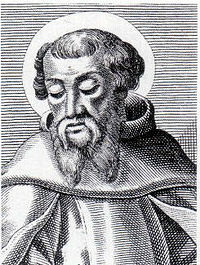
What is Orthodoxy? [Part 2] Irenaeus weighs in

Irenaeus

Irenaeus

The question as to whether orthodoxy is narrow or wide was considered in the last post?  A narrow orthodoxy is one in which the basic set of Christian doctrine is defined. It does not incorporate speculative theological ideas but only what has been held by the historic church as essential truth. A wide orthodoxy is one that encompasses all the varying and often speculative teachings found in church history. Based on a sampling writers ancient and contemporary I asserted that orthodoxy is narrow. In this post I will share some research into what a narrow historic orthodoxy includes.

Before starting with an creedal examination, the first tenet of historic orthodoxy would include the reliance on the Scriptures as the trustworthy source of knowledge about God: Continue reading →

What is Orthodox?

Rob Bell in the preface to Love Wins claims to be swimming in the wide, diverse pool of historic, orthodox Christian faith.

But what is historic, orthodox Christian faith?  Is it wide and diverse? How wide and diverse is it? Who gets to decide?

In Scott McKnight’s article What Love Wins Tells Us About Christians  he lists ten lessons that we can take away from the debate over Love Wins that erupted in the blog-o-sphere. Lesson #10 asks the following:

Tenth, what is evangelicalism and what is orthodoxy? I heard Rob Bell say in an interview that he is evangelical and orthodox to the bone. What do these terms mean? (emphasis in original)

If people holding to different viewpoints and theological systems are going to communicate and use terms like orthodox then it is important that we have a working definition that we can agree upon. The goal of this post is to think through what the term orthodox means. Generally, orthodox refers to the “right beliefs”. Summarizing dictionary.com it is “pertaining or conforming to approved doctrine”.

Scott McKnight’s tenth takeaway continues by defining orthodoxy as follows:

… And what does “orthodoxy” mean? Ask the best church historians and theologians and they will point you to the classic creeds, from Nicea on, and that means orthodoxy defines and articulates the Trinity. An orthodox person is someone who believes those creedal formulations. But I’m encountering a generation of young thinkers who really don’t care what these terms mean.

G. K. Chesterton (1908) seems to agree writing that “[w]hen the word ‘orthodoxy’ is used [in the book of the same title] it means the Apostles’ Creed, as understood by everybody calling himself Christian until a very short time ago and the general historic conduct of those who held such a creed.”

C. Michael Patton explores 6 different approaches to orthodoxy found in the church today. Patton assesses two views of orthodoxy as credible and defines them as follows (I recommend reading the whole post):

[Paleo-orthodoxy:] the Christian faith can be found in the consensual beliefs of the church. …  consensual faith can be found in the first five centuries of the Christian church.

[Progressive Orthodoxy:] seeks the consensus of the Church throughout time for the core essential theological issues, finding most of these in the early church expressed in the ecumenical councils. But it also believes that our understanding of these issues can and may mature and reform both through articulation and added perspective.

In another post on essentials Patton proposes separating orthodoxy along historic and denominational lines. The historic orthodox faith would be a set of doctrine that would (or should) be agreed upon by all denominations and which has been held throughout the history of the church. Patton cites the Vincentian Canon found in  the Commonitory (434 AD) – “that which has been believed everywhere, always and by all” – as the principle behind historic orthodoxy.

But are we really to look to the historic church and the creeds and writings to define orthodoxy? Shouldn’t we just rely on Scripture?

Before answering that question consider what Irenaeus wrote in “Against Heresies” (180 AD) regarding the purpose of orthodoxy (Book 1 Chapter 10):

As I have already observed, the Church, having received this preaching and this faith, although scattered throughout the whole world, yet, as if occupying but one house, carefully preserves it. She also believes these points [of doctrine] just as if she had but one soul, and one and the same heart, and she proclaims them, and teaches them, and hands them down, with perfect harmony, as if she possessed only one mouth.

And also what Augustine wrote in a treatise called On the Creed (around 393). In it he explains the importance and purpose of orthodoxy (which he calls the “rule of faith”) :

Receive, my children, the Rule of Faith, which is called the Symbol (or Creed). …  These words which ye have heard are in the Divine Scriptures scattered up and down: but thence gathered and reduced into one, that the memory of slow persons might not be distressed; that every person may be able to say, able to hold, what he believes.

Orthodoxy then seems to center on those doctrines which are held in the early creeds and councils of the church. It comprises those essential beliefs that unified the church, that people were willing to die for, and made the teachings of Scripture more easily remembered.  Orthodoxy, therefore, is not taking historic Christianity over and above the teaching of Scripture. It is capturing the essential doctrines of the faith throughout the history of the church that are clearly taught in the Scriptures.  These rules of the faith are part of what was passed on to us and which  Jude urges us to contend for (Jude 1:3). As does Paul (2 Tim 2:2; 1 Core 11:2; 1 Thess 2:15; 3:6). When orthodoxy goes beyond the Scriptures we would certainly be right to reject it. Of course determining which creeds (Apostle, Nicene, or Athanasian) and which councils are to be used to define orthodoxy certainly muddy up the water a bit (more on this in later posts). However rather than a wide and diverse pool – the purpose of orthodoxy seeks to define a clear set of basic doctrine that is narrow and establishes the essentials. Orthodoxy is the bumper guards in the bowling alley of theology. It is the narrow and uniform body of water that is safe to swim in.  It is there to protect us from straying outside of the truth.

How do you define orthodoxy?

Is it a narrow (defining the basic Christian doctrine) or wide (encompassing all the varying and often speculative teachings found in church history) pool?