
 In the book Love Wins, Rob Bell speculates on what happens in the after-life opening up the door on various ideas claiming in an interview with George Stephanopoulos of ABC News:
I think that the orthodox, historic, Christian tradition is this vast, diverse, conversation that’s been going on for thousands of years and I think Jesus can handle the discussion. It think he can handle the debate.
Based on these comments we have looked at the orthodox, historic, Christian tradition – or the Rule of Faith – in a series of posts exploring whether it is something that should be considered wide (vast/diverse) or narrow.
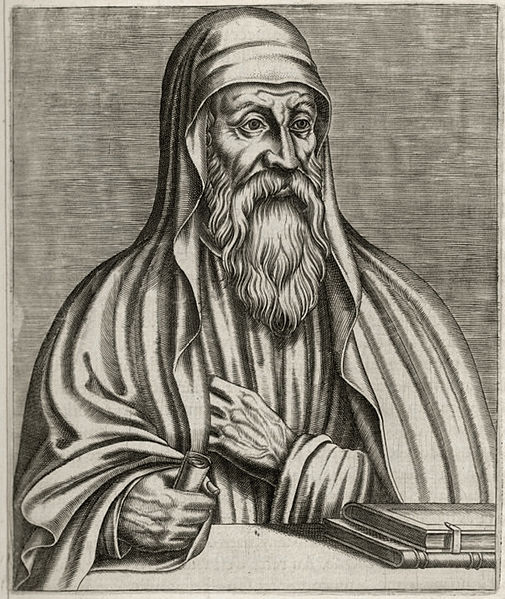
Now to this discussion I would like to look at Origen. Why? Because, Origen is considered one of the earliest writers who speculated on the after-life suggesting many ideas found in Love Wins. Origen (185-254) lived primarily in Alexandria, Egypt. His writings are later than the previous two apologists that we have examined and unlike Irenaeus and Tertullian, Origen is not writing against heresies. One might argue that rather he is creating them. In First Principles he is laying out a systematic theology of sorts.
Origen: On the After-Life
In this book Origen speculates on the after life. Before recording his ideas on this topic he writes:
But since the discourse has reminded us of the subjects of a future judgment and of retribution, and of the punishments of sinners, according to the threatenings of holy Scripture and the contents of the Church’s teaching—viz., that when the time of judgment comes, everlasting fire, and outer darkness, and a prison, and a furnace, and other punishments of like nature, have been prepared for sinners—let us see what our opinions on these points ought to be. [2.10.1]
From this two observations regarding the judgment and the punishment of sinners can be made – according to Origen:
- they are according to Scripture.
- they are according to the Church’s teaching.
Rather than jump into his opinions on the after-life, Origen next establishes that there is an after-life and a resurrection of the body:
there will be no absurdity in restating a few points from such works [other treaties he has composed], especially since some take offence at the creed of the Church, as if our belief in the resurrection were foolish, and altogether devoid of sense; and these are principally heretics, … [2.10.1]
From this two more observations can be – according to Origen:
- a creed documenting the Church’s doctrine is in existence.
- those who reject it are heretics.
Having established the resurrection of the dead and the immortality of the soul, Origen states that after we die God will raise out of up the natural body “a spiritual one capable of inheriting the heavens” for those that deserve it, while those that are “destined to everlasting fire or to severe punishments” are given a body that “cannot be corrupted or dissolved”. Based on this, Origen would certainly reject the annihilationist view of the after-life. Having established that the church teaches that there is an “everlasting fire”, he moves on to to “see what is the meaning of the threatening of eternal fire” [2.10.3].
Origen suggests that there are two possibilities [2.10.5]:
- psychological/emotional – the conscience torments the soul because it accuses/convicts the person of all the sin committed.
- physical – the pains of general punishment.
However it is his “opinion that another species of punishment may be understood to exist”. Here the pain is likened to the body being torn apart since the soul recognizes it is not connected to God and is in a disordered condition. This state when it has “been tested by the application of fire” will result in “restoration”. Here Origen is advocating the post-mortem evangelistic view.
He bases the restoration on:
- “God our Physician, desiring to remove the defects of our souls” will like a doctor take extreme measures to cure us and restore us. [2.10.6]
- “Nothing is impossible to the Omnipotent, nor is anything incapable of restoration to its Creator” so the “destruction of the last enemy” is when the soul/body ceases to be an enemy and to be dead, but is rather restored. [3.6.5]
What should we make of these ideas in regard to orthodoxy?
Does that fact that Origen wrote out his ideas make them part of the historic, orthodox, Christian faith? Or are they one man’s ideas on what the after-life could be like. More importantly can the speculations withstand the teaching of the Scriptures and the church which even Origen acknowledged were to be the source of truth in his preface to First Principle:
Since many, however, of those who profess to believe in Christ differ from each other, not only in small and trifling matters, but also on subjects of the highest importance […] it seems on that account necessary first of all to fix a definite limit and to lay down an unmistakable rule regarding each one of these [areas that are in disagreement].
…
seeing there are many who think they hold the opinions of Christ, and yet some of these think differently from their predecessors, yet as the teaching of the church, transmitted in orderly succession from the apostles, and remaining in the churches to the present day, is still preserved, that alone is to be accepted as truth which differs in no respect from ecclesiastical and apostolical tradition. [preface]
Then he goes on to list what he considers plain and explicit doctrine clearly communicated by the apostles. Here is how they line up with the Apostles’ Creed.
| Apostle’s Creed | De Principiis (Preface) |
| I believe in God the Father, Almighty, Maker of heaven and earth | there is one God, who created and arranged all things, and who, when nothing existed, called all things into being […] |
| And in Jesus Christ, his only begotten Son, our Lord | This just and good God, the Father of our Lord Jesus Christ […] |
| Who was conceived by the Holy Ghost, born of the Virgin Mary | He in the last times, divesting Himself (of His glory), became a man, and was incarnate although God, and while made a man remained the God which He was; that He assumed a body like our own, differing in this respect only, that it was born of a virgin and of the Holy Spirity |
| Suffered under Pontius Pilate; was crucified, dead and buried | […] that this Jesus Christ was truly born, and did truly suffer, and did not endure this death common (to man) in appearance only, but did truly die; |
| He descended into hell | |
| The third day he rose again from the dead | that He did truly rise from the dead; and that after His resurrection He conversed with His disciples, |
| He ascended into heaven, and sits at the right hand of God the Father Almighty | and was taken up (into heaven). |
| From thence he shall come to judge the quick and the dead | the apostolic teaching is that the soul, having a substance and life of its own, shall, after its departure from the world, be rewarded according to its deserts, being destined to obtain either an inheritance of eternal life and blessedness, if its actions shall have procured this for it, or to be delivered up to eternal fire and punishments |
| I believe in the Holy Ghost | the apostles related that the Holy Spirit was associated in honour and dignity with the Father and the Son. |
| I believe in the holy catholic church: the communion of saints | [clearly acknowledges the teaching of the Church as the basis of truth] |
| The forgiveness of sins | |
| The resurrection of the body And the life everlasting. | that there is a time of resurrection from the dead […] |
| Amen. |
When Origen writes about his opinions on the after-life he shows that he is familiar with teachings that some will be raised to “eternal fire and punishments”. He then speculates that these punishments are restorative in nature. Even thought he attempts to support his ideas with Scripture he does not claim that these speculations are part of the Rule of Faith/creed. Therefore it is reasonable to conclude that even Origen would not have considered his ideas or conclusions regarding “restorative punishment” as orthodox but rather his explanation to things that were (in his view) outside of the clear and plain teachings of Jesus and the apostles.
Is orthodoxy narrow or wide?
Is Origen’s list of clear teachings a good basis for orthodoxy? Can they be supported with Scripture?
Is there anything you agree with or disagree with in his list?

