Blessed are those who Hunger for a Markan Sandwich

This post is part of a series on the Gospel of Mark based on classes I am teaching.Bite of Sandwich

Mark, the writer of this gospel we are studying is helping us understand who Jesus is. Throughout the narrative he uses a literary technique called the “Markan Sandwich”. This technique involves starting a story that pulls the reader in, then switches to another story line before concluding the first story line. This is similar to how a movie tells concurrent story lines shifting from one character’s situation then panning out and dropping us into the events being tackled by another character. What makes this technique a “sandwich” is after the author finishes telling us the middle story the shift in the narrative moves immediately back to the story that was started and left unfinished.

One of the most obvious and identified “sandwiches” in the Markan narrative occurs in chapter 5. It looks like this: Continue reading

What is Mark’s Good News?

The beginning of the gospel of Jesus Christ, the Son of God.

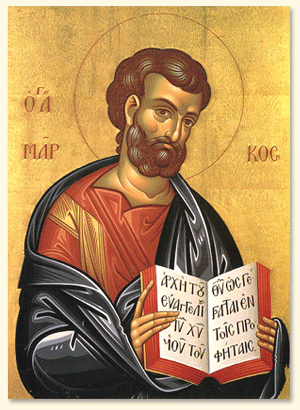
Mark

Mark

So begins the Gospel according to Mark. We might have different ideas about what the term “gospel” means, but for a first century reader the “good news” (from the Greek εὐαγγέλιον) would bring to mind the ideas of a ruler and/or a great victory. [1]

A popular example that captures these Roman ideas from the same time period (9 BC) is the Priene Inscription. It is an engraved stone created in the city of Priene in Asia Minor to celebrate the birth of Emperor Augustus. It is variously translated, but the Greek word for gospel appears twice (noted in bold).[2] Continue reading

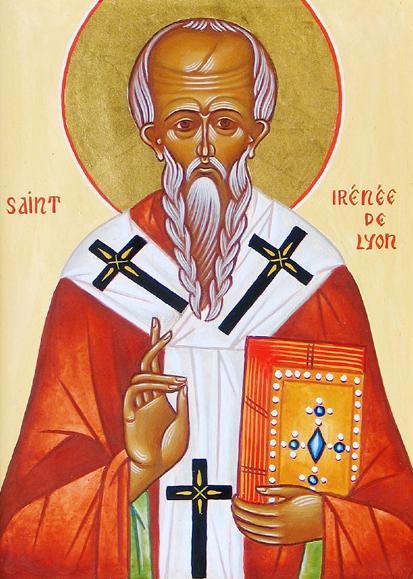
Irenaeus on Free Will

Irenaeus

Irenaeus

Charles Spurgeon has written in his treatise “A Defense of Calvinism” that:

The old truth that Calvin preached, that Augustine preached, that Paul preached, is the truth that I must preach to-day, or else be false to my conscience and my God. … Calvinism is the gospel, and nothing else.

Augustine, the #1 theologian on Parchment and Pen, and his writings had tremendous influence on the Reformers including Martin Luther and John Calvin. The ideas expressed in his writings form the foundation for the tenets of Calvinism. The question often debated is whether the views of Augustine were held by the early theologians of the church prior to Augustine.

In “Calvinism in History“, Reformed theologian Loraine Boettner acknowledges that Augustine is responsible for formulating these views. Continue reading