An Ancient Theologian tackles John 6 and Romans 9

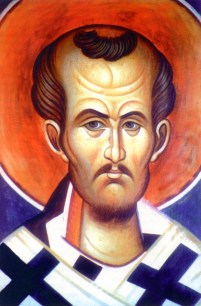
st-john-chrysostom-71John Chrysostom, a 4th century theologian, served as Bishop of Constantinople and was known for his preaching and ascetic lifestyle. What made him a noteworthy teacher was his ability and desire to be understood by the lay person and his rejection of allegorical interpretation.

Chrysostom predated the Pelagian and Semi-Pelagian debates that dominated the 5th century but was around during the disputes with the Manicheans.

The Manicheans were a heretical group that held to dualism. The founder claimed to be an apostle.

Augustine was a Manichean for nearly a decade before coming to Christ. He spent much of his early Christian experience refuting them in numerous works. At this time Augustine refuted the Manichean deterministic idea that “evils and sins are thereby connected, as by a sort of chain, to God” by arguing that actions that were determined and not performed through a willing agent did not deserve condemnation.

While ministering in Antioch, Chrysostom wrote Homilies (or sermons), which consist of verse by verse expositions of the Scriptures. Chrysostom, did not author major works against the Manicheans as Augustine did, but noted in his sermons those passages which these (and other heretical groups) wrongly interpreted. Continue reading

Bible Reading that is put into PRACTICE

It is that time of year when resolutions are made. And right along-side the goals of eating better and exercising is the plan to read through the Scriptures.

The most typical approach is to try and read the entire Bible in a single year. One of the most popular formats for getting this accomplished is the M’Cheyne One-Year Reading Plan or something very similar (ESV Study Bible Reading Plan or Daily Reading Plan). These plans provide a daily reading schedule that includes selections from the Old Testament, New Testament, and Psalms/Proverbs.

That means that as a reader we are reading from 3 different books on a single day (and possibly a single sitting). I find that I am are less likely to be able to focus on what I am reading when I am bouncing between this many different books in a single day. And I am probably not the only one since there are plans that are put together so that the reader can focus on reading from one book at a time while still reading through the entire Bible in a year (Straight Through the Bible).

Most of these plans also schedule readings for every single day of the year. That means that when life happens and you miss a day or two you are behind schedule. Which means that readers often start speed reading and skimming in order to catch up, if they don’t lose heart and stop altogether.

Rather than trying to read the entire Bible in 1 year I am going to lay out a plan to read the entire NT in (just under) 2 years.

Why? Continue reading

Top Posts in 2014

Just want to thank everyone who came by to read and explore theology with me this year on the blog. Hope to see you in 2015.

It was exciting to see two posts published on the Society of Evangelical Arminians site this year:

Watch for more cross posting next year.

Here are the top 5 overall posts in 2014 (by total views)

Rank Post
1 The Five Act Hermenuetic (Scripture and the Authority of God by N.T. Wright) takes the top spot for the 3rd year in a row. This post takes a look at NT Wright’s 5 act hermeneutic (a fancy word for framework) that focuses on the story line that runs through the pages of scripture from Genesis to Revelation and finds its climax in the hero of the story Jesus.
2 John Wesley On Original Sin and Total Depravity. This post is part of an occasional series that explores the theological writings of John Wesley. In this post Sermon #44 and What is an Arminian are used to explore Wesley’s views on the fallen state of man. Continue reading