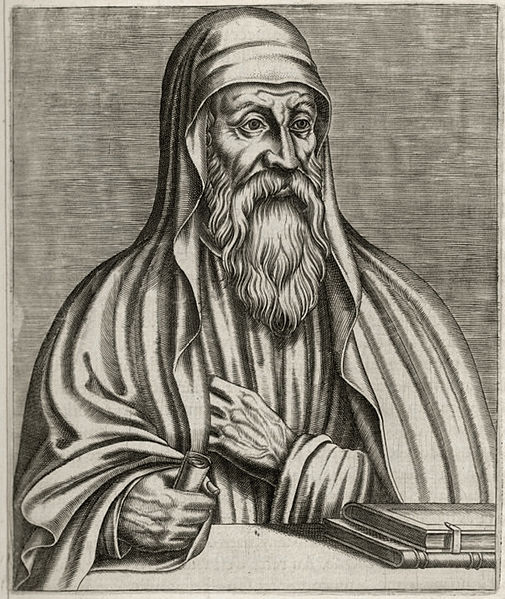
Origen on Free Will

This is a series that will be updated periodically that captures the early church views on free will. Check the Series page for the other posts.

OrigenWhat prompted this series was an assertion made by Charles Spurgeon in his sermon “Election“, that throughout church history only heretics held to a view of free will:

Were I a Pelagian, or a believer in the doctrine of free-will, I should have to walk for centuries all alone. Here and there a heretic of no very honourable character might rise up and call me brother.

In this post we will examine the views that Origen held on these topics.

If you have heard the name Origen before then you probably know that he had his run ins with various church leaders (during his lifetime through to today) due to his hermeneutics and speculative views on various doctrines. But reading about his life and digging into his writings it is evident that his life was focused on Jesus Christ. We evaluated his basic views and whether they were orthodox in a prior post. Continue reading

Fear of the Dark

Let not your hearts be troubled, neither let them be afraid. – Jesus

Have you ever been approached by a stern-looking man, carrying a sword with a large blade and eyes that glowed as if on fire – eyes that could pierce right through to your very soul? He walks up to you with an unmistakable urgency, wearing a robe splattered with blood and on his belt hung the keys to the land of the dead. I doubt you have so let me tell you, calling it scary is an understatement. Huge understatement! But that is a story for another time.

Yoda

I sense much fear in you

Fear of the dark. I have known it. At least I thought I did. That was until I saw this terror redefined. True darkness is the absence of all light. I can’t imagine what it would be like to experience that. But I saw someone who did once. But that is getting ahead of ourselves.

Fear. That was something that we dealt with a lot following Jesus. Continue reading

Faith and Signs a lesson from the Cross of Jesus

Dawkins at the University of Texas at Austin

What is faith? Many define faith as “blind trust” or irrational beliefs:

[Faith] means blind trust, in the absence of evidence, even in the teeth of evidence. … The meme for blind faith secures its own perpetuation by the simple unconscious expedient of discouraging rational inquiry. Blind faith can justify anything. (Dawkins, the Selfish Gene, 198)

Faith is the great cop-out, the great excuse to evade the need to think and evaluate evidence. Faith is belief in spite of, even perhaps because of, the lack of evidence (Dawkins)

Is faith really blind? Continue reading