Conciliar Christology Calmly Considered (Part 2)

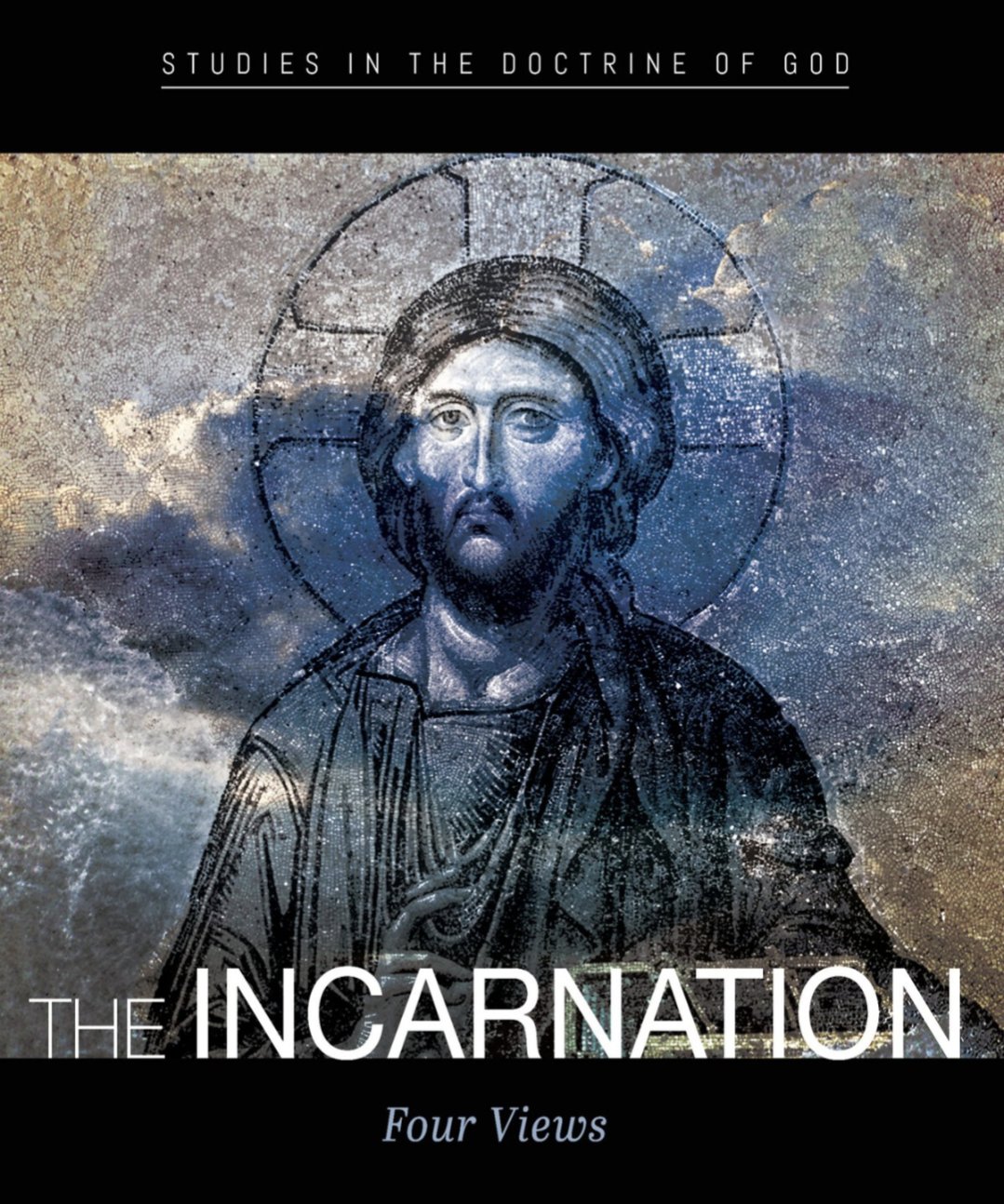
This is part of a series of posts exploring each of the views presented in The Incarnation Four Views edited by Andrew Hollingsworth and R.T. Mullins. This post is the second exploring Conciliar Christianity.

In the last post we began to unpack what counts as orthodox with a particular focus on conciliar Christology. This inquiry was inspired by questions that were raised in the book The Incarnation Four Views. Pawl makes adherence to conciliar Christology a benchmark for what should be considered “traditional, orthodox Christology” and challenged those models that failed to align with them. 1

Do you want your novel Christology to prohibit the doctrine of God taught in the Council of Ephesus…? Wouldn’t it be better to have a model at least consistent with the faith of our forebears? I think so.2
But what does it mean for a Christological model to be consistent with the councils?

Fred Sanders observes that the study of conciliar Christology, which involves numerous developments over many centuries, has a tendency to go one of two different ways. There is a “multiplying [of] differences to divide unities” or there are attempts to construct “less convoluted metanarrative arcs” to suggest greater “coherence and unity.” 3

The challenge to anyone seeking to align what counts as orthodox with what was taught by the ecumenical councils is determining what counts as fidelity to these councils amid the rich history in which they occur.

Donald Fairbairn argues that Pawl has set a rather high bar in what constitutes the teaching of the councils, and thus what counts as orthodox. Quoting Pawl, he writes that conciliar Christology “includes their creeds, canons, expositions of faith, and anathemas,
as well as any documents accepted and endorsed in the previously listed sources.” 4 Fairbairn then reminds us that the goal of aligning with conciliar Christology “sits atop a mountain of historical and theological complexities.” 5 He suggests the need for “plausible summaries” to manage the vast amount of conciliar data. Theses summaries are often provided by scholars. But even then we are left with numerous summaries to consider as the historical events and theologies are variously understood and interpreted among scholars.6 How to define Christology based on what was accepted by the councils then is not merely asking which councils or which documents, but which interpretation of those documents and events that one should accept and work from.

What justifies treating one plausible summary of what the councils affirmed and rejected as the proper interpretation of conciliar teaching over others?

That is an important question if that decision is then to be treated as the baseline for orthodoxy? One approach to this question is to identify the boundaries the councils sought to establish, implicitly or explicitly, as they rejected various Christological theories and models. Focusing on the various anathemas, understood in their historical context, can help provide reasonable limits for any new Christological models that are proposed.

The Challenging Fifth Century
Cyril, writing to Nestorius, urged him to consider “what is meant by the Word of God being incarnate and made man.” 7 The competing answers to that question drew in a vast array of characters, prompted the calling of synods and councils, and generated an exchange of numerous letters over the next two decades. The controversy would culminate in the Council of Chalcedon in 451, whose definition of Christ contributed to a division within Christianity that eventually gave rise to the distinct Oriental Orthodox tradition.
Continue reading →

Blogging Thru The Incarnation Four Views: Conciliar Christology Calmly Considered (Part 5)

This is part of a series of posts exploring each of the views presented in The Incarnation Four Views edited by Andrew Hollingsworth and R.T. Mullins

Having covered each of the models of the Incarnation presented in the Four Views book, I thought I would extend the series by exploring some of the topics that were brought up.

In the first essay Timothy Pawl defined Conciliar Christology as that which was “officially endorsed by the seven ecumenical councils.” 1 He argues that “Conciliar Christology is therefore the traditional, orthodox Christology of the Christian faith” and “is our shared intellectual and theological heritage.” 2

In his critique of Evans’ essay, Pawl asks the question “what counts as orthodoxy.” This was a pointed question raised against Evans’ assertion that his model was orthodox and consistent with the creedal claims about Jesus. 3 Pawl goes on to assert that orthodoxy regarding Christology goes beyond the statements made in the creeds and should include other conciliar documents.4 He argues that one should outline what conciliar documents are being considered, what the councils taught and how one’s model is consistent with them to justify the claim.5

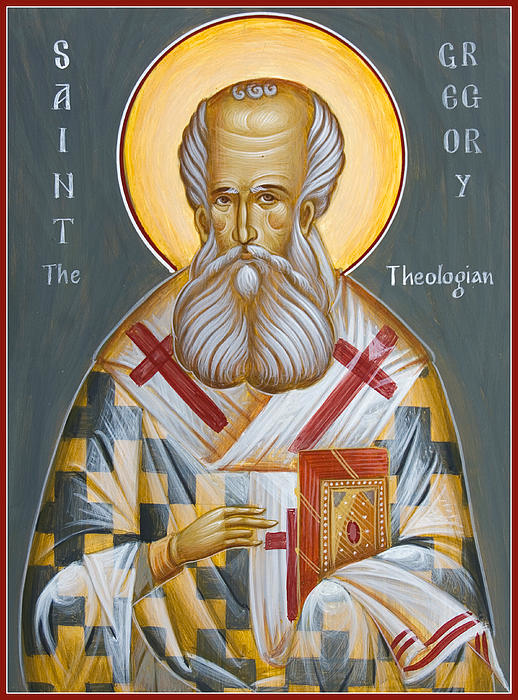
For it is one thing to be persuaded
of the existence of a thing,
and quite another to know what it is.

Gregory of Nazianzus

In his response to Andrew Loke, Pawl critiques the novelty of his model and the reinterpretation of terminology. But Pawl does go on to admit that “all the technical mechanics of the philosophical understanding of the doctrine of the incarnation were novel at some point or other.” 6 The history regarding the “standard terms” shows that they were anything but, undergoing revision over the centuries.

These exchanges in the book brought up an interesting question. What does count as orthodoxy? Even if we appeal to the ancient creeds and councils, does orthodoxy require all of the seven councils or just the earliest ones? Does it require only the creeds or should the canons, letters and other documents be included? Perhaps most interestingly, does orthodoxy require acceptance of the ancient metaphysics or is accounting for the broader claims made about the Trinity and Incarnation enough to count?

Continue reading →

Blogging Thru The Incarnation Four Views: Narrow Scope Negation (Part 1)

This summer I have been reading more about the Trinity and Christology. I was excited to see the newly published book that explores four different views on the Incarnation. It was edited by Andrew Hollingsworth and R.T. Mullins. I was unfamiliar with the four main contributors and was interested in seeing the different approaches each would take. This short blog series will cover each view with some of my thoughts.

Having read through the first entry and the responses I have a few observations regarding the book. Understanding that the authors were given a limited amount of space to make their points, they need to be judicious in describing their view. However, that should not have resulted in skipping defining key terms in detail. In addition, readers should know that when they crack the cover they are dropped into the middle of a rather deep philosophical discussion between the contributors. It can take some effort to get oriented. Finally, prior familiarity with the concepts that are part of the Trinitarian and Christological discussion is highly recommended.

View 1: Conciliar Narrow Scope Negation
Dr. Timothy Pawl is the first to present his view. He is a Professor in the Department of Philosophy at the University of St. Thomas and is noted for publishing two books on Conciliar Christology. Pawl argues that a Conciliar Christology is the foundation upon which any model of Christology should be built.

Continue reading →