
This is part of a series of posts exploring each of the views presented in The Incarnation Four Views edited by Andrew Hollingsworth and R.T. Mullins
Having covered each of the models of the Incarnation presented in the Four Views book, I thought I would extend the series by exploring some of the topics that were brought up.
In the first essay Timothy Pawl defined Conciliar Christology as that which was “officially endorsed by the seven ecumenical councils.” 1 He argues that “Conciliar Christology is therefore the traditional, orthodox Christology of the Christian faith” and “is our shared intellectual and theological heritage.” 2
In his critique of Evans’ essay, Pawl asks the question “what counts as orthodoxy.” This was a pointed question raised against Evans’ assertion that his model was orthodox and consistent with the creedal claims about Jesus. 3 Pawl goes on to assert that orthodoxy regarding Christology goes beyond the statements made in the creeds and should include other conciliar documents.4 He argues that one should outline what conciliar documents are being considered, what the councils taught and how one’s model is consistent with them to justify the claim.5
For it is one thing to be persuaded
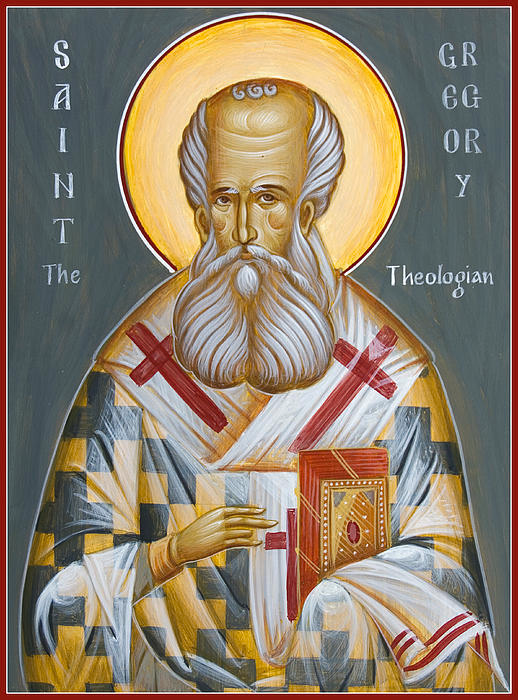
Gregory of Nazianzus
of the existence of a thing,
and quite another to know what it is.
In his response to Andrew Loke, Pawl critiques the novelty of his model and the reinterpretation of terminology. But Pawl does go on to admit that “all the technical mechanics of the philosophical understanding of the doctrine of the incarnation were novel at some point or other.” 6 The history regarding the “standard terms” shows that they were anything but, undergoing revision over the centuries.
These exchanges in the book brought up an interesting question. What does count as orthodoxy? Even if we appeal to the ancient creeds and councils, does orthodoxy require all of the seven councils or just the earliest ones? Does it require only the creeds or should the canons, letters and other documents be included? Perhaps most interestingly, does orthodoxy require acceptance of the ancient metaphysics or is accounting for the broader claims made about the Trinity and Incarnation enough to count?
Continue reading
