Grace for All: Conditional Election

415xXkjORGLDespite the terms “predestination” and “election” being quite controversial today in theological circles, Jack Cottrell (blog), Professor of Theology at Cincinnati Christian University, starts off his essay reminding us that the Greek words behind these terms hold very common meanings. These words simply mean “to plan before hand” and to “choose or select”.

In the Scriptures these terms can refer to groups and/or individuals. Furthermore these terms do not always mean those who are chosen for salvation. They can also specify those who are chosen to service (see also this post).

In order to properly understand election, Cottrell rightly argues, we should first understand it as being Christ-centric.

Election primarily reflects God’s choices around establishing the Messiah. Continue reading
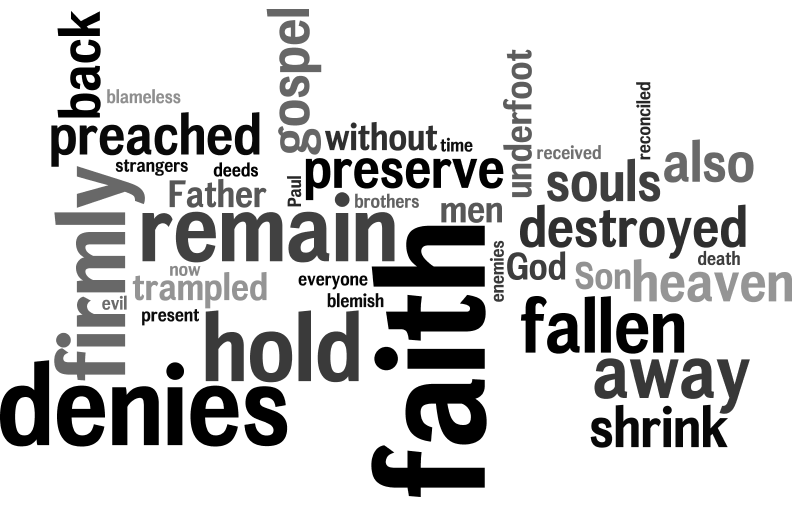
Wednesday with Wesley: Perseverance of the Saints & Arminianism

Can a true disciple of Christ later commit apostasy? Will those who commit apostasy perish? Can someone who was at one time placed in Christ be removed? How one answers these questions depends on how they view eternal security (outline of views).

holdFirm2While most proponents of Arminianism hold to a view that a true believer can commit apostasy and thus forfeit salvation, the Arminian camp allows proponents to hold different views on eternal security. Despite holding these different views, it must be understood, Classical Arminianism does affirm that a true believer will possess enduring faith. There is no such thing, Ashby will write, in his essay in “Four Views on Eternal Security”, as a “saved unbeliever”.

Based on early writings, Classical Arminians held that one of two things must be true: Continue reading

Grace for All: The Wideness of God’s Mercy

Nothing in human history testifies to the wideness of God’s mercy or the breadth of his love like the atoning death of Christ.

So begins chapter 4 of Grace for All, in which we are presented with both an “exegetical” and a “systematic” investigation of the intent and extent of the atonement.

The essay was written by Robert Picirilli (link), the former Academic Dean of the Graduate School at Free Will Baptist Bible College. Picirilli has autho415xXkjORGLred numerous commentaries, including one on Romans from an Arminian perspective. He has also written the book Grace, Faith, Free Will (amazon), one of the best and most accessible books (IMO) on the Calvinism/Arminianism debate. Some of the points covered in this essay can also be found in a lecture Picirilli gave in 2002 (link).

What is the atonement? Noted Reformed pastor, John Piper, provides us with a great definition (link):

the work of God in Christ on the cross whereby he canceled the debt of our sin, appeased his holy wrath against us, and won for us all the benefits of salvation.

There would be little to debate on this important truth, so Picirilli focuses his essay on the question: what did God intend to achieve through the atoning, redemptive work of Jesus? Continue reading