Book Review: The Atheist’s Fatal Flaw

“The main argument against the existence of God has always been the ‘argument from evil'”, argues Richard Swinburne, a philosopher who has written numerous works defending the existence of God .

For atheists like Sam Harris:

The problem of vindicating an omnipotent and omniscient God in the face of evil … is insurmountable. [1]

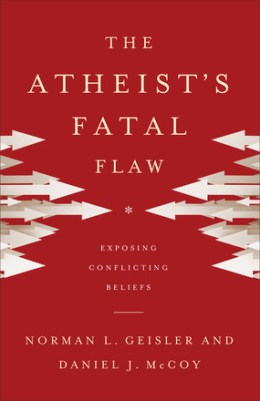
Based on this premise Norman Geisler and Daniel McCoy tackle this problem head on in The Atheist’s Fatal Flaw, published by Baker Books (available at Amazon).

For those familiar with Norman Geisler’s FatalFlawCoverwork, you may be wondering how this book differs from his previous book – Not Enough Faith to be an Atheist? Continue reading →
What does Free Will do?

calvin-and-hobbes-on-predestinationI have posted a lot on Free Will since I find it both an interesting topic of study as well as one of the most misunderstood areas of theology. The way I see it, a libertarian definition of free will is necessary to rationally and Biblically solve such theological problems as God’s relationship to evil, ethics and personal responsibility, and reconciling how a sovereign God could want none to perish and desire all to be saved when not all people receive eternal life.

Liberty necessitated, or over-ruled, is really no liberty at all. It is a contradiction in terms … downright nonsense. – John Wesley

In Disputation #11, Arminius attributed “complete freedom of action” to God alone, and listed the following characteristic of free will as it applied to man. Continue reading →

Tertullian on the Problem of Evil and Free Will

This is part of a series of posts that captures the early church views on free will and determinism. The idea for this series was motivated by Calvinist claims that their view was held by the early church.

Tertullian

Tertullian

Tertullian (160-225), a 2nd century theologian lived in North Africa, wrote numerous works explaining and defending Christianity. We explored his views of orthodoxy (or the Rule of Faith) already, in this post we will look at how he approached the problem of evil.

One of his works is The Five Books against Marcion. In Book 2, Tertullian explores the problem of evil because Marcion (the heretic of Pontus) was wrestling with how a good God could be the author of all the evil in the world (i.2).

The problem of evil, as stated by Marcion and presented by Tertullian goes, something like this (ii.5): Continue reading →